


























Church leaders and civil groups in Mizoram unite to fight rising drug abuse, targeting youth and trafficking across border districts.
Newsroom (04/06/2026 Gaudium Press ) Churches across denominations and civil society groups in Mizoram are intensifying collaborative efforts to address a worsening drug abuse and trafficking problem that is increasingly impacting the state’s youth and families. The initiative marks one of the most coordinated attempts yet by religious and community institutions in the Christian-majority state to confront a crisis that has deepened over recent years.
The decision was reached during a meeting held on June 2 in Aizawl, convened by the Central Young Mizo Association (CYMA) and the Mizoram Kohhran Hruaitute Committee (MKHC), the apex body representing the state’s major churches. Participants emphasized the urgent need for unified and sustained action.
“The discussions focused on the urgent need for closer cooperation between religious institutions and community organizations to curb drug problems across Mizoram,” said Malsawmliana, the general secretary of CYMA.
The association has formally designated the period from 2025 to 2027 as a focused campaign phase to combat drug abuse, signaling long-term commitment rather than a short-term intervention.
Churches at the Forefront of Social Action
In Mizoram, where Christianity shapes both community life and social outreach, churches already play a significant role in addressing addiction and rehabilitation. According to Malsawmliana, this existing network made them natural partners in the renewed effort.
“We approached all church denominations because they are already involved in awareness programs and counseling services. We want them to continue to fight this menace,” he said.
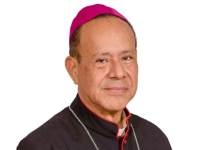
Bishop Stephen Rotluanga of Aizawl welcomed the initiative, describing drug abuse as one of the most pressing challenges facing the state. He warned that young people are particularly vulnerable, citing the ease of access to narcotics in the region.
“Drug abuse is one of the most serious concerns facing both churches and civil society today,” the bishop said, adding that various stakeholders are already working independently and will benefit from greater coordination.
Church-run social service centers have long provided support to those struggling with addiction, alcoholism, and related health issues such as HIV/AIDS. The expanded cooperation aims to build on these efforts, improving outreach and strengthening prevention programs.
Geography and Trafficking Pressures
Mizoram’s geographic position significantly complicates anti-drug efforts. India’s 1,643-kilometer unfenced border with Myanmar runs through four northeastern states, including Mizoram. The region’s proximity to the Golden Triangle—one of Asia’s largest narcotics-producing zones—has made it particularly vulnerable to drug trafficking.
Districts bordering Myanmar such as Champhai, Siaha, Lawngtlai, Hnahthial, Saitual, and Serchhip have emerged as key transit routes for illicit substances, including heroin and methamphetamine tablets. These routes have facilitated the steady inflow of drugs into the state, exacerbating local addiction issues.
Officials say the problem now cuts across all demographics, with rising use reported among youth, women, and even minors.
Rising Death Toll and Seizures
The human cost of the drug crisis is becoming increasingly visible. Government data recorded 118 drug-related deaths in 2025—the highest annual figure in over 20 years—highlighting the severity of the situation.
Recent law enforcement actions underscore both the scale of trafficking and the challenges involved in tackling it. On June 2, the Excise and Narcotics Department seized 971 grams of heroin and arrested four suspected traffickers in a border area. Just a day earlier, police intercepted a vehicle carrying 587 grams of heroin and detained a 51-year-old woman accused of transporting the drugs from Churachandpur in neighboring Manipur to Aizawl.
Heroin and methamphetamine remain the primary substances driving both addiction and trafficking in the state, authorities confirmed.
Society Mobilizes for Change
The renewed campaign reflects a broader recognition that law enforcement alone cannot address the crisis. By bringing together religious institutions, community groups, and government agencies, stakeholders hope to tackle both supply and demand.
Bishop Rotluanga expressed optimism that the initiative would strengthen ongoing efforts and contribute to the broader goal of making Mizoram drug-free.
The state’s social fabric may offer unique advantages in this regard. With approximately 87 percent of its 1.1 million residents identifying as Christian, churches wield considerable influence and are well-positioned to shape public attitudes and behavior.
Community organizations like CYMA, which have deep grassroots networks, complement this influence by mobilizing young people and local volunteers.
A Critical Moment
The coordinated push comes at a critical juncture. With drug abuse spreading across districts and affecting increasingly diverse sections of society, the need for unified action has become urgent.
While challenges remain—particularly given Mizoram’s location along major trafficking routes—the latest collaboration between churches and civil society offers a comprehensive approach that combines moral leadership, social outreach, and community mobilization.
If sustained, stakeholders believe this collective effort could significantly reduce the impact of drugs on Mizoram’s future generations.
- Raju Hasmukh with files from UCA News
Related Images: