










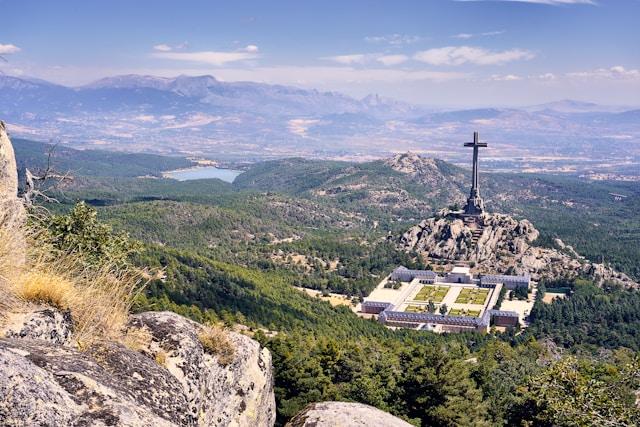
Spanish government launches works at Valley of the Fallen during Pope Leo XIV visit, sparking protests, secrecy concerns, and accusations.
Newsroom (08/06/2026 Gaudium Press ) The start of excavation work at Spain’s Valley of the Fallen has ignited a wave of controversy, unfolding against the backdrop of Pope Leo XIV’s high-profile visit to Madrid and raising questions about transparency, timing, and institutional coordination.
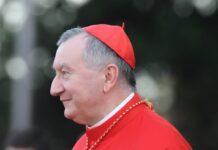
Early Monday morning, drilling machinery arrived at the historic site to initiate geological studies on the esplanade in front of the basilica, according to reports and photographic evidence published by El Debate. The operation began simultaneously with a key address by Pope Leo XIV to a joint session of the Congress of Deputies and the Senate, and just minutes after Prime Minister Pedro Sánchez met with the pontiff at the Apostolic Nunciature.
The timing of the works has drawn particular scrutiny. Critics have described the move as deliberate, arguing that it coincided not only with the Pope’s historic speech but also with heightened public attention on the papal visit. The Association for the Defense of the Valley of the Fallen has formally denounced the government’s actions, citing both procedural and symbolic concerns.
According to witnesses interviewed by El Debate, the construction activity began without prior notification to local stakeholders or the necessary municipal building permit. “They haven’t notified anyone, and they also lack the necessary building permit from the city council,” sources claimed, pointing to what they described as a lack of transparency. The works reportedly took advantage of the site’s Monday closure and the diversion of media focus toward the Pope’s presence in Spain.
Pablo Linares, president of the Association for the Defense of the Valley of the Fallen, confirmed in remarks to ACI Prensa that the activities currently underway are preliminary. “The necessary geological studies are beginning on the esplanade,” he said, explaining that the machinery visible at the site is being used for exploratory subsurface testing. According to Linares, these studies could take several months to complete, after which a formal building permit would be required for further development.
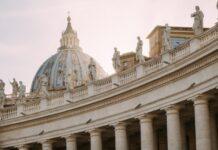
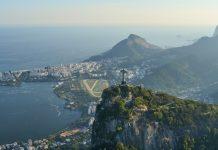
Despite the technical framing of the works, Linares and others have emphasized the broader implications. The Valley of the Fallen, which houses a pontifical basilica, a guesthouse, a school-choir institution, and a Benedictine community, is also home to the largest cross in Christendom. For critics, any transformation of the site carries deep historical, cultural, and religious significance.
Linares sharply criticized the timing of the operation, calling it “a blatant provocation” given its overlap with Pope Leo XIV’s visit and particularly his address to Parliament on June 8. This sentiment was echoed by individuals gathered outside the headquarters of the Spanish Episcopal Conference later that morning, where some called on the pontiff to intervene in the government’s “resignification” process concerning the monument.
Meanwhile, Prime Minister Sánchez’s meeting with Pope Leo XIV at the Apostolic Nunciature was met with public protests. As Sánchez’s motorcade arrived at the Vatican diplomatic residence shortly before 9:30 a.m., a group of demonstrators assembled nearby shouted “Resign!” and “Traitor!” as police halted traffic to allow the convoy to enter the compound.
The meeting served as a prelude to the Pope’s address before Spain’s legislative chambers, marking a significant moment in church-state engagement. Following his speech in Parliament, Leo XIV concluded the morning’s schedule with a visit to the headquarters of the Spanish Episcopal Conference, where he met with bishops.
The convergence of these events—the initiation of works at the Valley of the Fallen, the papal visit, and visible public dissent—has intensified debate over the government’s handling of the site. Questions remain regarding the role of ecclesiastical authorities, the legality of the construction process, and the broader political context surrounding the intervention.
As the geological studies proceed and further steps await official authorization, the controversy is likely to persist, fueled by competing interpretations of the site’s significance and the appropriateness of the government’s actions during a moment of national and religious visibility.
- Raju Hasmukh with files from ACI Prensa and Infocatholica
Related Images: