









Irish Bishop Niall Coll says post-1995 Catholics crave doctrinal clarity and tradition over modern adaptability in a fragmented world.
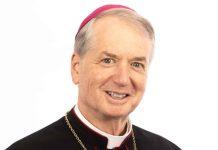
Newsroom (04/03/2026 Gaudium Press ) In a pointed reflection on the future of faith in Ireland, Bishop Niall Coll of Raphoe argued that the newest generation of Catholics is not looking for a Church that chases cultural relevance, but one that stands firm on its foundations. Speaking at the mid-February Dublin launch of Transformative Renewal in the Catholic Church, a new book by Spiritan Father John O’Brien, Bishop Coll described the emerging “i-Gen” — those born after 1995 — as a cohort shaped by disconnection from Ireland’s once-dominant Catholic identity.
“Growing up entirely in a post-Christian, digital, morally fragmented culture, they have no inherited memory of Catholic Ireland,” he said, according to The Irish Catholic’s Feb. 26 report. “Often converts, they are drawn to doctrinal solidity, sacramental depth, and continuity with the Church’s tradition. For them, the Church lies in truth that is intelligible in body and demanding, not adaptability.”
His comments arrive as the Irish Church prepares for its National Synodal Assembly on October 17 — the culmination of the Irish Synodal Pathway, launched in 2021 to encourage open dialogue among clergy, religious, and laity. Yet Bishop Coll cautioned that much of this effort risks missing its mark. Catholic leaders, he suggested, may be addressing an audience that no longer recognises itself in progressive rhetoric.
“Young Catholics have grown up amid constant choice, information overload, and moral ambiguity,” he said. “They are less interested in conversation and more in formation that produces conviction and confidence. Most people you meet today are not on fire with progressive questions.”
Bishop Coll warned that synodality — the process of collective discernment central to the current reform movement — risks becoming directionless if detached from Scripture and doctrine. “Synodality, if not anchored in Scripture and doctrine, risks endless discussion without direction,” he said. “Renewal cannot be sustained without formation.”
Formation and catechesis, in his view, are not optional footnotes but the heart of ecclesial renewal. “A synodal church requires not only participation but understanding, not only voice but formation. The people of God cannot discern together unless they can articulate what they believe and why.”
Reflecting on Father O’Brien’s work, Bishop Coll praised his call for “mutual learning with integrity” — a principle that, he said, could help integrate tradition with synodality. “The hunger among ‘i-Gen’ Catholics for coherence and tradition should be received as a gift to the Church, not a problem to be managed,” he said.
“The task,” he concluded, “is not to choose between synodality and tradition but to integrate them.” True renewal, Bishop Coll added, “may be slow and sometimes uneven, but it demands sustained theological clarity and spiritual depth.”
As Ireland’s Church prepares for its most significant synodal moment in decades, the bishop’s challenge rings clear: the future of Irish Catholicism will hinge on whether the Church can combine credibility and communion — a Church that “listens deeply, teaches clearly, forms intentionally, and bears warm witness in a wounded world.”
- Raju Hasmukh with files from UCA News