










The Society of Saint Pius X has delivered a 154-point Catholic Profession of Faith to Pope Leo XIV and the Sacred College ahead of planned episcopal consecrations at Ecône.
Newsroom (24/06/2026 Gaudium Press ) On the feast of the Nativity of Saint John the Baptist, the Society of Saint Pius X delivered to Pope Leo XIV and every member of the Sacred College of Cardinals a sweeping doctrinal declaration setting out its comprehensive vision of Catholic faith and its diagnosis of what it describes as an existential crisis gripping the Church — a formal gesture timed with unmistakable precision to the most consequential week in the traditionalist movement’s recent history.
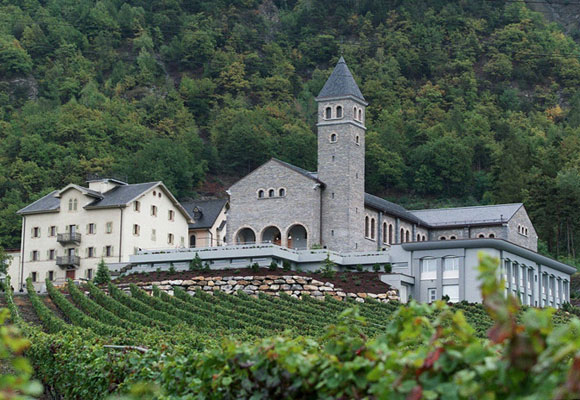
The open letter, dated June 24, 2026, and signed by Superior General Davide Pagliarani alongside the Society’s senior leadership, arrives on the eve of an Extraordinary Consistory of Cardinals convened by Leo XIV at the Vatican for June 26 and 27, and just one week before the SSPX’s planned episcopal consecrations at its Swiss headquarters in Ecône on July 1 — an event set to proceed without a pontifical mandate.
Accompanying the letter is a 154-point Profession of Faith spanning 28 pages and organized across seventeen doctrinal chapters, offering the most comprehensive and systematically structured statement of the Society’s theological positions in recent memory. The document was first published in Italian by the outlet Messa in Latino, which said it received the materials from sources it described as operating at the highest levels of the organization.
A Document of Proclamation, Not Petition
The contrast with the SSPX’s previous communication to the new pontiff is immediately apparent — and, observers suggest, deliberate.
On May 14, the Feast of the Ascension, the Society had addressed a shorter Declaration of Catholic Faith of roughly twenty theses to Leo XIV. Written in a filial register and using an institutional first-person plural, that text greeted the Pope warmly and concluded with an explicit request for papal confirmation: “It is in this faith and in these principles that we ask to be instructed and confirmed by Him who has received the charism to do so.”
The June Profession is a fundamentally different kind of document. Its title directs it not to the Pope but “to souls.” The institutional “we” of May has given way to the solemn first-person singular of classical credal language: “I profess and embrace in its entirety the truth of the Catholic faith.” The formulations — “I believe,” “I reject,” “I hold” — deliberately evoke the Tridentine symbols of faith and the anti-Modernist oath instituted by Pope Saint Pius X in the early twentieth century.
The request for papal confirmation that concluded the May Declaration is entirely absent. So too is the earlier document’s lament over failed negotiations with the Holy See and its pointed criticism that “canon law is being used to lead people away from the faith.” The June text closes instead by entrusting the profession to the intercession of the Virgin Mary and the saints, with no invocation of the Roman Pontiff.
The open letter that formally accompanies and frames the Profession does address Leo XIV and the cardinals directly. In it, the signatories write that the Church “suffers under the pressure of new forces, arising both from within and from without, which are driving her in every possible direction except — so it seems to us — the right one.” They express hope that the doctrinal text may “one day serve as the basis for a frank discussion with the Holy See, in a peaceful, fraternal, and charitable spirit,” while insisting the document is “not the sterile litany of a group of nostalgics, but the necessary expression, peaceful yet resolute, of our faith.”
A Systematic Architecture of Tradition
The Profession’s seventeen chapters constitute a comprehensive traversal of Catholic doctrine. They address Divine Revelation, the Holy Trinity, creation and grace, original sin, the Redemption, Mariology, ecclesiology, the hierarchical constitution of the Church, the Magisterium, moral theology, the social kingship of Christ, the sacraments, the Mass and liturgy, Christian life, eschatology, and what the Society terms the current crisis of the Church.
Throughout its 154 propositions, the document draws exclusively on the pre-conciliar Magisterium, citing councils, papal encyclicals, decrees of the Holy Office, and patristic sources — 127 references in total. Conspicuously absent are any citations from or references to the Second Vatican Council or any post-conciliar teaching authority. In their place is an explicit rejection of doctrines and currents the Society considers incompatible with Catholic faith, including modernism, religious liberalism, indifferentism, secularism, and certain forms of ecumenism.
Vatican II in the Dock
The document’s most confrontational section is its final chapter, in which the SSPX offers its diagnosis of the Church’s present condition in the starkest terms it has yet employed in an official document.
“Modern errors,” the text contends, have penetrated ecclesial life “through the Second Vatican Council and the post-conciliar reforms,” producing a crisis it characterizes as “exceptionally serious.” The Society attributes to these developments a cascade of ills: the weakening of doctrinal preaching, the disappearance of the missionary spirit, the trivialization of sin, the crisis of the family, the ruin of the liturgy, the loss of the sense of God, the decline in vocations, the silent apostasy of Christian nations, and what it calls “the profound confusion of the faithful.”
The crisis, the Society insists, “cannot be reduced to a simple conflict of sensibilities, liturgical preferences or pastoral options” but “affects the very foundations of faith and morals, of the priesthood and of worship.” Among the specific theological currents it holds responsible, the document cites agnosticism for weakening the knowledge of God, naturalism for undermining the necessity of grace, relativism for eroding the immutability of dogma, and the conciliar principles of collegiality and synodality for distorting the Church’s hierarchical constitution.
A Notable Correction on Salvation
One of the more technically significant developments in the June Profession is a quiet but consequential adjustment to the Society’s stated position on the ancient axiom Extra Ecclesiam nulla salus — “outside the Church there is no salvation.”
The May Declaration had stated flatly that “every man must be a member of the Catholic Church to save his soul” and that this necessity “concerns all humanity without exception and includes indiscriminately Christians, Jews, Muslims, pagans, and atheists.” That formulation drew critical attention from commentators including the theologian George Weigel, who noted that it effectively reproduced the rigorist interpretation associated with the American priest Leonard Feeney — a position formally condemned by the Holy Office in 1949 under Pope Pius XII, the very pontiff the SSPX regards as a primary Magisterial reference point.
The June Profession addresses this in paragraph 60, introducing a qualification absent from the May text: “If some men are saved without belonging to the visible society which is the Church, the Mystical Body of Christ, they are saved by a supernatural ordination to the one Church of salvation.” A footnote cites the 1949 Holy Office letter to the Archbishop of Boston, explicitly invoking the doctrine of the “implied vow.” The correction aligns the Society’s stated position with the pre-conciliar Magisterium it claims to uphold, though subsequent paragraphs maintain a firmly restrictive tone in rejecting ecumenism and what the document calls “anonymous Christianity.”
The Liturgical Question
The Profession devotes a dedicated chapter to the Eucharist and the liturgy, restating with characteristic directness the Society’s rejection of the reformed rite of Mass instituted following the Second Vatican Council.
The traditional Roman Mass, celebrated according to the pre-reform rite, “expresses with unparalleled clarity,” the document states, “the Catholic doctrine of sacrifice, priesthood, and the Real Presence.” The post-conciliar liturgical reforms, by contrast, are said to have “departed considerably from the traditional liturgy” and to have contributed directly to “the loss of a sense of the sacred, the corruption of the Christian spirit, the decline in vocations, and the general weakening of faith.”
The Society’s conclusion is unambiguous: “The Catholic restoration of peoples necessarily requires the restoration of divine worship, through the traditional liturgy of all time.”
Ecclesiology, Morality, and Governance
In its ecclesiological propositions, the Profession rejects what it describes as “synodal conceptions that tend to transform the hierarchical Church into a consultative, parliamentary or democratic structure,” insisting that “the monarchical constitution of the Church is of divine and inviolable institution.” The document similarly criticizes ecumenical approaches it regards as relativizing the uniqueness of the Catholic Church and its claim to be the sole ordinary means of salvation.
On moral questions, the text reaffirms Catholic teaching on marriage as “a stable and indissoluble union of a man and a woman,” rejects abortion, euthanasia, and contraception, and refuses the possibility of presenting “situations objectively contrary to divine law as compatible with God’s plan.” It also explicitly rejects the admission to the sacraments of those who publicly persist in situations the Church has deemed incompatible with Catholic morality — a pointed reference to controversies generated by post-conciliar pastoral practice — as well as “the modern separation between doctrine and pastoral practice.”
Signed at the Summit
The letter bears the signatures of the Society’s most senior figures. Beyond Superior General Pagliarani, it is co-signed by Bishop Alfonso de Galarreta, First Assistant General; Christian Bouchacourt, Second Assistant General; Bishop Bernard Fellay, First General Councillor and a former Superior General who led the SSPX through decades of difficult negotiations with Rome; and Franz Schmidberger, Second General Councillor and also a former Superior General. The breadth of the signatories signals that the gesture represents an institutional consensus reaching across generations of the organization’s leadership.
The letter closes with two scriptural citations. From the Second Letter to the Corinthians: Non enim possumus aliquid adversus veritatem sed pro veritate — “For we can do nothing against the truth, but only for the truth.” And from the Psalms as taken up by Saint Paul: Et nos credimus propter quod et loquimur — “We too believe; therefore we speak.”
Identity, Not Negotiation
The cumulative picture that emerges from the June 24 documents is of an organization entering a decisive moment with its theological identity consolidated rather than softened. The open letter preserves the formal channels of dialogue with the Holy See and gestures toward future discussion. But the accompanying Profession, in its scope, its tone, its exclusive reliance on pre-conciliar sources, and its deliberate abandonment of the May Declaration’s posture of petition, functions less as an opening bid in a negotiation than as a declaration of who the Society is and what it believes — offered to Rome, but addressed, in its own words, to the world.
The SSPX will proceed to Ecône on July 1 without a pontifical mandate and carrying a body of doctrine it has presented not as a bargaining chip but as an act of faith.
- Raju Hasmukh with files from Infocatholica
Related Images: