




Trappist Bishop Erik Varden to lead Pope Leo XIV and Roman Curia in a monastic-style Lenten retreat focused on hidden glory and spiritual renewal.
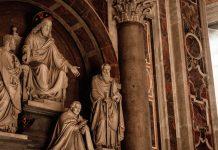
Newsroom (05/02/2026 Gaudium Press ) A profound quiet will descend upon the Apostolic Palace later this month. For the first time in his pontificate, Pope Leo XIV will begin his Lenten spiritual exercises in Rome’s Renaissance-era Pauline Chapel, where Michelangelo’s The Crucifixion of St. Peter and The Conversion of Saul have wordlessly preached for centuries.
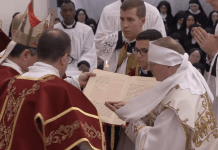
The retreat, running from February 22 to 27, offers a return to tradition both physical and spiritual: its tone, distinctly monastic, guided by Bishop Erik Varden of Trondheim, a Trappist monk whose life has been steeped in the contemplative rhythm of prayer, music, and silence.
A Trappist Voice in the Apostolic Palace
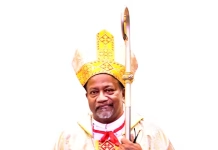
Bishop Varden, 51, brings a remarkable biography to the Lenten lectern. Born into a non-practicing Lutheran family in southern Norway—the son of a village veterinarian—he discovered Catholicism while studying at Cambridge. Music, he has said, was his bridge to the faith.
After a decade at the university, Varden entered the Trappist Abbey of Mount Saint Bernard in England in 2002, professed vows in 2007, and was ordained in 2011. In 2015, he became the abbey’s 11th abbot, the first from outside Britain or Ireland. Since 2020, he has shepherded the Diocese of Trondheim, where Catholic communities are small and scattered but vibrantly alive.
Varden’s episcopal motto, Coram Fratribus Intellexi—“Face to face with my brethren, I have come to understand”—now takes on new significance as he steps quietly into the role of spiritual guide to the world’s most senior church figures.
“It is a responsible task,” he told EWTN News. “I hope, in one way or another, to be of service.”
A Week of Hidden Glory
The retreat theme, “Illuminated by a Hidden Glory: A Lenten Itinerary,” evokes both monastic reserve and theological depth. It will center on the writings of St. Bernard of Clairvaux, a thinker whom Varden describes as “both idealist and realist.” Daily meditations will reflect on the splendor of truth, the angels of God, and the communication of hope.
The first meditation is scheduled for 5 p.m. on Sunday, Feb. 22, after Pope Leo celebrates Mass that morning at Rome’s Parish of the Most Sacred Heart of Jesus. Days will begin with the Liturgy of the Hours at 9 a.m., followed by afternoon meditations and adoration on the retreat’s final day, Feb. 27.
Varden’s recent books—Chastity (2024), Healing Wounds: The 2025 Lent Book (2024), and The Shattering of Loneliness (2018)—have cemented his reputation as a modern spiritual writer fluent in both monastic discipline and contemporary longing.
A Return to the Chapel and Its History
In a symbolic move, Pope Leo has chosen the Pauline Chapel over the Redemptoris Mater Chapel, where recent retreats took place before controversies surrounding its mosaics. Restoring the gathering to this Michelangelo-decorated setting underscores the pope’s desire for continuity with the Church’s contemplative heritage.
During the retreat week, papal events, including the Wednesday general audience on Feb. 25, will be suspended—a tradition dating back to Pope Pius XI’s institution of the papal retreat in 1925. Pope Paul VI later fixed it in the post–Ash Wednesday week to mark the Church’s entry into Lent.
From Ariccia to Rome: A Shift in Tone
This return to the Vatican also marks a change from recent years. Under Pope Francis, the Lenten exercises had moved to a retreat house in Ariccia, south of Rome, until the pandemic and his own declining health led to a more private observance.
Last year’s meditations, given by Capuchin Father Roberto Pasolini, were followed remotely by Francis from the hospital—his final Lent before the transition to a new papacy.
By contrast, Pope Leo’s decision to restore the communal dimension of the retreat within the Apostolic Palace hints at a renewed emphasis on spiritual unity at the heart of Church governance.
A Northern Light for Rome
For Bishop Erik Varden—a contemplative from Norway, preaching before the frescoes of Michelangelo—the moment holds quiet symbolism. It is a convergence of monastic humility and papal tradition, an encounter between the silent search for God and the public ministry of the Church.
“I simply hope,” he said, “that in some little way I may render myself useful.”
- Raju Hasmukh with files from CNA and OSV News
Related Images: