





Aboard flight from Beirut, Pope Leo XIV opens up on conclave shock, Ukraine mediation, Hezbollah message, Venezuela crisis, and Middle East peace hopes
Newsroom (03/12/2025 Gaudium Press ) On the papal flight from Beirut to Rome, Pope Leo XIV offered journalists an unusually candid window into his first months as the first American pontiff, describing the moment in the conclave when he realized the cardinals had chosen him and how, rather than resisting, he simply “resigned” himself to God’s will.
“I took a deep breath,” the Pope recalled in English, “I said here we go Lord, you’re in charge, you lead the way.”
Only a year earlier, the former Archbishop of Chicago had been contemplating retirement. “Just a year or two ago I too thought about retiring someday,” he said with a smile, playfully noting that some journalists present would soon enjoy that privilege while he would not.
The Pope linked his reaction to a lifelong spirituality shaped by Brother Lawrence’s 17th-century classic The Practice of the Presence of God. “One simply gives his life to the Lord and allows the Lord to lead,” he explained, a disposition forged during difficult years combating terrorism in Peru and unexpected appointments across continents.
The 75-minute airborne press conference ranged widely across the crises that dominated his just-concluded journey to Türkiye and Lebanon.
On the Middle East, Leo XIV insisted sustainable peace remains possible and confirmed he has already begun private conversations with regional leaders, including those mentioned in questions about President Donald Trump and Prime Minister Benjamin Netanyahu. The Holy See, he stressed, prefers discreet diplomacy “behind the scenes” to public proclamations, working to convince all parties “to lay down their arms” and choose dialogue.
Asked directly about a message sent to him by Hezbollah before the trip, the Pope confirmed he had received and read it. His only public comment: the Church continues to urge the militia to disarm and enter negotiations.
Regarding Ukraine, the Pope lamented a multi-dimensional war now involving cyberattacks and energy warfare as winter approaches. While noting the Holy See is not formally part of NATO or current talks, he strongly defended Europe’s indispensable role in any lasting settlement and suggested Italy’s historical and cultural position could make it an especially valuable mediator. The Vatican, he added, stands ready to encourage such efforts.
On Venezuela, where tensions have escalated after an ultimatum from President Trump to Nicolás Maduro, Leo XIV said the Venezuelan bishops and the apostolic nuncio are seeking ways to calm the situation and protect ordinary people who suffer most in such crises. He urged dialogue even amid economic pressure and warned against any military invasion.
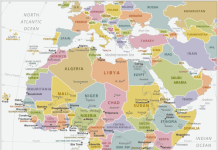
Looking ahead, the Pope said his next major journey will likely be to Africa, with Algeria high on the list both for the legacy of St. Augustine — revered there as a native son — and for continuing Christian-Muslim bridge-building. Visits to Latin America, including long-awaited trips to Argentina, Uruguay, and possibly Peru, remain under active consideration but without fixed dates.
Addressing European Catholics who see Islam as a threat, the Pope pointed to Lebanon itself as proof that Christians and Muslims can live as friends and neighbors. The testimonies he heard during the trip — of Muslims and Christians rebuilding destroyed villages side by side — offer, he said, a powerful lesson against fear and for authentic dialogue.
On Germany’s controversial Synodal Way, Leo XIV acknowledged cultural differences in living synodality but stressed the need for continued conversation so no Catholic voice is silenced. Ongoing meetings between German bishops and curial cardinals, he said, aim to keep the process in communion with the universal Church.
Before taking questions, the Pope warmly thanked the 81 journalists aboard — and their colleagues in Türkiye and Lebanon — asking for a round of applause for their work in transmitting the messages of peace and hope from the journey.
As the plane began its descent into Rome, Leo XIV accepted a parting gift from a Lebanese correspondent: a painting created live on television depicting the Pope alongside the sacred sites he had visited in the Land of the Cedars — a colorful reminder, perhaps, that for this pontiff the path forward remains, as always, in God’s hands.
- Raju Hasmukh with files form Vatican News
Related Images: