












Pope Leo XIV deems Trump’s threat to destroy Iranian “civilization” unacceptable, calls for peace talks and rejection of war amid Hormuz crisis.
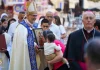
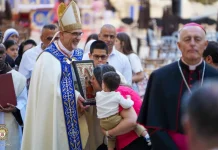
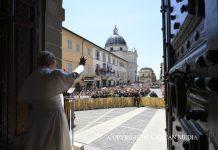
Newsroom (07/04/2026 Gaudium Press ) In a moment charged with moral gravity and geopolitical tension, Pope Leo XIV issued a renewed and impassioned plea for peace on Tuesday evening, condemning threats against the entire Iranian people as “truly unacceptable.” Speaking briefly to journalists outside Villa Barberini, his papal residence in Castel Gandolfo, the pontiff called on “all people of goodwill” to reject war, recommit to dialogue, and uphold the principles of international law.
The Pope’s remarks came against the backdrop of the ongoing U.S.-Israeli war against Iran, a conflict that has shaken global stability and inflamed regional tensions. His words followed a chilling Truth Social post by President Donald Trump earlier Tuesday—posted approximately 12 hours before a White House-imposed deadline—threatening irreversible destruction if Tehran fails to reopen the Strait of Hormuz. Trump wrote: “A whole civilization will die tonight never to brought back I don want that happen, it probably will. 47 years of extortion, corruption, and death, will finally end. God Bless the Great People of Iran!”
In a clear echo of his Urbi et Orbi message on Sunday, Pope Leo restated his conviction that “people of goodwill must always search for peace and not violence.” He warned that a war “which many have said is unjust” continues to escalate and offers “no resolution, only suffering.”
“This Is Truly Unacceptable”
Switching briefly to Italian, Pope Leo addressed the severity of the threat head-on, implicitly referencing rhetoric like Trump’s.
“Today, as we all know, there has also been this threat against the entire people of Iran,” he said. “And this is truly unacceptable! There are certainly issues of international law here, but even more, it is a moral question concerning the good of the people as a whole, in its entirety.”
His words underscored the moral dimension of diplomacy—the idea that statecraft should serve human dignity rather than destroy it. He reminded leaders that attacks on civilian infrastructure not only violate international law but also deepen humanity’s divisions, amplifying “the hatred, division, and destruction that the human being is capable of.”
A Wider Crisis
The Pope widened his remarks to encompass the global consequences of the conflict.
“We have a worldwide economic crisis, an energy crisis, and a situation in the Middle East of great instability, which is only provoking more hatred throughout the world,” he warned. His statement painted a picture of a planet destabilized not only by war but by the ripple effects of fear and retaliation—exacerbated by Trump’s escalatory online warnings.
He urged political leaders and citizens alike to “come back to the table,” stressing that diplomacy, not aggression, is the path forward. “Let’s talk. Let’s look for solutions in a peaceful way,” he said with characteristic humility.
Remembering the Innocent
In a poignant turn, Pope Leo remembered those most vulnerable amidst the ongoing warfare—the children, the elderly, the sick. “So many people have already become, or will become, victims of this continued warfare,” he lamented, urging the global community to recognize their suffering as a moral imperative to act.
Again, he reinforced the fundamental principle that peace is not an abstract ideal but an urgent, shared responsibility. “We all want to work for peace. People want peace,” he said, his voice carrying both empathy and resolve.
A Call to Action
Pope Leo’s appeal ended with a direct invitation to citizens everywhere to speak up—to engage democratic structures and press their leaders toward peace, even in the face of provocative rhetoric from figures like Trump.
“I would invite the citizens of all the countries involved to contact the authorities—political leaders, congressmen—to ask them, to tell them, to work for peace and to reject war and violence,” he concluded. “Thank you very much.”
It was a closing line that resonated with moral clarity: a reminder that beyond diplomacy and military calculations—or viral social media ultimatums—peace begins with personal conviction and the courage to act upon it.
- Raju Hasmukh with files from Vatican News
Related Images: