












After two decades of service, Phnom Penh’s Carmelite monastery closes due to lack of vocations, marking the end of an era for Cambodia’s reborn Church.
Newsroom (26/03/2026 Gaudium Press ) In a poignant ceremony on March 19, the Catholic community of Phnom Penh gathered to bid farewell to the Discalced Carmelite nuns, whose quiet presence had accompanied the rebirth of the Church in Cambodia for more than two decades. After 21 years of contemplative service, the monastic community that had rooted itself in prayer, simplicity, and hope will now close its doors, citing a lack of new vocations.
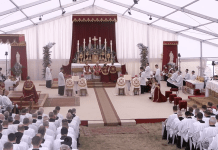
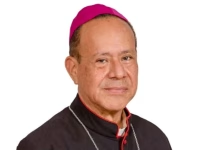
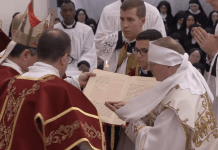
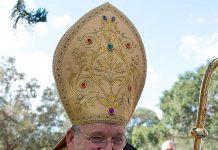
Bishop Olivier Schmitthaeusler, apostolic vicar of Phnom Penh, presided over the farewell Eucharistic celebration, joined by Coadjutor Bishop Pierre Hangly Suon and numerous priests. Around a hundred faithful were present, their gratitude evident in the solemn silence that filled the chapel. “The fruits of your presence will continue in our community,” Bishop Schmitthaeusler told the nuns, his words both a benediction and a farewell.
A Rebirth Rooted in Faith
The Carmelite monastery of Phnom Penh was founded in 2004 by Korean nuns from Seoul. Their arrival marked a renewal of a contemplative presence originally begun in 1940 by French Carmelites. That initial community was tragically destroyed during the Khmer Rouge regime, which left the Catholic Church in Cambodia almost completely eradicated.
When the Korean sisters arrived, Cambodia was only beginning to emerge from the shadows of that trauma. Their mission in Phnom Penh was the Seoul congregation’s first contemplative venture outside Korea. Over two decades, the sisters’ prayers and quiet witness became a heartbeat for a Church slowly finding its feet again—a Church that today counts around 23,000 faithful across three dioceses.
Silence as a Form of Service
Initially living in a small house in the capital, the Carmelite nuns moved in 2010 to a monastery they built in Ang Snuol, Kandal province, just outside Phnom Penh. At its peak, the community included seven sisters—most of them Korean—who learned Khmer and English to immerse themselves more deeply in the life of the local Church.
The monastery, nestled amid fields and quiet roads, became known as a place where time seemed to slow. Visitors often spoke of the serenity they felt upon entering. The rhythm of the sisters’ daily prayer—rooted in the Carmelite tradition of contemplation—stood in stark contrast to the noise of the world outside.
Though they lived a cloistered life, their spiritual reach extended far beyond the monastery walls. Their prayers encompassed the Church, society, and a world marked by conflict and suffering. In a country where faith communities had once been shattered, their presence became a symbol of endurance and grace.
Gratitude and Continuity
At the farewell Mass, Bishop Schmitthaeusler did not hide his sorrow. The decision to close the monastery, he said, marked the end of a precious chapter for Cambodia’s Catholic community. Yet he called on the faithful to continue the spirit of the Carmelites—through prayer, unity, and faith in what cannot yet be seen.
The closure highlights a global challenge faced by many religious orders: the decline in vocations and the difficulty of sustaining contemplative communities. For Cambodia, however, the legacy of the Carmelites remains tangible. Their prayers, hospitality, and quiet example helped nurture the fragile rebirth of Catholic life after decades of silence and loss.
As the last sisters prepare to depart, what remains is a seed—a contemplative witness that once again took root in Cambodian soil and allowed hope to flower where destruction had reigned.
- Raju Hasmukh with files from Asianews.it
Related Images: