












Marking ten years since Mother Angelica’s death, we recall how a Poor Clare nun built EWTN and changed Catholic broadcasting forever.
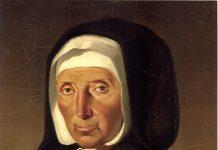
Newsroom (31/03/2026 Gaudium Press ) Ten years have passed since the death of Mother Mary Angelica of the Annunciation, the Poor Clare nun from Alabama who founded the Eternal Word Television Network (EWTN). Her life story remains one of extraordinary faith and audacity—a reminder that conviction rooted in divine trust can defy the odds and transform Catholic evangelization forever.
Born in 1923 to a struggling family of Italian immigrants in Canton, Ohio, Mother Angelica grew up amid instability. Her early life was marked by her father’s abandonment and her mother’s fight for survival in the Great Depression. These wounds would become the soil in which her lifelong dependence on God took root.
When she entered the Poor Clares of Perpetual Adoration in 1945, few could have imagined the evangelizing fire that burned behind the monastery walls. Yet this cloistered nun would become one of the most powerful Catholic voices in the modern era, as recognizable to television audiences as Archbishop Fulton J. Sheen had been a generation earlier.
From Hidden Life to Global Mission
Mother Angelica’s calling to religious life began traditionally enough: a life of prayer, silence, and sacrifice. But by the 1960s, she felt a divine tug to bring Christ beyond the cloister. In 1962, she founded the Monastery of Our Lady of the Angels in Irondale, Alabama—a move that set the stage for her future media mission.
She began recording short talks at a local CBS affiliate, her blend of humor and doctrine captivating viewers. Unlike the polished oratory of Bishop Fulton Sheen’s Emmy-winning Life Is Worth Living in the 1950s, Mother Angelica’s on-air charisma was earthy, spontaneous, and tinged with Southern plain-spokenness. She didn’t perform for the camera; she conversed with it, as though addressing a kitchen-table confidant hungry for truth. But when the station aired a blasphemous program, Angelica refused to stay silent. Her protest ended the collaboration, prompting a skeptical director to warn her she’d never work in television again. “I’ll build my own station,” she shot back—and, astonishingly, she did.
The Birth of EWTN
In 1981, operating with little more than borrowed equipment and divine confidence, Mother Angelica launched EWTN from the monastery garage. What began as a shoestring operation blossomed into a multimedia network spanning television, radio, print, and digital platforms in multiple languages. Her mission was simple yet radical: to make the Good News accessible to every home, with content faithful to Church teaching.
The comparison to Bishop Sheen grew inevitable. Both relied on media to bridge the sacred and secular worlds, but their styles reflected different epochs. Sheen, ever the scholar, appealed to the intellect through philosophy and persuasion. Angelica, armed with wit and an Alabama accent, reached hearts as much as minds—her authenticity cutting through the static of modern skepticism.
Trials Within and Without
Angelica’s work, however, came at great personal and institutional cost. Balancing the contemplative life of a Poor Clare with the relentless demands of media entrepreneurship tested her health and her obedience. Within the Church, her unapologetic orthodoxy won her both loyal admirers and sharp critics. When the Vatican initially forbade her from traveling for her apostolic work, she endured the struggle with her characteristic stubbornness and serenity until permission was granted.
Her most public clash came with Cardinal Roger Mahony of Los Angeles in the 1990s, whom she accused of weakening Church teaching on the Eucharist. Her public rebuke sparked controversy but underscored her conviction that fidelity outweighed diplomacy. Similarly, her defense of the traditional ad orientem Mass faced resistance from her local bishop, yet she remained steadfast, confident that reverence in worship was not subject to trends.
The Cross Behind the Camera
Behind her on-screen confidence lay decades of suffering. Father Joseph Mary Wolfe, a Franciscan Missionary of the Eternal Word and longtime collaborator, recalled the many trials she bore—poverty, chronic illness, misunderstanding, and the daily anxiety of sustaining a media apostolate dependent on providence. Yet those who worked with her noted that she embraced each hardship as a share in Christ’s cross.
Her broadcasting career effectively ended after a severe stroke in 2001, leaving her largely silent for her remaining years. Still, her witness did not fade. Her final Good Friday, in 2016, encapsulated the spirituality that defined her life. As Father Wolfe recounted, he entered her cell and lifted a crucifix to her lips, allowing her to kiss the wound in Christ’s side—a gesture she had practiced in prayer for years. On Easter Sunday, she passed away at age 92, completing a life that had lived Good Friday and Easter in equal measure.
A Legacy That Endures
Today, EWTN continues to reach millions across continents, a living testament to the faith and tenacity of a nun who refused to yield to cynicism or limitation. Like Bishop Fulton Sheen before her, Mother Angelica demonstrated that spiritual truth could thrive in a medium often dismissed as profane. Yet, where Sheen modeled elegance and intellect, Angelica offered heart and humility—two giants of the screen, united by the conviction that God’s grace can sanctify even the airwaves.
Ten years on, her words still echo through EWTN’s programming: faith without compromise, humor without fear, and love without limit. For Mother Angelica, the camera was simply another pulpit, the world her parish.
- Raju Hasmukh with files from Infocatholica
Related Images: