










Polish churches open all night on Good Friday for confessions, a 15-year tradition reaching those on the edge of faith and doubt.
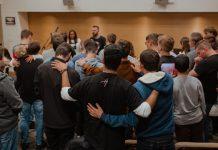
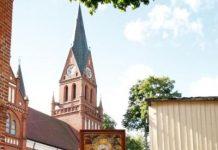
Newsroom (31/03/2026 Gaudium Press ) As the darkness of Good Friday settles across Poland, hundreds of church doors remain open. Candles flicker against the stone walls while the sound of whispered prayers breaks the quiet. It is the Night of the Confessionals — Noc Konfesjonałów — a homegrown initiative now in its fifteenth year that invites the faithful, the distant, and the doubtful to seek reconciliation long after midnight.
This Holy Week event, born in 2010 and since spread to nearly every Polish diocese, turns the night into a vigil of grace. Several hundred parishes will keep confessionals open until dawn, joining a tradition that has touched thousands each year. Parish registration is open until the last moment, ensuring even latecomers find their way inside before the morning light.
A Ministry for the Sleepless
According to Father Grzegorz Adamski, the national coordinator speaking to Poland’s KAI news agency, the initiative was never meant only for regular churchgoers. It reaches out to “those living on the border between faith and unbelief,” including three key groups — those who feel a lingering spiritual hunger in a secular world, emigrants returning home for Easter without a chance to confess beforehand, and workers worn by long hours for whom standard confession schedules are simply out of reach.
“The light of the church at night must be like a beacon,” Father Adamski says, “one that attracts those in whose hearts something still burns.”
Confession in the Quiet Hours
The night setting lends a different quality to the sacrament. “If someone gives up sleep to go to confession, it shows determination and a genuine desire for conversion,” the priest notes. Confession by moonlight, it seems, strips away distractions, making the encounter more deliberate and sincere.
Yet Adamski does not hide his concern about waning spiritual interest, particularly among the young. “The problem isn’t only that they’re leaving the Church,” he explains. “It’s that many aren’t seeking any spirituality at all. They are, in a sense, spiritually deaf.” He sees this indifference as part of a wider crisis — a loss of meaning that leaves young people searching for fulfillment in a world that rarely speaks of soul or transcendence.
From Darkness to Light
In an age when Easter images often revolve around shopping, gifts, and pastel rabbits, The Night of the Confessionals reclaims a deeper narrative. “We see bunnies, gifts, and shopping,” laments Father Adamski, “but we don’t see the most important message: Christ and the love that is sacrifice.”
The priest frames the event as a spiritual counterpoint to consumer culture — an act of resistance that leads from “darkness to light, from sin to grace.” It is a night, he says, that recalls the core of Holy Week itself, when faith and forgiveness meet in quiet, personal encounters behind the confessional screen.
Fifteen Years of Watchful Prayer
The inspiration for the first Night of the Confessionals came on April 2, 2010, in Szczecin — coinciding with the fifth anniversary of the death of Pope John Paul II. That night, three churches kept their confessional lights burning until six in the morning. What began as a local experiment soon grew into a national phenomenon.
Over fifteen years, the event has been held in more than 2,100 churches. Even the pandemic years of 2020 and 2021, which brought near-silence to Poland’s sacristies, could not extinguish it entirely. Last year, 149 parishes opened their doors for the night watch. This year, it returns with full support from the Polish Bishops’ Conference and its president, Archbishop Tadeusz Wojda.
Hundreds of priests take part, exchanging rest for the murmured confessions of strangers. “It’s a night watch of love,” Father Adamski says simply, expressing gratitude to those who keep vigil in the name of mercy.
As dawn approaches and the last penitents rise from prayer, the silence gives way to birdsong outside. The light returns — and with it, perhaps, a renewed sense that faith still flickers in the night.
- Raju Hasmukh with files from Infocatholica
Related Images: