










Religious icons and handwritten psalms inside El Mencho’s last refuge reveal a complex faith behind the feared Jalisco cartel leader.
Newsroom (27/02/2026 Gaudium Press) In the quiet hills of southern Jalisco, the final stronghold of Nemesio Oseguera Cervantes — better known as El Mencho — offered a startling window into the private world of Mexico’s most elusive cartel lord. When Mexican soldiers raided the property Sunday, killing the Jalisco New Generation Cartel (CJNG) leader after a firefight outside Tapalpa, they uncovered a scene that blended devotion and dread in equal measure.
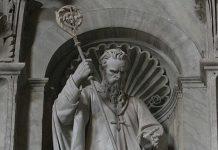
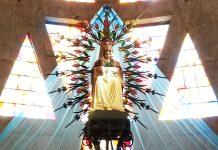
Inside the luxurious home, authorities found more than weapons and tactical gear. Resting beneath a polished wooden crucifix stood a makeshift altar adorned with votive candles, religious figurines, and hand-carved icons of Our Lady of Guadalupe, Saint Jude Thaddeus, and Saint Charbel Makhlouf. In the backyard, boulders bore hand-carved images of the Virgin and Saint Jude, while on a desk lay a handwritten copy of Psalm 91—a prayer Catholics often invoke for divine protection from harm.
Letters recovered from the scene, some written in intimate tones to Oseguera Cervantes, referenced Saint Jude, the patron of lost causes whose following among those on society’s margins includes many within Mexico’s criminal underworld.
A sacred shadow over violence
For nearly two decades, Oseguera Cervantes reigned as one of Mexico’s most powerful and secretive drug bosses. His cartel, renowned for its ferocity and rapid territorial expansion, projected an image of unrelenting brutality. Yet the religious artifacts discovered in his final refuge suggest a parallel narrative—a man turning to symbols of faith not for salvation, but for safety.
“This is not traditional Christian devotion,” observed Fabián Acosta Rico, researcher at the University of Guadalajara and the Center of Religious Studies in Mexico. “It’s a popular, everyday religiosity—a man asking God not for forgiveness, but for protection against hunger, cold, or danger.”
Such interplay between faith and ferocity is hardly new in the world of organized crime. From Japan’s samurai code infused with Buddhist philosophy to Italy’s Cosa Nostra kneeling before the Virgin, religion has long coexisted with systems of violence. In Mexico, a nation steeped in Catholic tradition, that contradiction feels especially vivid.
Faith in the narco world
Over the years, many Mexican cartel figures have cloaked themselves in the imagery of sainthood. Édgar Valdez Villarreal, “La Barbie,” was said to hold deep devotion for the Virgin of Guadalupe. Ovidio Guzmán López, son of Joaquín “El Chapo” Guzmán, was spotted wearing a scapular of the Holy Infant of Atocha when first captured in 2019. And in some narco circles, unorthodox devotions like the cult of Santa Muerte—the skeletal figure embodying “Holy Death”—have gained new traction, though the Catholic Church has strongly disavowed them.
Mexico’s Catholic Bishops Conference has repeatedly condemned such syncretic practices, warning that aligning sacred symbols with criminal acts “distorts faith beyond recognition.” Yet, as Acosta Rico points out, the Church’s influence over the public’s use of religious imagery has waned in modern times.
“Anyone can use religious symbols as they wish,” he said. “The Church no longer holds the authority to regulate how people express their spirituality.”
The contradictions of power and piety
In the shattered calm of Oseguera Cervantes’s compound, the contrast is almost cinematic—Bible verses beside assault rifles, serenity beside bloodshed. The discovery offers no clear answers, but it deepens the enigma of a man whose power spanned continents and whose fears, it seems, were answered not just with soldiers, but with saints.
As investigators comb through the relics left behind, the image that emerges is not purely that of a criminal mastermind, but of a believer—albeit one whose faith was as pragmatic and perilous as the world he ruled.
- Raju Hasmukh with files from Crux Now
Related Images: