






















European Parliament approves nonbinding resolution for voluntary EU fund to aid women seeking abortions abroad, highlighting deep divisions over national sovereignty and ethics.
Newsroom (19/12/2025 Gaudium Press ) In a vote that underscored persistent cultural and political fractures across the European Union, the European Parliament on December 17 approved a nonbinding resolution supporting the establishment of a voluntary fund to help women travel abroad for abortions when such procedures are restricted or unavailable in their home countries.
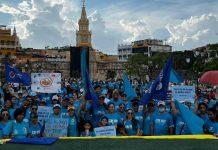
The resolution passed with 358 votes in favor, 202 against, and 79 abstentions. It stems from a European Citizens’ Initiative (ECI) titled My Voice, My Choice, which gathered signatures calling for an opt-in financial mechanism to assist women seeking abortions in member states with more permissive laws.
Although the resolution carries no immediate legal force, supporters hailed it as a symbolically important step toward expanding reproductive access. The initiative now awaits a formal response from the European Commission, due by March 2026, outlining whether the executive body will propose any legislative or policy follow-up.
Under ECI rules, the Commission is obliged to consider successful initiatives but is not required to act on them. Historical precedent suggests caution: several prior citizen initiatives that cleared procedural hurdles ultimately stalled or were rejected by the Commission.
Voting patterns revealed sharp national and ideological divides. Hungarian members of the European Parliament overwhelmingly opposed the resolution, while Polish representatives were nearly evenly split — 23 in favor, 24 against, and one abstention. Delegations from Austria, Germany, Spain, Italy, France, and Lithuania also displayed closely contested votes, reflecting broader European disagreement on abortion policy.
Critics, including family advocacy groups, religious organizations, and conservative lawmakers, maintained that health policy, particularly abortion, remains a core national competence under EU treaties. They argued that any centralized funding mechanism would risk bypassing domestic democratic processes and national legislation.
Days before the vote, the Commission of the Bishops’ Conferences of the European Union (COMECE) issued a statement urging parliamentarians to adopt “prudent policies that genuinely protect and support women, while also safeguarding unborn human life.” The bishops described abortion as “a medical intervention of such gravity and with such important ethical implications” that it “cannot and must not be normalized.”
Separate scrutiny has focused on the campaign itself. My Voice, My Choice faced criticism for its advocacy tactics after a November 13 parliamentary vote incorporated elements of the initiative into the Gender Equality Strategy 2025. The group subsequently published social media posts listing lawmakers who voted against inclusion, grouped by country and including their social media handles, while encouraging the public to tag and persuade them.
Some observers characterized the approach as coercive, while others suggested it helpfully identified politicians opposed to expanding abortion access.
Further questions about the initiative’s grassroots character emerged from a funding analysis presented at a November 26 conference in Brussels organized by the European Centre for Law and Justice. Attended by pro-life members of the European Parliament, civil society leaders, and representatives of the Federation of Catholic Family Associations in Europe, the event featured personal testimonies from women and examined what speakers described as top-down strategies behind the campaign.
The accompanying report examined financial ties among more than 250 organizations listed as supporters of My Voice, My Choice. It documented that a significant number receive funding from EU institutions as well as major U.S.-based philanthropic foundations, including the Open Society Foundation, Gates Foundation, Ford Foundation, MacArthur Foundation, and David and Lucile Packard Foundation.
The report highlighted the campaign’s principal organizer, Slovenian anthropologist Nika Kovač, who directs the 8th of March Institute, noting her organization’s funding from the Open Society Foundation and support from the International Planned Parenthood Federation (IPPF). IPPF’s European branch, according to the analysis, has received millions of euros over two decades from both the European Union and several of the aforementioned U.S. foundations.
The report emphasized that it alleged no illegality, instead raising questions about whether the ECI in this instance represented genuine organic citizen mobilization or primarily served as a platform for well-resourced advocacy networks to advance established policy objectives under the guise of popular participation.
As the Commission prepares its response in the coming months, the debate over abortion funding at the EU level appears poised to remain a contentious intersection of national sovereignty, ethical conviction, and reproductive rights advocacy.
- Raju Hasmukh with files from CNA News
Related Images: