


















Australian church leaders denounce rising euthanasia deaths under VAD laws, warning of moral decline and lack of palliative care.
Newsroom (02/02/2026 Gaudium Press ) Across Australia, alarm is growing among church leaders as new figures reveal a dramatic rise in deaths caused by voluntary assisted dying (VAD), fueling renewed debate about societal values, medical ethics, and care for the vulnerable.
Since euthanasia was legalized across various states beginning in 2019, more than 7,200 deaths have been recorded under VAD laws. The latest fiscal year alone saw an alarming 3,329 deaths, a sharp increase that critics say reflects a growing normalization of assisted death rather than an expansion of meaningful alternatives for those facing terminal illness.
Queensland’s Rapid Rise
The state of Queensland has emerged as the country’s most striking example. Though VAD only became legal there in January 2023, it has already recorded 2,110 deaths—more than any other jurisdiction. Church figures have called this rate “a shocking discovery,” questioning what the trend reveals about the broader direction of Australian society.
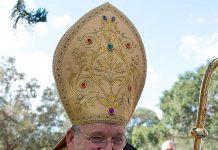
Bishop Tim Harris of Townsville did not mince words: “This is not something to be proud of, but rather an indictment of the system that has been set up to facilitate a horror like state-sanctioned suicide.” For Harris, the speed and magnitude of the increase underscore a systemic failure—the lack of commitment to palliative care and support for the dying.
He criticized governments for neglecting those responsibilities: “This is the path governments have provided for the terminally ill without any serious or adequate funding for palliative care.” In his view, assisted dying is being presented as a substitute for care rather than an act of compassion. “Assisted suicide would not be necessary,” Harris continued, “if governments took their responsibilities seriously and provided a life-support system of care instead of conspiring to take it away.”
A Broader Moral Concern
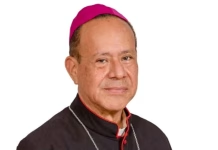
In Sydney, Auxiliary Bishop Danny Meagher, who serves as the episcopal delegate to the Australian Catholic Bishops Conference’s working group on euthanasia, described the trend as “extremely worrying.” He believes the numbers reflect a deeper social fracture—one that leaves the elderly and infirm feeling abandoned.
“It indicates that the elderly and sick in our community lack any sense of belonging, leading them to choose death,” Meagher said. “It indicates a lack of care and support for our vulnerable.” He questioned whether society’s instinct is now to end suffering by ending the sufferer, rather than to meet their needs through compassionate care. “They need more palliative care, especially in our regions,” he warned. “It’s terrible to think that, due to a lack of adequate medical care, people are choosing to end their lives.”
Comparing the States
In the 2024–25 reporting period, Queensland registered 1,072 VAD deaths, followed closely by New South Wales with 1,028 in its first full year of operation, and Victoria with 389. The differences between state results, experts suggest, are linked to variations in legislative design and implementation.
Xavier Symons, director of the Plunkett Centre for Bioethics at the Australian Catholic University, pointed out that Victoria’s lower death rate is partly due to stricter regulations. “A key difference with New South Wales is that in Victoria, self-administration is currently the default option, whereas in New South Wales, you can choose between self-administration or administration by a doctor,” Symons explained. This difference, he suggested, may have psychological consequences—many patients feel more at peace when a physician administers the dose rather than having to perform the act themselves.
A “Myth” of Rare Cases
Symons also challenged the original political narrative that legalized euthanasia across Australian states. “Australians were sold the myth that euthanasia would be very rare,” he said. “The reality is that it is becoming normalized.” For him, this normalization is shifting not just statistics, but cultural attitudes toward mortality, potentially leading more people with terminal conditions to view euthanasia as a routine option rather than an extreme last resort.
His concern extends to proposed expansions of assisted dying, including cases involving dementia patients. “I am worried that there is a push for euthanasia of people with dementia,” he warned. “This would be disastrous and would mark a low point in how our society treats its most vulnerable members.”
Global Reflections
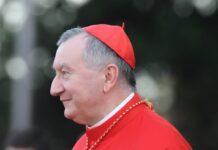
The Australian debate unfolds amid similar tensions in other nations weighing the consequences of euthanasia laws. In Italy, Cardinal Matteo Zuppi, president of the Italian Episcopal Conference, has reiterated the Church’s unequivocal opposition. “Human dignity is not measured by efficiency or utility,” he said, cautioning that laws permitting assisted suicide “risk weakening the public commitment to the most fragile and vulnerable, who are often invisible.”
As Australian states continue to manage and expand their VAD systems, religious and ethical leaders are pressing for renewed focus on palliative care, social belonging, and human dignity. For them, the numbers are not merely statistics—they are a stark reflection of how society understands compassion, responsibility, and the meaning of life itself.
- Raju Hasmukh with files from INfocatholica
Related Images: