










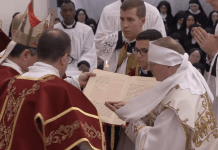
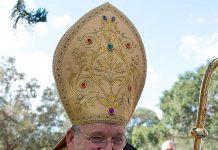
Cardinals Müller and Sarah warn the SSPX’s planned July 1 bishop ordinations without papal consent risk new division within the Catholic Church.
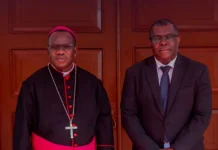
Newsroom (23/02/2026 Gaudium Press ) Cardinal Gerhard Müller and Cardinal Robert Sarah, two of the Catholic Church’s most prominent defenders of the Traditional Latin Mass, have voiced grave concern over the Society of St. Pius X’s (SSPX) decision to ordain new bishops without papal approval. The traditionalist group’s plan, scheduled for July 1, has drawn sharp warnings from both cardinals, who described the move as a potential act of rupture with the Church founded on communion with the pope.
The SSPX confirmed its decision in a February 18 letter from Superior General Father Davide Pagliarani, issued just days after his meeting with Cardinal Víctor Manuel Fernández, prefect of the Dicastery for the Doctrine of the Faith (DDF). In the letter, Pagliarani said the society could not “accept the perspective and objectives” outlined by the Vatican for renewed dialogue, while insisting the ordinations would “not constitute a rupture of communion” with Rome.
Founded by Archbishop Marcel Lefebvre, the SSPX maintains long-standing doctrinal opposition to certain teachings of the Second Vatican Council, particularly on religious liberty, ecumenism, and relations with non-Catholic faiths. Its priests exclusively celebrate the Traditional Latin Mass, often attracting Catholics dissatisfied with modern liturgical reforms. Yet under canon law, any bishop who ordains another without a papal mandate, and the cleric who receives such ordination, incur automatic excommunication—a fate that befell Lefebvre himself on July 1, 1988, for consecrating four bishops contrary to papal orders.
Müller Calls for Humility and Obedience
In a February 21 statement, Cardinal Müller, former prefect of the Congregation for the Doctrine of the Faith (2012–2017), urged SSPX leaders to reconsider, saying “personal sensitivities should take a back seat” in favor of unity. “If the Society of St. Pius X is to have a positive impact on Church history,” he warned, “it cannot fight for the true faith from a distance, from the outside, against the Church united with the pope.”
Emphasizing the importance of visible communion, Müller said the SSPX must submit fully to papal authority “not only in theory but also in practice.” He cautioned that no Catholic can invoke conscience to justify separation from the pope’s authority, warning such withdrawal undermines the “visible unity of the sacramental Church.” For Müller, fidelity to the Church’s magisterium remains the only legitimate path to defending tradition within the Catholic fold.
Sarah Warns of “Irreversible” Division
Cardinal Robert Sarah, who led the Vatican’s liturgy congregation from 2014 to 2021, expressed deep distress over the SSPX’s confirmed ordination plans. In a February 22 article for Le Journal du Dimanche, the Guinean cardinal lamented what he called a potential “tearing apart of the mystical body of Christ.” “Is it to desire the salvation of souls to tear apart the mystical body of Christ in a way that may be irreversible?” he asked, adding that such a decision could jeopardize countless souls.
Sarah, a figure widely respected for his defense of reverence in liturgy, said that invoking tradition to justify disobedience distorts the meaning of fidelity. “We are told this act defends tradition and the faith,” he wrote, “but how can one defend the deposit of faith by separating oneself from the Church Christ entrusted to Peter and his successors?” The cardinal appealed to the SSPX to imitate Christ’s humility, urging the society to embrace obedience rather than retreat into self-sufficiency. “Is it not a betrayal of tradition to take refuge in human means and maintain our works, however good they may be?” he asked.
A Crucial Test for Unity
The planned July 1 consecrations, falling on the anniversary of Lefebvre’s 1988 excommunication, carry heavy historical symbolism. Then, as now, concerns over Rome’s modern reforms prompted a rift between traditionalists and the Vatican. While Pope Francis has signaled openness to reconciliation—including allowances for SSPX priests to hear confessions and witness marriages—this latest act threatens to unravel decades of cautious progress.
Both Müller and Sarah’s interventions reflect an unusual convergence of voices from across the Church’s conservative spectrum, underscoring the gravity of the SSPX’s decision. Their appeals highlight a shared conviction: that true tradition can never be separated from obedience to the successor of Peter.
In the backdrop of renewed tension, the SSPX’s actions stand as a test not only for Vatican diplomacy but also for the broader question of what unity means in an era of deepening liturgical and doctrinal divides. Whether the society reconsiders or proceeds, July 1 now looms as a defining moment for Catholic traditionalism—and for the Church’s ongoing struggle to hold faith and obedience in balance.
- Raju Hasmukh with files from CNA
Related Images: