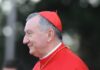


Cardinal Sarah spoke on issues ranging from abortion and euthanasia to liturgy, the crisis of faith in the West, and liturgical deviations in Africa
Newsroom (16/10/2025, Gaudium Press ) In an exclusive interview with Tribune Chrétienne conducted in Rome, Cardinal Robert Sarah, the Guinean prelate known for his unwavering defense of Catholic doctrine, addressed the pressing spiritual and moral challenges of our time. With profound conviction and spiritual intensity, he spoke on issues ranging from abortion and euthanasia to liturgy, the crisis of faith in the West, and liturgical deviations in Africa. Below is the full transcript of this powerful exchange.
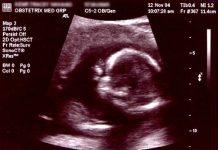
Tribune Chrétienne (TC): Your Eminence, you have often spoken out on the sanctity of life. How does the Church view abortion in light of contemporary debates?
Cardinal Robert Sarah (CRS): The Second Vatican Council defined abortion as a grave crime, an abominable act. This remains the official stance of the Church. It is not merely an opinion but a truth rooted in the dignity of human life from conception.
TC: In France, the recent constitutional enshrinement of abortion has sparked controversy. What is your perspective on this development?
CRS: Inscribing abortion into the Constitution is an affront to God, a mockery of His divine law. For a historically Christian nation to enshrine such an act as a constitutional right is a direct insult to God. It is a tragic step toward a culture of death.
TC: You’ve spoken about a broader moral crisis in the West. Are there any signs of hope you see elsewhere?
CRS: Yes, there are glimmers of hope, particularly in the United States. I commend President Donald Trump’s efforts to place faith at the heart of public life. Excluding God from society is a form of spiritual suicide. His decision to reintegrate faith into the public square is a positive step.
TC: The assassination of Charlie Kirk shocked many. How do you view this event in the context of freedom of expression?
CRS: This act was horrific. In a civilized country, to kill someone for holding a different view is unthinkable. We claim to live in democracies, yet there is growing intolerance for dissenting voices. This violence wounds us all and exposes the ideological aggression spreading in the West.
TC: Euthanasia is another contentious issue. What is the Church’s stance?
CRS: No government or authority has the right to decide who lives or dies. Human life is sacred, and euthanasia violates this fundamental truth. I condemn it unequivocally.
TC: Some have accused you of engaging in political debates. How do you respond to these criticisms?
CRS: I never speak as a politician. My voice is that of God’s truth, nothing more. Some may exploit my words for their own agendas, but my mission is spiritual, not partisan. The Church is not a political entity; it is the spouse and mother of all peoples, serving neither the rich nor the poor exclusively but all humanity.
TC: On the topic of women’s ordination, where do you stand?
CRS: This question was definitively settled by Pope John Paul II: there is no female priesthood. The Church has no authority to ordain women as priests. This is not a matter of opinion but of divine institution.
TC: How should the Church balance fidelity to tradition with calls for doctrinal evolution?
CRS: The Church must teach the Magisterium, not the opinions of theologians. Doctrine may develop, but it must retain its essential nature. Any change that contradicts the deposit of faith is not development but distortion.
TC: The issue of clergy abuse has shaken the Church. How do you address this crisis?
CRS: The abuse scandals are deeply painful, but we must keep perspective. Reports indicate that only 3% of clergy have committed such acts. While this is tragic, the issue is sometimes exaggerated to silence the Church. Critics say, “Be quiet, you’re guilty too.” We must address these sins with justice and humility, but we cannot let them define the Church’s mission.
TC: You’ve expressed concerns about liturgical crises, particularly regarding Traditionis Custodes. Can you elaborate?
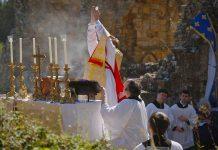
CRS: The Mass has become a battleground, and the Eucharist is being profaned. Many of the faithful who attend the traditional Mass are deeply committed to their faith. Why prohibit them? We should encourage their devotion. I am confident that Pope Leo XIV will act to preserve this treasure.
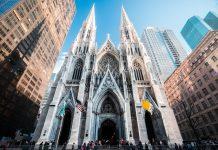
TC: You’ve also addressed moral deviations within the Church, such as the presence of symbols like the LGBT flag in sacred spaces. What is your view?
CRS: Introducing such symbols into a basilica is an insult to God, a direct aggression against His sanctity. Every person deserves respect, but all must respect the Church’s doctrine. The idea of same-sex unions contradicts the Church’s teaching on marriage and human dignity.
TC: Europe is grappling with de-Christianization. How do you assess this trend?
CRS: The ideological persecution in the West is, in some ways, more insidious than the physical persecution faced by Christians in Africa or Asia. Your Christian values are being anesthetized. A secular state does not mean one must sever its Christian roots. To deny these roots is to lose your identity.
TC: Migration is a complex issue. How should the Church approach it?
CRS: We must combine charity with truth. Migrants come to Europe seeking a paradise, but true help means enabling them to develop their own countries so they can stay. As Pope Benedict XVI said, if you give the poor only bread, you’ve given them nothing. Welcome migrants, but share with them the gift of faith and God’s truth.
TC: Environmental concerns are prominent today. How does the Church navigate ecological issues?
CRS: Creation is God’s work, but we must not turn nature into a goddess. The Synod on the Amazon introduced troubling elements, like idols in sacred spaces. This is not ecological stewardship but ideological confusion. The Church must proclaim God’s truth, not conform to secular ideologies.
TC: What are your hopes for Pope Leo XIV’s pontificate?
CRS: Let us give him time. True reform begins not with structures but with personal conversion. The change we need lies within each of us, guided by the Holy Spirit.
TC: How do you view the state of the Church in France compared to other European countries?
CRS: France’s Church, despite its challenges, is in a stronger position than those in Germany, Holland, or Belgium. You should be grateful for the vitality of faith in France compared to the broader European context.
TC: In Africa, there are concerns about liturgical deviations. What are your thoughts?
CRS: As an African Christian, I am a child of God before I am African. We must not confuse culture with worship. Cultural elements cannot override the sacredness of the liturgy. Such deviations risk undermining the Church in Africa.
TC: As we conclude, what is your prayer for the Church today?
CRS: I pray that God makes me a holy priest in service to His Church and His people. Let us pray for priests facing adversity and for bishops to stand close to them. May we all be faithful witnesses to Christ’s truth.
This exclusive interview, conducted in Rome, reflects Cardinal Robert Sarah’s profound commitment to the unchanging truths of the Catholic faith. His words resonate as both a challenge and a beacon of hope in a world grappling with spiritual and moral crises.
- Raju Hasmukh with files from Tribune Chrétienne
Related Images: