











Cardinal Ambongo at Sant’Egidio: Dare ‘disarmed’ peace in DRC’s 30-yr war; reject arms, resource plunder. Call for dialogue, justice, heart-change.
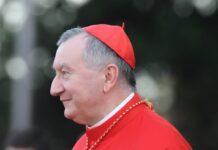
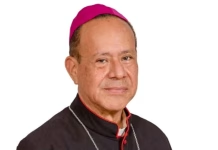
Newsroom (04/11/2025, Gaudium Press ) In a stirring address at the international peace conference “Daring Peace,” hosted by the Community of Sant’Egidio, Cardinal Fridolin Ambongo Besungu of Kinshasa called for a radical shift from armed conflict to “disarmed and disarming” peace, drawing on biblical roots and the ongoing crises in the Democratic Republic of Congo (DRC) and Africa.
The conference, held in Rome, brought together religious leaders, diplomats, and activists amid escalating global tensions. Ambongo, a prominent voice in African Catholicism, structured his remarks around three core themes: the essence of unarmed peace, its application in the DRC, and its broader implications for the continent and world.
Below is a transcript of key excerpts from Cardinal Ambongo’s speech, presented in interview-style Q&A format for clarity, with questions framed to reflect the logical flow of his address.
Q: Your Eminence, you opened by honoring the courage of those building peace amid war. What does “daring peace” truly mean in a fragmented world?
Cardinal Ambongo: Dear organizers, dear participants, ladies and gentlemen: We meet in a world exhausted by persistent wars that fuel a global moral crisis. In Africa and the DRC, peace initiatives multiply but often lack substance—reduced to diplomatic formulas or instrumental tools. The question haunting us: What is the true nature of peace? What does “disarmed” and “disarming” peace entail, and what responsibilities does it impose?
After “imagining peace” in Paris last year, today we are called to “dare peace.” To dare means overcoming fear, rejecting inevitability, and arming ourselves with the courage to act. It is the courage of women and men who continue disarming hearts amid war; of mothers shielding children under enemy fire and bombings; of resilient communities choosing life despite weapons.
I pay tribute to the Community of Sant’Egidio’s persevering mediation, which tirelessly opens paths to peace. My reflection focuses on three points: (1) the meaning of disarmed and disarming peace; (2) disarmed peace in the DRC; (3) disarming peace in Africa and the world.
Q: You referenced Pope Leo XIV’s prophetic mandate. How do you define a “disarmed and disarming” peace as an act of courage, especially when the term “peace” is so often abused?
Cardinal Ambongo: When Pope Leo XIV spoke of “disarmed and disarming” peace, he proposed a prophetic mandate for our time. Today, “peace” is abused—used as a slogan, political tool, or cover for economic interests. For us Christians, it holds admirable semantic value: Peace is a sacred name of God, YHWH Shalom (Judges 6:24). As St. Paul reminds us, “Christ is our Peace” (Ephesians 2:14).
Per Pope Leo XIV, disarmed peace does not impose by force. It is not gathering belligerents before cameras for ephemeral agreements. It builds in the silence of truth, listening, dialogue, and responsibility toward victims. It is disarmed because it rejects domination’s logic; disarming because it touches hearts and overturns hatred’s logic.
Disarmed peace emerges from a long, demanding process—from deep wounds to reconciled humanity. It requires humility, justice, and inner conversion. In short, true peace is not imposed; it is cultivated.
Q: Turning to your homeland, the DRC has endured over 30 years of conflict. What makes disarmed peace essential there, and how do current realities underscore the failure of military solutions?
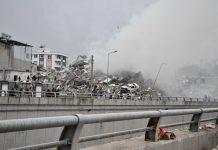
Cardinal Ambongo: I come from the DRC—a magnificent but wounded country enduring one of Africa’s longest conflicts. Over 120 armed groups remain active in Ituri, North Kivu, South Kivu, and sometimes Tanganyika provinces. In the west, the Mobondo conflict extends to the Batéké plateau. Similar wars erupt across the nation.
These have caused millions of deaths, destroyed villages, and scattered families—amid a guilty global silence that profits from systematic resource plunder.
Yet tragedies find no lasting solution through arms. As groups multiply, conflicts spread, institutions collapse. Ordinary people pay: poverty, displacement, despair.
National budgets increasingly fund armaments, less solidarity. What secures the world—vast arsenals or just, solidaristic policies for the poor? Congolese experience proves arms races ruin the common good. “Peace is not merely the absence of war but the fruit of God’s ordered design” (CCC §2304). It presupposes justice, dignity, and combat against poverty and corruption’s structural causes.
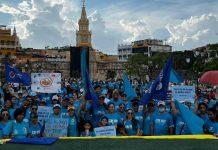
The National Episcopal Conference of Congo (CENCO) states: “It is illusory to believe peace can be imposed by force. It arises only from sincere dialogue and genuine political will for the common good.” CENCO and Protestant pastors united in the Church of Christ in Congo (ECC), via their Pact for Peace and Good Coexistence, call for inclusive national dialogue—including those who took up arms.
Congolese seek not truce but minds’ conversion; not promises but commitment to disarm hearts before armies.
Q: You outlined the Pact’s five principles and implementation steps. Can you elaborate on these as a roadmap for disarmed peace in the DRC?
Cardinal Ambongo: This Social Pact rests on five fundamental principles:
- Restore local communities’ social and spiritual values;
- Resolve conflicts through dialogue, addressing root causes without violence;
- Embrace diversity to strengthen national unity and ties with neighbors;
- Convince political leaders to end armed conflicts by promoting sustainable development and countering natural resource exploitation;
- Encourage sincere international support for justice, peace, and environmental sustainability.
For implementation, we propose thematic commissions of experts and academics in peace and social cohesion. They will work on multiple fronts and draft a National Charter for Peace and Harmony, presented to the Head of State and Government. Planning is underway for an “International Conference for Peace, Joint Development, and Coexistence in the Great Lakes Region.”
Q: Finally, how can disarming peace extend beyond the DRC to Africa and the world, addressing regional roots and inspiring global change?
Cardinal Ambongo: Disarmed and disarming peace must transcend borders. Congolese conflicts root in regional dynamics: foreign interference, resource greed, ethnic rivalries, institutional fragility. Lasting peace in Congo demands continental peace based on fraternity and shared sovereignty.
As I stressed at the Symposium of Episcopal Conferences of Africa and Madagascar (SECAM): “Africa will recover only by choosing solidarity and fraternity.” If war is contagious, peace is more so. Rooted in justice, it becomes a gentle flame disarming hate speech.
DRC peace could model hope for other continental conflicts and beyond. Pope Francis in Fratelli Tutti teaches: “Social peace is laborious, artisanal; it requires patient work, listening, and recognizing the other” (FT §217). In Kinshasa on Feb. 1, 2023, he declared: “Hands off the DRC! Stop choking Africa: it is not a mine to exploit or land to plunder.”
Disarming peace disarms minds, demilitarizes discourse, strips hearts of hate. It heals, unites, converts.
Q: In conclusion, what is your vision for this peace, and how should we commit to it?
Cardinal Ambongo: The peace we desire for the DRC and Africa is disarming because it rejects violence; disarming because it transforms hearts; prophetic because it announces a new world. Let this peace be our commitment, prayer, and struggle—and by God’s grace, our reality. Thank you.
- Raju Hasmukh with files from santegidio.org
Related Images: