




















Catholic bishops in Bangladesh welcome the BNP’s election win and urge new leadership to safeguard minority rights after years of political unrest.
Newsroom (18/02/2026 Gaudium Press) The Bangladesh Nationalist Party (BNP) has swept to power after winning the nation’s first parliamentary elections since the turbulent 2024 Gen Z uprising that toppled longtime Prime Minister Sheikh Hasina. The results on February 12 mark a turning point for the Muslim-majority South Asian nation, raising both hope and anxiety among its minority communities.
The BNP-led alliance secured 212 out of 300 parliamentary seats, while the right-wing Jamaat-e-Islami coalition captured 77. Hasina’s Awami League, which ruled for 15 years before being barred from participation, watched from the sidelines as BNP leader Tarique Rahman, 60, was sworn in as prime minister on February 17.
In his inauguration speech, Rahman vowed to restore political stability and revive investor confidence in a country still grappling with the social and economic fallout of Hasina’s ouster. For many Bangladeshis, his rise symbolizes the end of a tumultuous era — but for religious minorities, the true test will be how the new government handles issues of inclusion and security.
Faith Leaders Send a Message of Hope
Bangladesh’s Christian community, though small at less than 0.5% of the country’s 180 million people, has played an outsized role in national development through education, healthcare, and social work. Its leaders were among the first to respond to the election results.
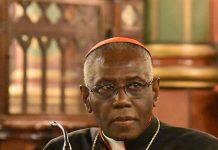
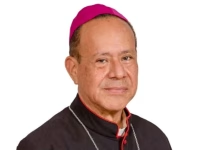
In separate statements on February 15, the Catholic Bishops’ Conference of Bangladesh, the United Forum of Churches Bangladesh, and the Bangladesh Christian Association all congratulated the BNP-led government. Archbishop Bejoy Nicephorus D’Cruze of Dhaka, president of the bishops’ conference, praised the party’s victory and expressed cautious optimism.
He urged the new leadership to focus on “putting the country first” and to make Bangladesh “a haven of comfort, security, and hope,” particularly for marginalized and minority communities. “Although small in number, we Christians have always made special contributions to the development of the nation,” he said. “We hope to strengthen your hands through participation in education, healthcare, development, and service for the poor and needy.”
Shadows of Sectarian Violence
Despite constitutional guarantees of religious equality, Bangladesh’s minorities — predominantly Hindu, Buddhist, and Christian — have long faced discrimination and sporadic violence. Between August 2024 and November 2025, the Bangladesh Hindu Buddhist Christian Unity Council documented more than 2,600 attacks on minorities, including killings, sexual assaults, and the destruction of homes and places of worship.
Tensions escalated in late 2025 when hand grenades exploded at Dhaka Cathedral and St. Joseph’s School and College. A month later, Catholic institutions in the capital reportedly received threats warning of further attacks on churches and missionary centers.
“The constitution guarantees equal rights, but reality tells a different story,” said a leader of the Hindu Buddhist Christian Unity Council, speaking to OSV News on condition of anonymity. The source described the recent uptick in aggression as “deeply concerning” and linked it to the resurgence of the Islamist Jamaat-e-Islami party.
The Return of a Polarizing Opposition
Jamaat-e-Islami, once Bangladesh’s largest Islamist political party, has reemerged as the main opposition force. The party was banned under Hasina’s rule, with many of its top leaders imprisoned or executed after being convicted by her government’s controversial war crimes tribunal for offenses committed during the 1971 independence war.
While Jamaat’s resurgence in 2026 elections underscores its enduring grassroots support, it has raised fears among minority groups and secular advocates. “The fundamentalist type of religion practiced by Jamaat-e-Islami is unsafe for the country’s minorities,” said the Unity Council leader. “They want to establish Islamic rule, which poses a serious threat to religious pluralism in Bangladesh.”
A Fragile Balance Ahead
Bangladesh now stands at a crossroads. With the BNP back in power and Jamaat-e-Islami in opposition, the political landscape is more open — but potentially volatile. The bishops’ cautious welcome reflects widespread hope that this new chapter will not repeat the cycles of violence and suppression of the past.
“The BNP should govern with fairness and prevent the rise of extremism,” urged the Unity Council representative. For many, this is not just a call for political reform — it is a plea for survival.
The reading of only the Quran at the February 17 swearing-in ceremony struck some observers as a worrisome sign, highlighting the tension between the nation’s constitutional secularism and its entrenched religious identity. Yet, as the country rebuilds confidence under new leadership, both majority and minority communities may find in this moment an opportunity for renewal, dialogue, and reconciliation.
- Raju Hasmukh with files from OSV News
Related Images: