


















Blocked aid, closed crossings, and shrinking livelihoods push Christian and Palestinian families in Gaza and the West Bank to the brink.
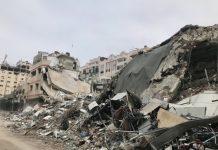
Newsroom (24/03/2026 Gaudium Press ) The humanitarian crisis engulfing Christian and Palestinian communities in Gaza and the West Bank has reached a tipping point. Church officials are sounding urgent warnings as blocked shipments, closed schools, and vanishing jobs drive families deeper into despair.
George Akroush, director of the Development Office of the Latin Patriarchate of Jerusalem, confirmed that no humanitarian shipments have reached Gaza since March 7. The impact, he said, is immediate and devastating: hospitals lack medicine, antibiotics, and essential spare parts. The Patriarchate has been unable to assist Gaza’s only Christian hospital—located near the Catholic compound—after its usual communication channels with Israeli authorities were severed.
As reported by John Newton and Felipe d’Avillez for Aid to the Church in Need (ACN), Israeli officials indefinitely closed crossings into Gaza on March 1, citing security concerns just one day after the outbreak of war with Iran. The closure has paralyzed humanitarian operations and forced the Church to abandon plans to reopen one of Gaza’s few Christian schools, which had been preparing to resume classes in phases.
Communities Living Under Siege
Roughly 250 people remain sheltered inside the Holy Family Church compound, a sanctuary that has become both refuge and prison. Fifty of them are people with disabilities cared for by the Missionaries of Charity. Although a few hundred residents were able to leave during a brief ceasefire, most remain trapped amid shortages and constant uncertainty.
Akroush described the atmosphere as one of perseverance against mounting hopelessness. “There is no medicine, no food aid, no certainty of tomorrow,” he told ACN, emphasizing that the Church’s mission now focuses on delivering small but essential acts of service—each one, he said, a “hammer stroke against the rock of despair.”
Pressure in the West Bank
Beyond Gaza, the situation in the West Bank has grown equally precarious. According to the ACN report, international aid organizations including Caritas, Oxfam, and Save the Children have been told to comply with new Israeli licensing regulations or risk losing access to Palestinian areas. Israeli officials argue the measures are necessary to curb alleged links between aid workers and militant factions.
Yet, for many Palestinian Christians, the tightening restrictions echo broader patterns of control and displacement. Akroush highlighted the severe economic consequences: before the October 7, 2023, attacks, around 180,000 Palestinians from the West Bank held work permits in Israel. Since then, most have lost that access, plunging families into financial crisis and leaving entire communities without reliable income.
Christian schools in Jerusalem also feel the pinch. Many teachers and staff who traditionally commute from the West Bank now face travel restrictions, disrupting education and threatening the viability of church-run institutions long seen as pillars of coexistence.
A Shrinking Presence—and a Symbol of Endurance
Akroush questioned official explanations blaming the ongoing checkpoint limits on manpower shortages. Many Christians, he noted, perceive these policies as another form of pressure contributing to a steady exodus. Increasingly, families weigh emigration to Jordan, Europe, or beyond as the only path to stability.
Despite the challenges, the Church continues its mission of resilience. Aid to the Church in Need has expanded emergency relief, food programs, and job creation efforts since late 2023. Patriarch Pierbattista Pizzaballa often compares this mission to a jackhammer steadily cracking stone—slow, deliberate, and unyielding.
“Each act of service, each job created, each child returning to school,” Akroush echoed, “is another small break in the rock of despair.”
- Raju Hasmukh with files form Aleteia
Related Images: