





















World Day for Grandparents and the Elderly highlights combating loneliness, valuing seniors, and making pastoral closeness a daily mission.
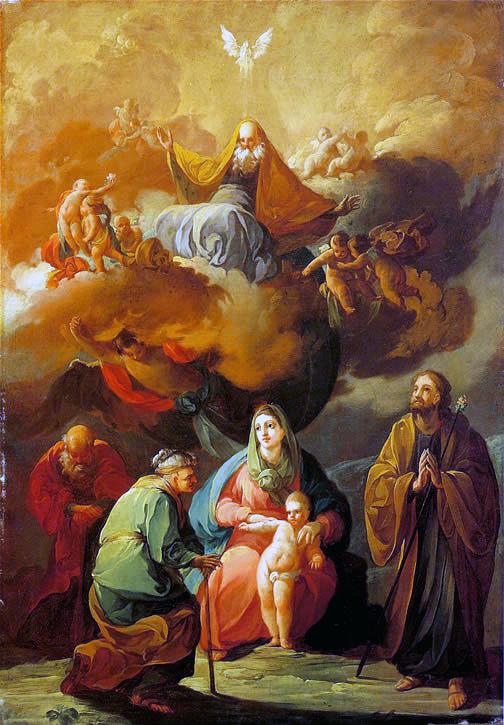
Newsroom (27/07/2026 Gaudium Press ) The Catholic Church marked the Sixth World Day for Grandparents and the Elderly on July 26, coinciding with the feast of Saints Joachim and Anne, traditionally honored as the grandparents of Jesus. The annual observance has evolved from a response to pandemic-era isolation into a wider call for renewed pastoral engagement with older people, according to Vittorio Scelzo, head of pastoral care for the elderly at the Dicastery for Laity, Family and Life.
Reflecting on six years of the initiative, Scelzo emphasized that the Church’s goal extends far beyond commemorating a single day. Instead, he said, the World Day has become a framework for reshaping how ecclesial communities understand aging, encouraging a model that recognizes older people not merely as recipients of care but as active participants in the life and mission of the Church.
At the heart of this year’s observance was the theme chosen by Pope Leo XIV: “I will never forget you” from Isaiah 49:15. The biblical message highlights God’s enduring closeness to every person and serves as a challenge to Christian communities to ensure that older people, particularly those who experience loneliness and isolation, encounter that same care in tangible ways.
From Pandemic Response to Lasting Pastoral Vision
According to Scelzo, the World Day was born during a period when the COVID-19 pandemic exposed the vulnerability and isolation experienced by many elderly people. Over time, however, it has developed into a stable feature of Church life and a catalyst for deeper reflection on old age.
The initiative seeks to broaden perceptions of aging beyond care and assistance. Older people, Scelzo noted, constitute a significant portion of the People of God and deserve pastoral attention that reflects their continuing value and contribution. The challenge ahead is ensuring that this awareness becomes part of ordinary parish life rather than remaining limited to annual celebrations and special initiatives.
For Church leaders and pastoral workers, this means integrating attention to older people into the ongoing formation and mission of ecclesial communities.
Confronting the “Throwaway Culture”
The theme selected by Pope Leo XIV carries particular significance in a society where personal value is often linked to productivity, efficiency, and independence. In such an environment, those who experience declining health, physical frailty, or memory loss can feel marginalized or forgotten.
Scelzo said the message of Isaiah challenges communities to reject what Pope Francis frequently described as a “throwaway culture.” Rather than waiting for older people to seek help, communities are called to actively reach out, visit, and accompany them.
The Pope’s message emphasizes that God’s love excludes no one and offers an answer to the anonymity that can make individuals feel invisible. For the Church, Scelzo explained, the task is to make that divine promise visible through concrete acts of presence and closeness.
This call is particularly relevant during the summer months, when elderly individuals may face heightened isolation. A visit, a conversation, or a simple gesture of companionship can transform the message of God’s remembrance into a lived experience.
“It’s not enough to organize services; we must build relationships,” Scelzo said, summarizing what he views as the central challenge facing communities today.
Addressing the Real Poverty of Old Age
Scelzo described loneliness as the true poverty confronting many older people. While practical assistance remains important, he argued that communities must move beyond service delivery alone.
The Dicastery frequently speaks of the need to move “from assistance to existence,” an approach that focuses on belonging and participation. The objective is not simply to help older people but to create communities in which they genuinely feel part of a shared “we.”
This vision challenges parishes and families alike. The certainty that God never forgets a person, Scelzo said, should be reflected in daily life through relationships that prevent anyone from feeling abandoned or overlooked.
Global Examples of Pastoral Creativity
Experiences collected from dioceses around the world reveal a growing commitment to placing older people at the center of community life.
In Latin America, celebrations are often closely connected to devotion to Saint Anne. In Venezuela, pastoral efforts have focused on ensuring that elderly people affected by an earthquake receive the message and support associated with the World Day.
Across Asia and Africa, numerous initiatives seek to reintegrate older people into the heart of ecclesial life. Scelzo highlighted the Diocese of Kampala in Uganda as one of the most active examples, with extensive programs dedicated to elderly pastoral ministry.
In India, young people have played a significant role in promoting the World Day through social media campaigns developed over several years. These efforts illustrate how younger generations can become partners in supporting older members of society.
One of the most widely adopted practices worldwide has been the organization of visits to elderly people who live alone. Many parishes now maintain volunteer schedules to provide regular companionship and personal contact.
European dioceses have also developed projects centered on what Scelzo described as an “intergenerational alliance.” These initiatives bring together younger and older people for prayer, recreation, and community activities, helping bridge generational divides that can weaken both groups.
According to Scelzo, communities as a whole benefit when seniors are recognized as an integral part of parish life rather than a separate group requiring attention from the margins.
Rethinking Old Age as a Vocation
One of the greatest challenges identified by Scelzo is changing attitudes toward aging itself.
He argued that both society and older people need to reject the notion that old age is a period without purpose. Spending decades of life without a sense of mission, he suggested, is neither acceptable nor consistent with the Christian understanding of human dignity.
Old age, in this view, is not an empty space to be managed while awaiting life’s conclusion. Instead, it is a distinct season with its own spiritual meaning and calling.
Pope Leo XIV addresses this reality directly in his message, encouraging older people not to fear frailty. Rather than diminishing a person’s value, weakness can deepen prayer, openness to God, and a renewed sense of vocation.
As a concrete expression of that vocation, the Pope has entrusted older people with a mission of persistent prayer for peace in the world. Scelzo stressed that this responsibility is not a form of spiritual retirement but an active contribution to the life and mission of the Church.
A Simple Call to Remember No One Is Forgotten
To support parishes and dioceses in observing the World Day, the Dicastery has prepared a pastoral kit, including prayers and practical resources available through its website.
The recommendations are intentionally straightforward: celebrate Mass with older people, ideally at the cathedral level, and visit elderly members of the community, especially those living alone.
Special attention is directed toward individuals who are bedridden or unable to participate in parish activities. The message of this year’s World Day, Church leaders insist, must reach everyone.
Ultimately, the initiative’s central purpose remains simple yet profound: ensuring that older people experience in everyday life the promise contained in Isaiah’s words, “I will never forget you.” For Church communities around the world, that promise is becoming a call not merely to serve the elderly, but to build lasting relationships that affirm their dignity, purpose, and indispensable place within the family of faith.
- Raju Hasmukh with files from Vatican News