










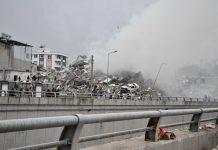




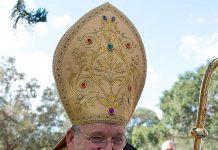
Nigeria’s Middle Belt has been the site of waves of attacks on Christian communities by predominantly Muslim Fulani herdsmen.
Newsroom (May 30, 2025, 08:55, Gaudium Press) A priest returning from a memorial service for two murdered clergymen is shot and wounded. A farmer is gunned down in his own field. A family of four is attacked—father, teenage son, and two-year-old child killed, the mother left fighting for her life.
These are just a few of the latest victims in a surge of violence terrorizing Nigeria’s Middle Belt, according to local clergy. Over one bloody weekend, at least 36 people were killed, with many more injured or abducted in a series of brutal assaults across Benue State, the Diocese of Makurdi reported to Catholic charity Aid to the Church in Need (ACN).
Priest Shot, Civilians Massacred in Coordinated Attacks
The violence, which local sources attribute to armed Fulani militants, unfolded between May 24 and 26, targeting farming communities in what appear to be systematic raids.
The first attack occurred on May 24 in Tse Orbiam, Gwer West Local Government Area (LGA), where Father Solomon Atongo of Jimba Parish was ambushed after attending a memorial for two priests slain in 2018. Gunmen opened fire, striking him in the leg and kidnapping his two companions.
“Father Atongo is currently receiving medical treatment,” said Ori Hope Emmanuel of the Diocese’s Justice, Development, and Peace Foundation. Nearby, a farmer was shot dead on his own land just after finishing his day’s work.
Father Oliver Ortese, Chairman of the Makurdi Diocese’s International Advisory Board, accused security forces of failing to act. “There is a military post where this incident happened,” he said. “Were the soldiers asleep while these shootings were going on?”
Bishop’s Home Village Among Targets
The bloodshed escalated on May 25 when attackers stormed Aondona—the hometown of Makurdi Bishop Wilfred Chikpa Anagbe—killing 20 people. “They opened fire indiscriminately, triggering panic,” Emmanuel said. Priests and nuns fled to St. Patrick’s Church in Taraku, now sheltering displaced survivors.
That same day, a family in Yelewata Village, Guma LGA, was torn apart. Armed men killed a father, his teenage son, and a toddler, leaving the mother severely wounded. Earlier, a 67-year-old farmer had been beaten, and his cassava farm destroyed.
By May 26, the death toll climbed further. Five were slain in Tse Orbiam, six in Ahume—including a police officer—and another on the Naka-Adoka Road, where six travelers were injured in a roadside ambush.
“This Is Terror”: A Deepening Humanitarian Crisis
Father Ortese condemned not only the killings but their devastating aftermath. Survivors, he said, are forced into displacement camps, “where they become beggars to survive.”
“You cannot imagine the reality we live in here,” he said. “This is horror. This is terror.”
Clashes between predominantly Muslim Fulani herders and Christian farmers over land and resources have plagued Nigeria’s Middle Belt for years. While most Fulani are peaceful, a violent faction has been accused of jihadist ties, exacerbating ethnic and religious fault lines.
As communities bury their dead, the Diocese warns that without urgent intervention, the cycle of bloodshed—and the humanitarian catastrophe it fuels—will only worsen.
- Raju Hasmukh with files from ACN
Related Images: