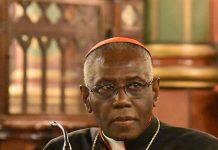
























Cardinal Víctor Manuel Fernández has categorically denied that his office approved controversial guidelines issued by the German bishops’ conference for the blessing of same-sex unions
Newsroom (09/10/2025, Gaudium Press ) In a development that underscores ongoing tensions within the Catholic Church over the pastoral care of same-sex couples, Cardinal Víctor Manuel Fernández, prefect of the Dicastery for the Doctrine of the Faith (DDF), has categorically denied that his office approved controversial guidelines issued by the German bishops’ conference for the blessing of same-sex unions. The statement, made in response to questions from The Pillar on October 8, 2025, directly contradicts claims by Bishop Georg Bätzing, president of the German bishops’ conference, who has insisted that the guidelines were developed in transparent consultation with the DDF.
The German bishops’ handbook, titled “Blessings Give Love Strength,” was published in April 2025, days after the death of Pope Francis during the papal interregnum. The document has sparked significant controversy, as it appears to outline a framework for blessing same-sex couples, raising questions about its alignment with the Vatican’s December 2023 declaration, Fiducia supplicans. That declaration, issued under Fernández’s leadership, permits informal, non-liturgical blessings of individuals in irregular unions, including same-sex relationships, but explicitly prohibits any formalized or ritualized blessings.
Conflicting Narratives
Bishop Bätzing has repeatedly defended the German guidelines, asserting that they were crafted with the DDF’s involvement. Speaking at a press conference on September 22, 2025, to open the German bishops’ plenary meeting, Bätzing claimed, “We have developed this paper transparently with the Dicastery for the Doctrine of the Faith and in consultation with this dicastery.” He further described the handbook as a “pastoral concretization” of Fiducia supplicans, tailored to the German context, and insisted that there was “no reason to withdraw it.”
However, Cardinal Fernández offered a starkly different account. In his October 8 response to The Pillar, the cardinal stated, “The DDF didn’t approve anything [of the irregular unions’ guidelines], and wrote a letter some time ago reminding [the German bishops] that Fiducia supplicans excluded any form of ritualization, just as the pope has said.” Fernández clarified that the DDF had sent a letter to the liturgical commission of the German bishops’ conference, explicitly noting that any form of ritualized blessing was “inadmissible” and could not be approved, as it contravened the directives of Fiducia supplicans.
This revelation casts doubt on Bätzing’s portrayal of a collaborative process with the Vatican. According to a recent report by Communio, sources within the DDF indicated that the German bishops had submitted their draft guidelines to the dicastery, accompanied by a note clarifying that they were not seeking formal approval. Despite this, Fernández provided critical feedback, reportedly prompting a revised draft from the German bishops. That revised version, however, also failed to secure the DDF’s approval.
Papal Critique and German Response
The controversy surrounding the German guidelines was further amplified by comments from Pope Leo XIV in an interview with Crux last month. The pope appeared to directly criticize the German text, stating, “In Northern Europe they are already publishing rituals of blessing ‘people who love one another’… which goes specifically against the document that Pope Francis approved, Fiducia supplicans, which… doesn’t look for a way of ritualizing some kind of blessing because that’s not what the Church teaches.”
In response, Bishop Bätzing sought to deflect the criticism, arguing that the German bishops had deliberately avoided publishing formalized liturgical rituals. “The criticism that the Pope hints at in the interview is directed against the publication of liturgical formularies for formal blessing rituals. This is precisely what the German bishops have consciously not done,” Bätzing said. Instead, he emphasized that the guidelines place responsibility for the form of such blessings in the hands of pastoral workers, suggesting a decentralized approach that avoids codified rituals.
Yet Fernández’s remarks suggest that the DDF views the German initiative as overstepping the boundaries set by Fiducia supplicans. The cardinal’s 2023 interview with The Pillar, conducted shortly after the declaration’s release, underscored that while some episcopal conferences had explored ritualized blessings for irregular unions, such practices were “inadmissible” and required reformulation to align with Vatican teaching.
A Broader Context of Tension
The dispute reflects broader tensions between the German bishops’ conference and the Vatican, particularly in the context of Germany’s Synodal Way, a multi-year process aimed at addressing issues such as Church governance, sexual morality, and the role of women. The Synodal Way has been a flashpoint for critics who argue that it risks diverging from universal Church teaching, while supporters, including Bätzing, maintain that it seeks to address pressing pastoral needs within the German Church.
The German bishops’ conference has remained reticent about its communications with the DDF. A spokesman for the conference told Communio that the bishops “do not publicly disclose any information about [their] communication with the Dicastery for the Doctrine of the Faith.” When contacted by The Pillar for comment, a spokesperson indicated that he would need to review the matter before responding.
Meanwhile, the Synodal Committee of the German Bishops’ Conference acknowledged in a May 2025 meeting that it had incorporated feedback from Fernández into the draft guidelines, though the extent and nature of this feedback remain unclear. The lack of transparency has fueled speculation about the degree of coordination—or lack thereof—between the German bishops and the Vatican.
Implications for Church Unity
The disagreement over the German guidelines raises significant questions about the interpretation and implementation of Fiducia supplicans, a document that has itself been a source of global debate within the Church. While the declaration was intended to offer pastoral flexibility in ministering to individuals in irregular unions, its prohibition on ritualized blessings has proven contentious, particularly in regions like Germany, where progressive voices have pushed for more explicit inclusion of same-sex couples.
Cardinal Fernández’s firm rebuttal of Bätzing’s claims underscores the Vatican’s commitment to maintaining doctrinal clarity on this issue. At the same time, the German bishops’ insistence on their approach highlights the challenges of balancing local pastoral initiatives with universal Church teaching. As the Catholic Church navigates these complex waters, the ongoing dialogue between the Vatican and national episcopal conferences will likely remain a critical point of focus.
For now, the German guidelines remain in place, but their legitimacy in the eyes of the Vatican appears increasingly tenuous. Whether this dispute will prompt further revisions or escalate into a broader confrontation remains to be seen, but it serves as a potent reminder of the delicate balance between unity and diversity within the global Catholic Church.
- Raju Hasmukh with files from The Pillar
Related Images: