
















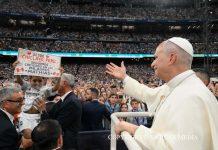
Amid Easter tensions and overlapping conflicts, Pope Leo XIV renews Vatican calls for ceasefire and humanitarian dialogue in Ukraine and the Middle East.
Newsroom (07/04/2026 Gaudium Press )On Good Friday, under the weight of overlapping religious calendars and deepening conflicts, Pope Leo XIV stepped into his familiar yet increasingly urgent role: moral interlocutor in a fractured geopolitical landscape. His two separate phone calls on April 3—to Israeli President Isaac Herzog and Ukrainian President Volodymyr Zelenskyy—revealed a Vatican diplomacy calibrated around humanitarian imperatives, multilateral dialogue, and symbolic timing as Easter approached under the shadow of war.
The Vatican confirmed that both conversations began with Easter greetings, bridging Christian and Jewish traditions before moving swiftly into substantive discussions on global crises. Central to the Pope’s message was a call for an unconditional ceasefire—or, at minimum, an Easter truce—a plea first voiced publicly on March 31 and now seemingly overtaken by events on the ground.
Reaffirming Humanitarian Principles
In speaking with Herzog, Leo XIV returned to a bedrock of Vatican foreign policy: diplomacy cannot be allowed to collapse, even under extreme conditions. Both parties, according to the Holy See Press Office, underscored the need to “reopen all possible channels of diplomatic dialogue” aimed at achieving “a just and lasting peace across the Middle East.”
Yet the exchange was more than procedural—it carried moral weight. The Pope stressed protection of civilians and adherence to international humanitarian law, reaffirming a Vatican tradition of ethical engagement amid violence. Herzog offered a sober appraisal of the regional security landscape, citing threats from Iran and allied groups that have recently targeted Jerusalem, a city central to Jewish, Christian, and Muslim faiths alike.
The Israeli leader also warned of renewed instability along the northern border, where Hezbollah’s presence continues to endanger both Israeli and Lebanese populations, including Christian communities. The discussion unfolded against a backdrop of escalating U.S.–Iran tensions, with former President Donald Trump signaling willingness to amplify military operations—a convergence that widens the Middle Eastern crisis and strains even the strongest calls for restraint.
Sensitive Issues and Silent Diplomacy
Absent from official readouts was any mention of a sensitive matter that spotlighted Jerusalem’s fragile balance of faith and security. Just days earlier, on March 29, Pierbattista Pizzaballa—the Latin Patriarch of Jerusalem—had reportedly been denied access to the Church of the Holy Sepulchre on Palm Sunday. The incident ignited debate on religious freedoms under heightened security restrictions. Although subsequent talks restored limited access for worship, neither the Vatican nor the Israeli presidency confirmed whether the topic was broached in their call.
Voices from a Nation at War
If the Middle East conversation revolved around diplomacy and deterrence, the Pope’s call with Volodymyr Zelenskyy was defined by urgency and direct human suffering. As the two leaders spoke, Russian forces unleashed missile attacks on multiple Ukrainian regions, a wave of violence Zelenskyy described as leaving “hundreds of martyrs.” The juxtaposition lent tragic immediacy to Leo XIV’s Easter truce appeal, highlighting the fragility of humanitarian proposals amid relentless warfare.
The Pope conveyed pastoral solidarity with Ukrainians entering their fourth wartime Easter, emphasizing continued humanitarian aid and targeted efforts to release prisoners. Kyiv’s reports indicate that Vatican diplomacy has quietly aided the return of deported Ukrainian children and coordinated winter relief for displaced populations. Zelenskyy expressed gratitude for these efforts and extended an invitation for a future apostolic visit—an idea rich in symbolism but fraught with logistical and political risk.
A Consistent Moral Compass
Across both phone calls, a clear pattern emerges: the Vatican operating not as a power broker but as an interlocutor of conscience. Leo XIV’s appeal for renewed dialogue and civilian protection reflects continuity with his predecessors—an enduring belief that peace begins with persistence. Yet the simultaneity of global crises—from Ukraine’s devastated cities to the volatile Levant—tests the reach of that moral framework.
Easter, therefore, becomes more than a liturgical marker; it stands as a moral horizon. Amid the din of missiles and the collapse of ceasefire hopes, Pope Leo XIV invokes the season not merely as ritual, but as a call to conscience—a plea that peace, even now, must remain possible.
- Raju Hasmukh with files from Zenit News
Related Images: