









New USCIRF Chair Asif Mahmood names Nigeria his top priority, citing persistent religious persecution and violence affecting Christians.
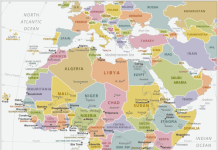
Newsroom (28/07/2026 Gaudium Press ) Nigeria has emerged as the foremost international religious freedom concern for the new chair of the U.S. Commission on International Religious Freedom (USCIRF), who says persistent violence targeting religious communities, particularly Christians, demands urgent attention.
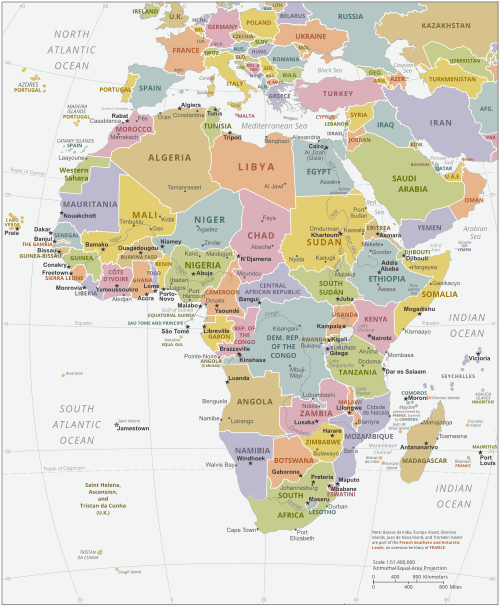
In an interview with OSV News on July 24, USCIRF Chair Asif Mahmood identified Nigeria as the commission’s top priority, underscoring the severity of ongoing religious persecution and violence in Africa’s most populous nation.
“My top priority is going to be, if you ask me, ‘pick one place,’ it’ll be Nigeria,” Mahmood said.
USCIRF is an independent, bipartisan federal commission tasked with monitoring religious freedom conditions around the world and advising the U.S. government on responses to violations. Mahmood’s remarks place renewed focus on Nigeria, where Christian communities have faced escalating attacks in recent years, particularly from Islamic extremist organizations such as Boko Haram.
While Christians have been disproportionately affected by religiously motivated violence, the crisis has also exacted a heavy toll on Muslim communities. In addition, longstanding conflicts between farmers and herders have contributed to widespread violence, displacement and instability across parts of the country.
Continued Scrutiny of Nigeria’s Religious Freedom Record
Nigeria’s religious freedom situation has remained a significant concern for USCIRF, which previously urged the Trump administration to redesignate the country as a “country of particular concern.” The designation, issued by the U.S. State Department, is reserved for nations that engage in or tolerate particularly severe violations of religious freedom.
President Donald Trump redesignated Nigeria as a country of particular concern in 2025. During the same year, the United States carried out a deadly Christmas Day military strike in Nigeria that Trump described as an operation targeting Islamic State terrorists responsible for persecuting Christians.
Mahmood emphasized the strategic and humanitarian importance of addressing the crisis. As Africa’s most populous country, Nigeria is home to substantial Christian and Muslim populations. He said the commission’s focus extends beyond policy designations and public statements to measurable improvements in the lives of ordinary people affected by violence.
He pointed to tangible concerns such as the recovery of kidnapping victims and the ability of religious communities to worship without fear.
“It is crucial” to end the “misery and that brutality,” Mahmood said, referring to the conditions facing communities impacted by religious violence.
The issue has also drawn attention from the White House. In a recent letter released by the office of Nigerian President Bola Tinubu, Trump praised the Nigerian leader’s efforts to address violence affecting Christian communities.
Despite those acknowledgments, Mahmood argued that significant challenges remain.
“The Nigerian government continues to tolerate and fail to respond to violent attacks against religious communities by non-state actors and expose them to a violent interpretation of Islam,” he said.
His assessment aligns with concerns highlighted in USCIRF’s 2026 annual report, released March 4, which emphasized ongoing problems related to religious freedom in Nigeria.
According to Mahmood, the commission’s evaluation is rooted in conditions experienced by ordinary citizens rather than official government assurances.
“Our assessment is what is happening on the ground, what is happening to the households, the communities, how many people can go to church and perform their services,” he said. He also raised concerns about churches requiring extensive security measures to operate safely.
“At this point we don’t see the corner being turned,” Mahmood added, while expressing hope that conditions could improve in the future.
Commission Resumes Operations Despite Key Vacancies
Mahmood’s comments come during a period of transition for USCIRF. Several new commissioners recently joined the commission after previous members completed their terms in May. Mahmood is one of only two commissioners who were reappointed.
Although the commission has regained a quorum and can resume its work, three commissioner positions designated for White House nominees remain vacant. Another significant vacancy exists within the State Department, where the position of ambassador-at-large for international religious freedom has yet to be filled.
The ambassador role and USCIRF itself were established under the International Religious Freedom Act of 1998. The ambassador serves as a key adviser to both the president and the secretary of state on global religious freedom issues.
A previous nominee for the ambassador position put forward by Trump saw the nomination expire, and it has not been renewed. The White House did not immediately respond to requests for comment regarding plans to fill the remaining vacancies.
Mahmood said USCIRF is prepared to move forward with its current membership but stressed the importance of restoring the commission to full strength.
“We fortunately have now six commissioners to start our business now,” he said, expressing appreciation for his fellow commissioners and highlighting their expertise on international religious freedom matters.
Bipartisan Mission and Congressional Support
As USCIRF looks to advance its work, Mahmood reaffirmed the commission’s bipartisan mission and commitment to defending religious freedom regardless of faith tradition or geography.
“Our priority and our goal and our mission is to help anybody and everybody all over the world who is repressed or oppressed because of their faith or religion,” he said.
The commission’s future appears to have strong bipartisan backing in Congress. In June, the U.S. House of Representatives approved the United States Commission on International Religious Freedom Reauthorization Act of 2026 (H.R. 1744), legislation introduced by Rep. Chris Smith, R-N.J. The measure would extend USCIRF’s authorization and annual appropriations through fiscal year 2028.
During debate on the bill, Smith described the commission as an essential and independent voice on international religious freedom.
“USCIRF is a genuinely independent force, a constructive influence on the State Department,” Smith said. “USCIRF is important to millions of people of all faiths.”
The legislation, supported by the U.S. Conference of Catholic Bishops, is currently awaiting action in the Senate.
As Mahmood begins his tenure as chair, Nigeria’s continuing religious freedom crisis is expected to remain at the center of USCIRF’s advocacy efforts, with the commission seeking greater accountability and protection for vulnerable religious communities across the country.
- Raju Hasmukh with files from OSV News