












Sudan’s civil war has displaced 12 million people, leaving women, children, and Christian minorities facing violence, famine, and global neglect.
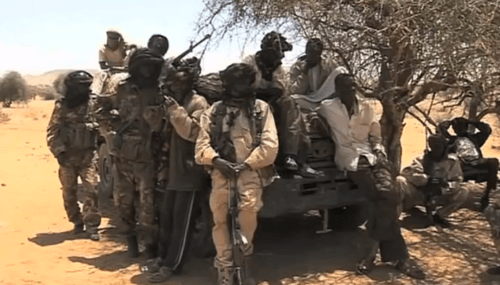
Newsroom (11/06/2026 Gaudium Press ) Since April 15, 2023, Sudan has been consumed by a devastating civil war that has spiraled into one of the world’s largest humanitarian crises. What began as a power struggle between the Sudanese army and the Rapid Support Forces (RSF)—a paramilitary group rooted in Darfur militias—has evolved into a prolonged conflict with catastrophic consequences for civilians. More than three years into the fighting, the war shows no sign of abating, yet it continues to unfold amid a striking lack of global attention.
Humanitarian organizations estimate that over 12 million people have been displaced since the conflict erupted, placing Sudan among the most severe displacement crises worldwide. Entire communities have been uprooted, with millions fleeing their homes in search of safety within Sudan or across its borders. At the same time, regions such as Darfur and Kordofan face the looming threat of famine, compounding an already dire situation marked by widespread food insecurity and collapsing infrastructure.
Women and children are bearing the brunt of the violence. United Nations agencies report a dramatic escalation in sexual violence, forced displacement, and child malnutrition. Thousands of children have been killed or injured, while many more have lost access to education entirely. In numerous areas, healthcare systems have effectively ceased to function, leaving populations without access to basic medical services. Humanitarian aid remains severely restricted, further deepening the crisis and leaving vulnerable populations without essential support.
Amid this widespread suffering, Sudan’s Christian communities represent a largely overlooked dimension of the conflict. Though often perceived as a predominantly Muslim nation, Sudan has long been home to a diverse Christian population. Prior to the war, approximately two million Christians—less than 5% of the population—lived in the country. These communities, including Catholics, Anglicans, Orthodox, and Evangelicals, were concentrated in Khartoum, the Nuba Mountains, and parts of Darfur.
There had been reasons for cautious optimism following the 2019 fall of President Omar al-Bashir. After decades of Islamization policies and restrictions targeting Christians, reforms introduced by transitional authorities suggested a new era of religious openness and inclusion. However, the outbreak of civil war abruptly shattered these hopes.
Since April 2023, Christian communities have faced increasing hardship. According to international Christian organizations, more than 160 churches have been damaged or destroyed. Parishes have shut down, Christian schools have ceased operations, and thousands of believers have been forced to flee to neighboring countries such as Chad, South Sudan, and Egypt. In many cases, displacement has not only stripped individuals of their homes but also disrupted the very foundations of their communal and spiritual life.
Despite the dangers, some continue to provide support under extraordinary conditions. In Khartoum, the Dar Mariam Catholic mission has emerged as a symbol of resilience. For months, nuns there sheltered women and children seeking refuge in the midst of active conflict. Even as bombings intensified and food supplies dwindled, they persisted in offering protection and care to the most vulnerable.
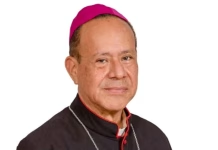
The Catholic Church remains among the few institutions still active in some of Sudan’s hardest-hit areas. In El-Obeid, Bishop Yunan Tombe Trille has consistently spoken out about the suffering caused by the war and called for peace. Across various dioceses, priests, religious leaders, and lay volunteers continue to assist displaced families, providing humanitarian aid, education, and spiritual guidance. Their work is carried out under constant threat, underscoring both the severity of the situation and the commitment of those who remain.
In recent weeks, Christian organizations have renewed calls for international attention to the plight of Sudan’s Christian minorities. They warn that the scale of the crisis is not matched by global awareness or response. While other conflicts dominate international headlines, Sudan risks slipping further into obscurity.
Yet behind the staggering figures—millions displaced, countless homes destroyed—are human stories of loss and endurance. Mothers fleeing with their children, families torn apart by violence, and communities struggling to preserve their identity all reflect the profound human cost of the war. For Sudan’s Christians, the challenge is not only survival but also the preservation of their faith and heritage in the face of profound uncertainty.
As the conflict drags on, the silence surrounding Sudan grows more pronounced. But for those caught within it, the consequences are immediate and unrelenting—demanding renewed global attention to a crisis that continues to deepen by the day.
- Raju Hasmukh with files from Tribune Chretienne