











Police recover stolen skull of Saint Zdislava after dramatic church theft; suspect claimed spiritual motive, not financial gain.
Newsroom (19/05/2026 Gaudium Press) Police in the Czech Republic announced on May 15 that they have recovered the stolen skull of Saint Zdislava, one of the country’s most revered religious figures, concluding a dramatic and unsettling episode that shocked believers nationwide.
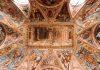
The relic had been taken just days earlier, on May 12, in what witnesses and investigators described as a lightning-fast theft carried out moments before evening Mass. A thief slipped into the Basilica of St. Lawrence and St. Zdislava in Jablonné v Podještědí, smashed a glass reliquary, and fled within seconds with the centuries-old remains.
Authorities said the skull was later found encased in hardened concrete. Experts are now carefully working to extract the fragile relic and assess its condition after the ordeal. The basilica, located roughly 70 miles north of Prague, is one of the Czech Republic’s most significant pilgrimage sites, drawing devotees from across Central Europe.
A Carefully Executed Theft
The events of May 12 unfolded with cinematic speed. Surveillance cameras captured a shadowy figure dressed in black entering the basilica. Two sharp bangs were heard, glass shattered, and before anyone could intervene, the relic had disappeared. The footage, however, was too blurry to immediately identify the suspect.
Father Štěpán Filip, a Dominican priest serving at the basilica, described the incident as over in “a few seconds.” He reported seeing only a person running from the church carrying the relic. According to local reports, the thief broke through two layers of protective glass, likely using a small emergency hammer.
Compounding the vulnerability, the alarm system in that section of the church had been switched off because Mass was about to begin. The timing appears to have been deliberate, contributing to the impression that the theft had been carefully planned.
The brazen act stunned clergy and worshippers alike. “We have to pray now that it gets back and that it’s OK,” Father Filip said before the relic was recovered, emphasizing the skull’s fragility and historic value.
Suspect Detained, Motive Revealed
Police quickly appealed to the public for assistance, releasing surveillance footage in hopes of identifying the perpetrator. Two days later, on May 14, authorities announced the arrest of a 35-year-old man in connection with the theft.
According to investigators, the suspect’s motives were not financial. Police spokeswoman Ivana Baláková clarified that “his motive was not to obtain money.” Instead, the man allegedly believed that the saint’s remains “would not find peace” if they continued to be displayed in the basilica.
Authorities said he had planned to dispose of the relic by throwing it into a river and then burying it privately—an unusual and deeply troubling rationale that has raised questions about the psychological and spiritual motivations behind the crime.
National Shock and Religious Outrage
The theft sent shockwaves through the Czech Catholic community and beyond. The skull of Saint Zdislava is not only a historical artifact but also a deeply venerated object of faith.
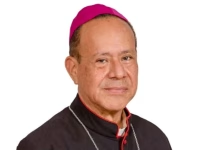
Archbishop Stanislav Přibyl, who previously led the Diocese of Litoměřice where the basilica is located, described the incident as “devastating news.” He expressed disbelief that such a sacred object could be stolen so brazenly, noting its immense historical and spiritual value.
“The skull was revered by pilgrims,” he said. “I cannot believe that someone practically in broad daylight steals from church a relic whose value is above all historical and also spiritual for believers.”
The timing of the theft heightened its emotional impact. It occurred just weeks before May 30, the feast day of Saint Zdislava, when pilgrims traditionally gather in large numbers to honor her life and legacy.
The Enduring Legacy of Saint Zdislava
Born around 1220 into a noble Bohemian family, Zdislava of Lemberk dedicated her life to charity, faith, and service. Though married with four children, she became closely associated with the Dominican Order as a lay member.
She earned a reputation as a compassionate figure deeply committed to helping the poor and the sick. She founded a hospital, supported religious communities, and personally cared for those in need. Her contemporaries affectionately referred to her as the “Mother of the Poor.”
After her death in 1252, devotion to Zdislava grew steadily, with many attributing miraculous healings to her intercession. Her enduring spiritual significance culminated in her canonization by St. John Paul II in 1995 in the city of Olomouc.
During the ceremony, the pope highlighted her life as a powerful example of holiness lived within marriage and family life. He quoted the words of Jesus—“It is more blessed to give than to receive”—to describe the essence of her spiritual legacy.
“Her example seems remarkably timely,” he said, emphasizing her message for families to remain open to faith, to life, and to the needs of the poor.
A Relic Restored, Questions Remain
With the recovery of the skull, attention has now turned to its restoration and preservation. Experts face the delicate task of removing the relic from concrete without causing further damage to what Father Filip had already described as “an old skull” and “fragile.”
The incident has prompted renewed reflection on security at religious sites, particularly those housing irreplaceable relics of cultural and spiritual importance. It has also underscored the deep emotional and symbolic value such objects hold—even in a country often described as one of Europe’s most secular.
Despite the shock and disruption, the faithful continue to look toward restoration—not just of the relic itself, but of the sense of reverence and security surrounding it.
For many pilgrims, the shrine at Jablonné remains a place of prayer for healing, family strength, and hope. And in the wake of the theft and recovery, the story of Saint Zdislava—marked by compassion, sacrifice, and enduring faith—has taken on renewed resonance.
- Raju Hasmukh with files from OSV News
Related Images: