













Santiago de Compostela celebrates St. James with Masses, pilgrimages, and cultural events while preparing for the Holy Year of 2027.
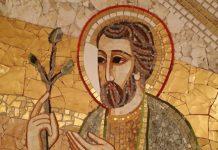
Newsroom (27/07/2026 Gaudium Press) Santiago de Compostela is marking the solemnity of Saint James the Apostle on July 25 with an extensive religious and cultural program that is drawing thousands of pilgrims to the famed Galician city. At the heart of the celebrations is the veneration of the tomb of the Apostle, whose shrine has made Santiago one of the most significant pilgrimage destinations in the Christian world for centuries.
The annual feast of Saint James, patron saint of Spain, coincides with World Pilgrimage Day, underscoring the enduring spiritual importance of both the Camino de Santiago and the city that serves as its destination. For generations, pilgrims have traveled from across Europe and beyond to reach the cathedral built around the Apostle’s tomb, making Santiago de Compostela one of the great centers of Christendom.
This year’s festivities began on July 23 and will continue through the end of the month. The program blends religious observances, pilgrimages, and public celebrations that reflect Galicia’s deep religious and cultural heritage.
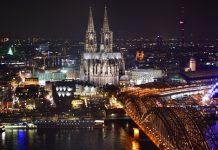
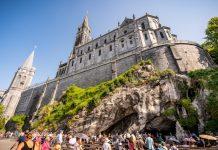
The central event of the celebrations is the solemn Pontifical Mass in the Cathedral of Santiago de Compostela, regarded as the spiritual heart of the Camino de Santiago. The cathedral stands over the tomb traditionally venerated as that of Saint James the Apostle and remains a destination for pilgrims seeking an expression of penance, thanksgiving, conversion, or a deeper search for God.
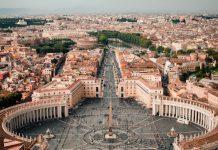
Throughout the festival period, religious ceremonies are accompanied by a wide range of cultural events. Processions move through the historic streets while folk performances, concerts, and historical parades celebrate Galicia’s traditions. Fireworks displays and a nighttime projection on the cathedral’s celebrated western façade facing the Plaza del Obradoiro add a public dimension to a feast that combines faith, history, and civic identity.
The celebrations come at a time when Santiago’s cathedral is also drawing attention for new insights into its architectural history. Shortly before the feast day, the Santiago Cathedral Foundation presented the results of a major research project dedicated to the evolution of the temple.
Conducted over four years, the study employed advanced technologies including three-dimensional scanning, drone imaging, and extensive historical documentation. Researchers used these tools to reconstruct the development of the cathedral from its Roman origins through the 14th century.
The investigation identified numerous previously unknown stages of construction and reconstruction. According to the findings, the sanctuary’s development reveals an extraordinary level of planning and technical expertise among the medieval master builders responsible for shaping one of Christianity’s most important pilgrimage shrines.
At the same time, both Church and civil authorities are intensifying preparations for the Compostela Holy Year of 2027. The upcoming Jubilee Year is already a major focus for local organizers, who expect another significant increase in pilgrim activity.
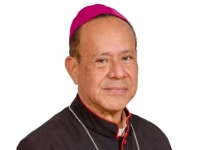
In support of those preparations, Marcos Gómez Román, the newly appointed commissioner for the Xacobeo of the Galician Regional Government, recently met with Archbishop Francisco José Prieto of Santiago de Compostela. The meeting focused on strengthening cooperation between public authorities and the Church in order to improve services for pilgrims and address the logistical and organizational demands expected during the Jubilee celebrations.
The urgency of that preparation is reflected in the continued growth of pilgrimage activity. During 2026, more than 273,000 pilgrims have already received the Compostela, the certificate awarded to those who complete the pilgrimage in accordance with established requirements.
The international character of the pilgrimage remains one of its defining features. Nearly two-thirds of those receiving the Compostela this year have come from outside Spain, demonstrating the global appeal of the Camino de Santiago and the continuing ability of the Apostle’s shrine to attract worshippers from a wide range of nations and cultures.
The influence of devotion to Saint James also extends beyond Galicia. In a recent development, the Holy See officially declared the Apostle the patron saint of the Balearic island of Formentera. The declaration formally recognizes a popular devotion that has been maintained there for centuries and highlights the enduring reach of the cult of Saint James beyond Santiago itself.
Located in northwestern Spain, Santiago de Compostela occupies a unique place within the Catholic world. Alongside destinations such as Jerusalem, Rome, and the Shrine of Guadalupe in Mexico, it remains one of the principal centers of Christian pilgrimage.
Since the Middle Ages, countless pilgrims have followed the routes that converge on the city. Over time, Santiago’s historic center grew around the cathedral and the phenomenon of pilgrimage, creating an urban landscape so significant that it is recognized as a World Heritage Site.
For believers, however, the significance of the July 25 celebration extends beyond history, tourism, or cultural tradition. The solemnity commemorates the apostolic ministry and martyrdom of Saint James while reaffirming the spiritual purpose that has sustained the Camino de Santiago for centuries: faith and the veneration of the Apostle’s tomb.
The importance of that tradition will become even more evident in 2027. Whenever the feast of Saint James falls on a Sunday, the Church celebrates a Jubilee Holy Year in Santiago de Compostela. With the next Holy Year approaching, ecclesiastical and civil leaders are already working together to ensure a worthy welcome for the vast numbers of pilgrims expected to arrive in the city, reaffirming Santiago’s role as one of the world’s great pilgrimage destinations.
- Raju Hasmukh with files from INfocatholica