















Over 14,000 register in 24 hours for the 2026 Chartres pilgrimage, reflecting a powerful spiritual revival among France’s young faithful.
Newsroom (09/04/2026 Gaudium Press ) “Everyone has the right to hear the Good News of God,” emphasizes Philippe Darantière, president of Notre-Dame de Chrétienté. His words resonate with renewed force as France witnesses an extraordinary spiritual resurgence. When registration for the 2026 pilgrimage opened at 3:00 a.m. on Palm Sunday, all 14,000 available spots were claimed in just 24 hours—a record that signals more than simple enthusiasm. It speaks of a spiritual hunger, a longing for meaning that seems especially alive among younger generations.
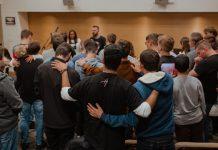
The pilgrimage, which will take place from May 23 to 25, 2026, traces the historic route between Paris and Chartres Cathedral. Organizers expect around 20,000 walkers—perhaps more—to take part, continuing a steady growth that has defied predictions of religious decline. Participation has surged each year: from 16,000 pilgrims in 2023, to 18,000 in 2024, and nearly 19,000 in 2025. The rising numbers confirm that what began as a devotional march has become one of Europe’s most striking signs of Catholic renewal.
For Darantière and his team, however, the statistics tell only part of the story. “It is not simply about walking, but about responding to a missionary call,” he insists. They see the pilgrimage not as a nostalgic revival, but as an active expression of faith in a changing France—one marked by a growing number of conversions, catechumens, and those rediscovering their spiritual roots. The presence of so many young participants—nearly half under 30—points to a generation seeking connection, transcendence, and community, often drawn through the beauty of traditional liturgy, which organizers describe as “a powerful means of apostolate.”
The pilgrimage’s momentum has prompted logistical adaptation as well. To accommodate the unprecedented influx, organizers have added a new “Jerusalem route,” allowing participants unable to cover the full 100-kilometer journey to nonetheless share fully in the experience. It is a practical gesture that mirrors the pilgrimage’s deeper mission: inclusion, accessibility, and a call to faith that transcends physical endurance.
Yet Darantière urges pilgrims to see Chartres not as an endpoint, but a beginning. “Beyond the three days of pilgrimage, it is in the daily lives of our loved ones that we will be missionaries,” he says, underscoring a vision of faith lived out through witness long after the procession ends. Pentecost, in this sense, becomes a launching point for everyday evangelization.
First organized in its modern form in 1983, the Chartres pilgrimage stands as an heir to centuries of tradition. Its revival reflects not nostalgia, but renewal—a powerful sign that amid secularization, France’s Catholic pulse remains strong. While commentators often lament the decline of Christianity in the West, the sight of thousands journeying from Paris to Chartres tells a different story: of faith in motion, a youthful enthusiasm rekindled, and a shared determination “to make Jesus Christ known and loved to the ends of the earth.”
- Raju Hasmukh with files from Tribune Chretienne
Related Images: