










Pope Leo XIV condemns war as the gravest assault on life and health, urging global solidarity and a renewed vision of the common good.
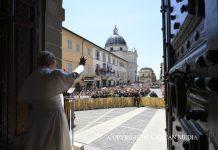
Newsroom (17/02/2026 Gaudium Press ) In a stark message delivered at the Vatican, Pope Leo XIV warned that modern warfare represents “the gravest attack human hands can make against life and public health.” Addressing participants at the Plenary Assembly of the Pontifical Academy for Life on February 16, the pontiff urged the world to confront its obsession with conflict and redirect resources toward the preservation and promotion of health and human dignity.
The assembly, held in Rome under the theme “Healthcare for All: Sustainability and Equity,” gathered experts to explore ways of ensuring universal access to health systems capable of serving all people fairly. Speaking to the delegates, Pope Leo emphasized that promoting health in a war-torn world demands both moral courage and structural reform.
“Conflicts consume enormous economic, technological, and organizational resources in the production of arms and other military equipment,” he said. “It has never been more important to dedicate time, people, and expertise to safeguarding life and health.”
Confronting Health Inequality
Pope Leo welcomed the academy’s focus on sustainable healthcare but warned that noble declarations alone were insufficient. “It is often said that life and health are fundamental values for all,” he said, “but this statement is hypocritical if we ignore the structural causes and policies that determine inequalities.”
He called attention to the vast disparities in global health outcomes, noting that life expectancy, quality of care, and access to treatment often reflect economic and social privilege. “Despite declarations to the contrary, all lives are not equally respected,” he observed. “Health is neither protected nor promoted in the same way for everyone.”
According to the pontiff, the roots of these inequalities lie in social and environmental conditions shaped by policy choices—factors such as income, education, and geographical context. Health, he implied, cannot be isolated from justice, governance, and community design.
The “One Health” Vision
Looking beyond national borders, Pope Leo XIV advanced an integrated view of well-being grounded in what he called the “One Health” approach—an ecological vision that considers the interconnection of human, animal, and environmental health. This perspective, he said, was powerfully reinforced by the COVID-19 pandemic, which exposed the deep interdependence of global societies.
“Our responsibility,” he told participants, “lies not only in treating diseases or ensuring equitable access to care but in understanding how health is shaped by a complex mosaic of factors — medicine, politics, ethics, and ecology.”
The pope stressed that the pursuit of health must not prioritize immediate profit or short-term national gain. Instead, it requires global cooperation and a shared recognition that “human life is incomprehensible and unsustainable without other creatures.” He urged world leaders to integrate health considerations into policies ranging from agriculture and education to urban planning and transport.
Reclaiming the Common Good
Pope Leo XIV’s address also returned to one of the pillars of Catholic social teaching — the common good. He warned that the concept risked becoming abstract or meaningless unless rooted in real human solidarity and lived relationships. “We must strengthen our understanding of the common good so it does not succumb to individual or national self-interest,” he said.
He framed the common good as the foundation of a democratic culture marked by efficiency, justice, and compassion, where citizens and institutions alike adopt a “fundamental attitude of care.” This, he underlined, must extend beyond aiding those in immediate need to embracing the shared vulnerability that defines all human beings.
Only by rebuilding this culture of care, the pope suggested, can societies develop health systems capable of meeting universal needs within finite resources — and restore trust in medicine and science despite widespread misinformation.
A Call for Peace and Global Cooperation
Pope Leo concluded his remarks with an appeal for renewed international collaboration. He called on governments and organizations to prevent armed conflicts and reject any attempts to dominate “with the mindset of force.” The same principle, he added, should guide supranational efforts to protect and promote health through cooperation rather than competition.
In declaring war the “gravest attack” on life itself, Pope Leo XIV reframed peace not simply as the absence of violence but as the essential condition for human flourishing. His message was both moral and practical: a call to invest humanity’s ingenuity in healing rather than harm, in solidarity rather than division.
- Raju Hasmukh with files from Vatican News
Related Images: