










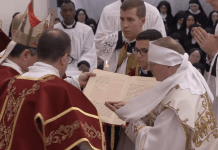
Pope Leo XIV calls the Chaldean Church to reject war and uphold peace during their Synod to elect a new Patriarch in Rome.
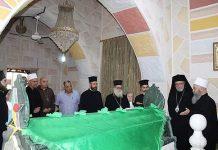
Newsroom (10/04/2026 Gaudium Press ) Meeting with members of the Chaldean Catholic Church during their Synod to elect a new Patriarch, Pope Leo XIV issued a strong appeal for peace and fidelity to the Church’s ancient mission. Addressing clergy, religious, and lay representatives gathered at the Apostolic Palace on Friday morning, the Holy Father warned against siding with those who “wield weapons” in a world consumed by greed, hatred, and violence.
The Pope’s address came during a pivotal moment for the Chaldean Church, which is based in Baghdad and faces mounting challenges—migration, persecution, and internal tension over the future of its leadership.
Rooted in an Apostolic Heritage
Pope Leo began with words of gratitude and encouragement, affirming the Chaldean Church’s apostolic roots. He described it as “an ancient and fruitful tradition, intimately linked to the places of salvation’s origin.” The Church, he said, had carried the Gospel beyond the borders of the Roman Empire, becoming a living witness of faith amid centuries of trial.
“Your history is glorious,” the Pope remarked, acknowledging the wars, persecutions, and displacements that have marked their journey. Yet he celebrated how these same hardships shone light upon the courage of believers who remained steadfast in their witness—proof that faith can flourish even in adversity.
Choosing Leadership in Complex Times
Gathered during the octave of Easter, the members of the Synod now face the delicate task of electing a new Patriarch after the resignation of Cardinal Louis Raphaël I Sako in March 2026. Pope Leo called the process “a delicate and complex phase” and urged discernment guided by the Holy Spirit.
“The new Patriarch,” he said, “should be, above all, a father in faith and a sign of communion with all and among all.” He encouraged the bishops to choose a leader who lives “in accordance with the heart of Christ”—a man shaped by daily holiness, humility, honesty, mercy, and purity of heart rather than worldly ambition.
Authority in the Church, Pope Leo reminded them, “is always service and never hegemony.” The leader must be close to his people, ready to accompany them through uncertainty with hope and realism. “Be not deceived by the world,” he cautioned, underscoring that genuine strength lies in love—the only force that conquers evil and defeats death.
Solidarity with the Church in Iraq
Amid troubling times for the Chaldean community in Iraq, Pope Leo addressed the pain of displacement and instability. Christian families have fled war and persecution, while the Church continues to navigate the withdrawal of civil recognition of its Patriarchate. “I am with you,” Pope Leo said plainly, expressing solidarity with their suffering and sense of responsibility.
He encouraged cooperation not only within their own Church but also with other Christian denominations, emphasizing unity and shared witness. “Offer a response enlightened by faith and inspired by communion,” he urged, marking his commitment to ecumenical dialogue and reconciliation in a region long torn by sectarian conflict.
“Never Be on the Side of Those Who Wield Weapons”
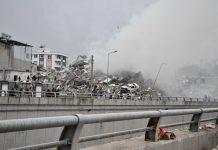
The Pope reserved his strongest words for the call to nonviolence. Referring to “a world marked by absurd and inhumane violence,” he declared that no cause can justify the shedding of innocent blood. “Be tireless workers for peace,” he said, invoking the presence of Christ as the foundation of their resolve.
He urged transparency in managing Church assets, renewed attention to priestly formation, and pastoral care for the lay faithful. Obedience and chastity, he noted, remain “ineffable gifts” that sustain spiritual integrity.
In his closing appeal, Pope Leo warned that faith cannot coexist with the tools of war: “You are called to be never on the side of those who yesterday wielded the sword and today launch bombs.”
At a moment when violence continues to ravage the Middle East, the Pope’s voice was both pastoral and prophetic—a reminder that the Chaldean Church’s witness of peace remains a light in regions shadowed by conflict.
- Raju Hasmukh with files from Vatican News
Related Images: