


Pope Leo XIV reaffirms women and lay members in the Dicastery for Bishops, echoing Francis’ reforms while reframing their theological foundation.
Newsroom (17/02/2026 Gaudium Press ) On Monday, Pope Leo XIV confirmed the membership of the Vatican’s Dicastery for Bishops, reaffirming the presence of two lay women appointed by Pope Francis and adding a third — Sr. Simona Brambilla. The move cements a historic precedent set under Francis: the inclusion of women and lay voices in one of the Curia’s most influential offices.
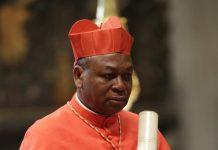
At first glance, the announcement could be seen as routine institutional housekeeping. Yet, in the intricate choreography of Vatican governance, timing and subtext are everything. The same day, L’Osservatore Romano ran a lengthy article by Cardinal Marc Ouellet — the former prefect of that same dicastery — revisiting a theological controversy that has shaped curial reform for the past decade. His essay, extolling the presence of the laity in positions of governance as an “ecclesiological advance,” reads like an intentional echo of Leo’s appointments.
Beyond Continuity: A Shift in Tone
Since his election in 2025, Pope Leo XIV has displayed a measured approach to Francis-era reforms—slowing their pace without reversing their trajectory. His decision to confirm and expand lay participation at the highest level of curial life suggests not contradiction but continuation, with a more deliberate theological framing.
The inclusion of Sr. Brambilla alongside Sr. Raffaella Petrini and María Lía Zervino signals that the new pontificate does not intend to undo Francis’ bold experiment. Rather, Leo’s Vatican appears intent on grounding it more securely in theological reasoning and ecclesiological balance, rather than in purely administrative authority.
The Theological Earthquake Revisited
To grasp the stakes of Ouellet’s essay — and by extension, Leo’s confirmation — one must recall the controversy that began under Pope Francis with Praedicate Evangelium (2023). That apostolic constitution opened curial leadership to lay people, redefining centuries of clerical order in Rome’s administrative heart.
Cardinal Gianfranco Ghirlanda, SJ, one of Francis’ most trusted canonists, provided the juridical justification. He argued that all power in the Church is ultimately papal in nature and can thus be delegated by the pope to anyone — even the laity. “The power of governance in the Church doesn’t come from ordination,” he said, “but from the canonical mission.”
Ouellet famously objected at the time, calling it “a Copernican revolution” inconsistent with Vatican II. In his view, it risked reducing Church authority to legal delegation, neglecting the sacred bond between the sacrament of Holy Orders and the Church’s governing munera — to teach, sanctify, and rule.
From Critic to Theologian of Continuity
Now, in 2026, Ouellet appears to have revisited his own critique — not to retract it, but to reinterpret it. His new essay does not simply endorse Francis’ reforms; it reframes them in pneumatological terms. Where governance had once been debated through juridical logic, Ouellet locates it in the broader action of the Holy Spirit working within the Church’s charisms.
“There is still uncharted territory to explore,” he writes, suggesting that lay governance may express the Spirit’s gifts — not as competition to hierarchical authority, but as its complement. The Church, he argues, suffers from a “pneumatological deficit” when governance is treated as exclusively tied to ordination.
Yet, even in his newfound openness, Ouellet draws a careful boundary: “There is no question of substituting charismatic governance for hierarchical government.” His emphasis, then, is not on eroding the sacramental structure, but on integrating lay charisms into it.
The Canonical Crossroads
Still, unresolved tensions remain. Canon law defines governance as belonging by divine institution to those in Holy Orders, while allowing others to “cooperate” in that power. This distinction between the power to govern and the cooperation in governance is at the heart of current Vatican debate.
If the Holy Spirit acts through both clergy and laity, how should the Church discern where hierarchical authority ends and charismatic participation begins? Ouellet does not answer directly, but he gestures toward openness — particularly in offices focused on communication, human development, and administration, which he believes can be led by qualified lay or religious figures with a recognized charism.
A “Reboot,” Not a Resolution
Some Vatican-watchers see deliberate orchestration in the synchronization of Leo’s announcement with Ouellet’s commentary. Together, they form less a policy change than a theological recalibration — a “reboot” of one of the Francis era’s most polarizing discussions.
Brambilla’s appointment, coupled with Ouellet’s public essay, points to a Vatican that is no longer debating whether lay people belong in the house of governance, but how their roles express the Church’s Trinitarian life. Under Leo XIV, the conversation appears to be shifting from canon law to theology — from “because the pope can” to “what the Spirit inspires.”
A Distinct Catholic Moment
For Catholics attentive to the Church’s internal logic, the significance of this moment runs deeper than institutional diversity. It reopens core questions about the relationship between hierarchy and charism, the episcopal office and the Spirit’s work among the baptized.
Ouellet’s late-career turn, Leo’s measured but unmistakable affirmation of Francis’ inclusion of lay women, and the ongoing debate about the nature of authority all point toward a developing theology of governance — one that seeks unity not in uniformity, but in the Spirit’s manifold gifts.
What remains to be seen is where the Church will draw the lines: between collaboration and command, between office and charism, between sacrament and mission. Pope Leo XIV seems content, for now, to keep that door open — allowing the conversation to mature under the light, not of controversy, but of discernment.
- Raju Hasmukh with files from The Pillar
Related Images: