




Pope Leo XIV meets again with Ukraine’s Greek Catholic leader, receiving names of prisoners held by Russia amid ongoing war and peace efforts.
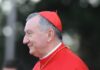
Newsroom (13/02/2026 Gaudium Press ) In a quiet yet solemn meeting inside the Apostolic Palace on February 12, Pope Leo XIV welcomed His Beatitude Sviatoslav Shevchuk, head of the Ukrainian Greek Catholic Church, marking their second encounter since the start of the pontificate. During the audience, the Major Archbishop of Kyiv-Halich handed the Pope a list of Ukrainian prisoners held by the Russian army—a document compiled directly from the families of the detained and missing.
The gesture carried profound symbolic and humanitarian weight. For many Ukrainians, the Church remains a moral lifeline amid the ongoing war that has gripped the nation since 2022. The list, delivered into the hands of the Holy Father, represents both an appeal for compassion and a prayer for freedom.
Shevchuk expressed gratitude toward Pope Leo XIV for his consistent solidarity with Ukraine, emphasizing the Holy See’s diplomatic efforts to seek peace through dialogue. According to a statement released after the audience, the Major Archbishop thanked the Vatican for its continued engagement at a time when both the spiritual and physical scars of war still deepen.
The Ukrainian Greek Catholic Church, which follows the Byzantine Rite and accounts for roughly 14.1% of Ukraine’s population, has long played a pivotal role in the nation’s cultural and religious identity. Concentrated largely in western regions bordering Poland, particularly in Lviv, the Church traces its origins to the Christianization of Kievan Rus’ in the 10th century—a spiritual legacy shared among Ukraine, Russia, and Belarus. Today, it is organized into 16 eparchies or exarchates across the country, equivalent to dioceses or vicariates in the Latin Church.
“Our local Church of Christianity in Kyiv is of Ukrainian origin, but it is not a Church only for Ukrainians,” Shevchuk said during the meeting. “It is open to the proclamation of the Gospel to all peoples, precisely because of its full visible communion with the Successor of the Apostle Peter.”
Pope Leo XIV, in turn, voiced his admiration for the Church’s steadfast witness throughout the conflict. He specifically praised the initiative “Healing the Wounds of War,” a pastoral program aimed at restoring dignity and hope to those traumatized by violence. The pontiff acknowledged that the Church’s mission extends far beyond relief—it is an act of rebuilding the human spirit.
At the conclusion of the audience, Archbishop Shevchuk presented Pope Leo XIV with a poignant gift: a sculpture depicting a dove of peace wounded by a fragment of metal from a Russian missile. The artwork, strikingly symbolic, captures both the agony and resilience of the Ukrainian people.
“This wound causes the bird great pain, but we see that it is not dead, but alive,” Shevchuk reflected. “It is a beautiful symbol of modern Ukraine, wounded but alive.”
This encounter followed a prior one on May 15, during which Shevchuk also delivered a list of Ukrainian detainees in Russia, seeking potential mediation through the Vatican’s diplomatic channels. The persistence of these efforts underscores the Church’s enduring hope that moral persuasion and faith-driven advocacy might succeed where politics often falters.
- Raju Hasmukh with files from ACI Prensa
Related Images: