










Pope Leo XIV affirms at General Audience that the Church’s hierarchy is a divine structure born from Christ to continue His mission of salvation.
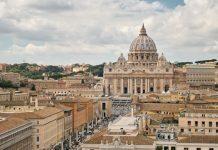
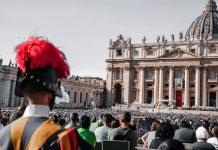
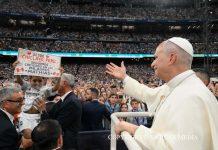
Newsroom (25/03/2026 Gaudium Press ) At his weekly General Audience in St. Peter’s Square, Pope Leo XIV continued his catechesis on Lumen gentium, the Dogmatic Constitution of the Second Vatican Council. Turning to its third chapter, the Holy Father explored the Church’s hierarchical nature as a divine institution rooted in Christ’s own mission to preach the Gospel.
The Pope recalled that the Council’s document first presented the Church as the People of God before addressing her hierarchical form. This structure, he emphasized, was not an afterthought or a purely human organization. Instead, it arose with the very birth of the Church—directly linked to the will and mission of Christ.
A Structure Willed by Christ
“Jesus’ first disciples, the Apostles,” said Pope Leo, “were established by Him as a means of salvation for the world.” From this foundation, the Church’s hierarchy took shape as part of the divine plan to continue Christ’s salvific work across time.
Quoting Lumen gentium, he noted that the hierarchical structure “is not a human construct” designed merely to organize the Church’s social life. Rather, it is “a divine institution whose purpose is to perpetuate the mission given by Christ to the Apostles until the end of time.”
This hierarchy, said the Pope, serves not dominance but communion. It functions “in the service of unity, mission, and sanctification of all her members,” ensuring that the Gospel’s grace and truth reach every generation.
Apostolic Succession and Sacred Ministry
Pope Leo XIV reiterated that the Church’s ministers act as successors of the Apostles, continuing their sacred mandate. “Since the Apostles are called to faithfully preserve the Master’s salvific teaching,” he said, “they hand on their ministry to men who, until Christ’s return, continue to sanctify, guide, and instruct the Church through their successors in pastoral office.”
In his reflection, the Pope underlined the Council’s aim—not to present the Church as a mere institution but to explain the inner mystery of her divine constitution. Central to this, he explained, is the distinction between the ministerial or hierarchical priesthood and the common priesthood of all the baptized.
Though every Christian shares in the one priesthood of Christ, the Pope said, those entrusted with the ministerial priesthood have been granted sacra potestas, or “sacred power,” to serve the community. Bishops, priests, and deacons each carry a distinct munus—a duty or gift—directed toward the salvation of God’s people.
A Hierarchy Born of Charity
Citing Saint Paul VI, Pope Leo presented the hierarchy as a reality “born of the charity of Christ,” existing to “fulfil, spread, and ensure the intact and fruitful transmission of faith, examples, precepts, and charisms.” This vision situates the Church’s governance not in worldly authority but in loving service modeled after Christ Himself.
Pope Leo concluded his catechesis with a prayer that the Lord may continue to call ministers filled with evangelical charity—men ready to become courageous missionaries and bring the Gospel’s light to every corner of the world.
- Raju Hasmukh with files from Vatican News
Related Images: