









At the Easter Vigil, Pope Leo proclaims Easter’s love conquers sin and hatred, calling believers to be bearers of renewal and peace.
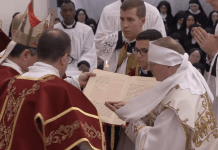
Newsroom (06/04/2026 Gaudium Press ) In the flickering glow of the Paschal Candle within St. Peter’s Basilica, Pope Leo’s voice rose with warmth and solemn conviction. Celebrating the Easter Vigil Mass at the Vatican, he declared that Easter—the “mother of all vigils”—reveals the victory of life over death and the triumph of divine love over human sin.
“God responds to the hardness of sin – which divides and kills – with the power of love, which unites and restores life,” the Pope said, reflecting on the sanctifying power of the night that “drives out hatred, fosters concord, and brings down the mighty.”
The vigil began in darkness. Then, as the deacon sang the ancient hymn of exultation, the light of the Paschal Candle pierced the still air. From that single flame, thousands of small candles were lit, illuminating the basilica in shimmering unity—a living symbol of the Church’s mission: to be light for the world. The congregation’s collective “Amen” echoed as both affirmation and commission: to carry that light beyond those marble walls.
The Vigil of Creation and Redemption
In his homily, Pope Leo connected the mystery of the Resurrection to the story of creation. He recalled how, in Genesis, God brought order from chaos and entrusted humanity with care for the world—a trust later fractured by sin yet restored through divine forgiveness.
The readings traced the long arc of salvation: Abraham’s tested faith, Israel’s liberation from Egypt, the prophetic visions of renewal and peace. Across this sacred history, Pope Leo said, God consistently answered human hardness not with wrath, but with mercy. “Even when we failed, God did not abandon us,” he affirmed, “but showed an even greater love through forgiveness.”
The Easter vigil, he explained, is both remembrance and reawakening—a passage through darkness into the dawn of reconciliation.
From the Tomb to the World
Recalling the Gospel of Matthew, Pope Leo spoke of Mary Magdalene and the other Mary who visited the tomb at dawn. Their courage to approach the sealed grave, he said, revealed the heart of faith: the refusal to let fear or despair close one’s path to God.
“The stone of sin,” he noted, “is heavy, but the power of love overturns it.” The angel’s presence atop the stone and the Risen Christ’s greeting—“Peace”—became, in the Pope’s words, God’s enduring message to humanity: that no tomb can imprison love.
This message, he urged, must be lived and shared. “We too are called to sing the Alleluia with our lives,” he said, quoting Saint Augustine, “as witnesses of resurrection through faith and charity.”
As newly baptized Christians from around the world stepped forward during the ceremony, Pope Leo reminded them—and the faithful—that to follow Christ risen is to be reborn as builders of unity. “Proclaim Christ,” he urged, “sow and spread everywhere what you have conceived in your heart.”
A Call to Lift the Stones of the Present
Looking beyond the Basilica, Pope Leo turned to the human struggles that still darken hearts and nations. Today’s “tombs,” he said, are found in mistrust, greed, fear, and war—stones that weigh on the soul and fracture human bonds.
“Such stones may appear immovable,” he admitted, “but throughout history, men and women of faith have rolled them away through the strength of God’s love.” Their courage, often born in suffering, remains the Church’s inheritance of hope.
The Pope called for that same courage today—from every believer, every community, every nation—to act with “the strength that God supplies” so that “the gifts of harmony and peace may grow and flourish everywhere and always throughout the world.”
In the soft glow that lingered as the vigil ended, the Paschal flame seemed to echo his challenge. Easter’s light, Pope Leo said, is not meant to remain within cathedral walls; it is meant to drive out hatred, renew hearts, and bring down the mighty through the quiet, transforming power of love.
- Raju Hasmukh with files from Vatican News
Related Images: