












Japanese Ambassador Koji Abe urges global cooperation among middle powers, pairing diplomacy and culture to foster peace and nuclear disarmament.
Newsroom (06/02/2026 Gaudium Press ) Japan’s new Ambassador to the Holy See, Koji Abe, believes the path to global peace begins with the collaboration of “middle powers” — nations like Japan and Canada that sit between superpowers but share a commitment to law, peace, and multilateralism. Speaking in an interview following the start of his tenure in December 2025, Abe emphasized that this shared vision aligns closely with the Holy See’s moral leadership under Pope Leo XIV: a world built on dialogue, justice, and the rule of law rather than domination by force.
For Abe, the prospect of a nuclear-free world is not only a moral imperative but a historical responsibility. “Japan continues to promote this cause within the United Nations,” he said, pointing to his country’s annual resolution calling for disarmament. “It is ambitious but essential.”
Japan’s Political Renewal and Economic Resolve
The ambassador addressed Japan’s domestic political shift ahead of the February 2026 general election. Prime Minister Sanae Takaichi, the country’s first woman to hold the post, called early elections after realigning her coalition. Abe noted her priority was stabilizing the economy, which has faced sustained inflation—particularly affecting staple goods like rice. “Without a strong economy,” he said, “there can be no strong diplomacy or defense.”
This belief reflects a fundamental principle of Japan’s post-war identity: security built upon the twin foundations of peace and prosperity.
A Diplomacy Rooted in Peace
Since adopting its pacifist constitution in 1947, Japan has avoided war entirely—a record unmatched by other major powers. Abe described Article 9, which limits Japan’s military role to self-defense, as “almost revolutionary.” That commitment, shaped by the atomic tragedies of Hiroshima and Nagasaki, has become “deeply embedded” in Japanese culture.
Today, Japan seeks to transform its pacifist heritage into proactive diplomacy: supporting UN peacekeeping, economic development, and collaboration with the “Global South.” “In a quickly changing world order,” Abe said, “we must strengthen multilateralism, not abandon it.”
Navigating Tensions in East Asia
Stable relations in East Asia remain central to Japanese strategy. Abe described Tokyo’s approach toward China as one of “mutual benefit based on shared strategic interests.” Cooperation with the United States and dialogue with South Korea underpin Japan’s efforts to balance regional power while addressing global threats.
However, relations with North Korea remain fraught. Abe reiterated Japan’s insistence on complete denuclearization and resolution of the long-standing abductions of Japanese citizens—an issue he raised repeatedly in his meetings with Vatican officials.
Manga Diplomacy and Japan’s Cultural Soft Power
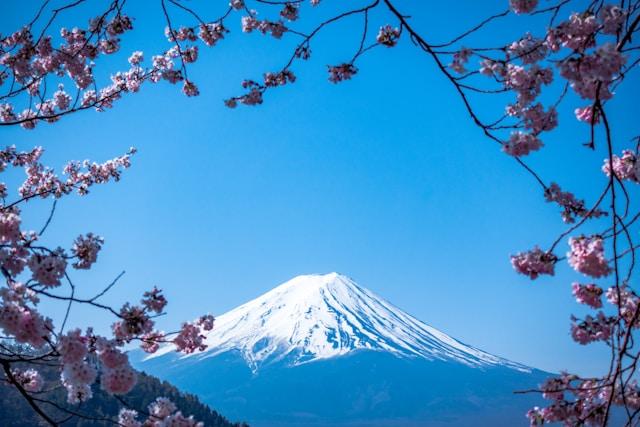
Beyond economic or strategic policy, Abe highlighted Japan’s “soft power” as a modern tool for peacebuilding. The global reach of Japanese manga and anime, he argued, provides a bridge between cultures. “Young people everywhere—whether in Africa, Europe, or America—read manga. It fosters mutual understanding,” he said, recalling his recent posting in Madagascar.
This form of cultural diplomacy, Abe believes, can inspire a new generation to embrace peace and tolerance, extending Japan’s peaceful influence far beyond geopolitics.
Faith, History, and Freedom
Reflecting on Japan’s Christian heritage, Abe described the endurance of the country’s “hidden Christians” as a story of faith’s quiet strength. “Today, their history is part of our national identity,” he said. As Ambassador, he sees opportunities to celebrate this legacy through cultural exchange and interfaith cooperation. “Everything leads to peace and religious freedom,” he added, underscoring Japan’s guarantees of conscience and belief.
Shared Values with the Holy See
In a global environment marked by rising authoritarianism and conflict, Abe praised Pope Leo XIV’s recent address to the diplomatic corps for identifying the trend toward “peace through force.” Japan, he said, fully shares the Vatican’s concern.
“We live in a moment when universal values—freedom, democracy, human rights—are being tested,” Abe warned. “Japan and the Holy See must work together to defend them.” He compared the moral influence of the Pope to Japan’s own reliance on diplomacy and persuasion. “When the Pope speaks, the whole world listens,” Abe concluded. “That is his soft power.”
- Raju Hasmukh with files from Fides News
Related Images:


