













Inside the Vatican’s renewed focus on exorcism as new technologies and online cults fuel a surge in spiritual crises worldwide.
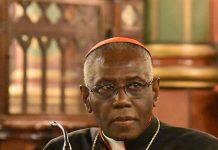
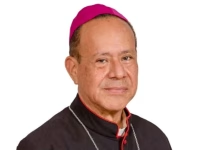
Newsroom (02/04/2026 Gaudium Press ) When Pope Leo XIV welcomed Monsignor Karel Orlita and Father Francesco Bamonte, the President and Vice-President of the International Association of Exorcists (IAE), on March 13, the meeting was anything but ceremonial. Representing more than 900 exorcists across the globe, their agenda was densely packed—and deeply spiritual. At the heart of their concerns lies a phenomenon as ancient as fear itself, now reborn in the digital age: an alarming rise in demonic disturbances linked to cults, occult practices, and the unchecked power of the Internet.
“The suffering of those under the extraordinary action of the devil is often invisible,” Bamonte told La Bussola, “yet it continues to grow.” What once seemed confined to rare or extreme cases now appears increasingly common, woven into the fabric of contemporary society—and technology may be its new conduit.
Digital Portals to Darkness
The vice-president draws a direct line between the accessibility of occult content and the explosion of interest in esoteric movements. The Internet, he notes, along with smartphones and even artificial intelligence, has made the gateway to such dangerous practices virtually omnipresent. “Access to these realms is now as simple as a search or a tap on a screen,” Bamonte said. The allure of belonging, secret knowledge, or instant empowerment can—digitally and spiritually—become a step toward self-destruction.
This disturbing trend is why formation and preparation have become central concerns for exorcists worldwide. The IAE insists that the Church must not only respond to these cases but anticipate them by training both clergy and laity to recognize the signs of danger in their communities.
Strengthening the Spiritual Frontline
Despite centuries of theological tradition, Bamonte admits that demonology still receives little attention in many seminaries. The topic, if addressed at all, often falls into the margins of dogmatic or anthropological study. “The absence of structured teaching leaves future priests ill-equipped to interpret what they encounter pastorally,” he explains.
But change is slowly stirring. Several seminaries now invite experienced exorcists annually to share real-world insights—an effort to demystify the work and create collaboration between parish priests and exorcists. The goal is clear: no one should face spiritual affliction alone, and the clergy must act as one unified pastoral body.
Educating the Faithful
A widespread yet respectful dialogue about the ministry of exorcism is another of the Association’s missions. The IAE promotes accurate, theologically grounded information via its official website, monthly Radio Maria program “Father, Deliver Us from Evil,” and parish conferences worldwide. Bamonte emphasizes that informed communities are less vulnerable to deception—and better equipped to support those in need of deliverance.
Education, he asserts, must go hand in hand with compassion. “The faithful are attentive, receptive, and often eager to understand,” he says. “It’s our duty to ensure that their curiosity leads them toward truth, not superstition.”
A Renewed Commitment Under Leo XIV
The audience with Pope Leo XIV symbolized more than support—it marked a new chapter in the Church’s confrontation with evil in all its forms. The exorcists presented the Pope with a metal image of Saint Michael the Archangel, a gesture rich in history and faith. Saint Michael, whose apparition once graced Italy’s Gargano Peninsula, has long stood as a symbol of divine justice and spiritual protection.
The meeting’s timing and gestures were not lost on Bamonte, who highlighted the hope that the new “Leonine” papacy brings. Echoing the legacy of Leo XIII, famed for his prayers against demonic forces, Leo XIV’s reception of the exorcists signals a continuity of vigilance—and a reminder that the fight against evil is both ancient and perpetually modern.
As Father Bamonte concluded, “The Church’s task is not only to liberate, but to enlighten—to help humanity see that the path to salvation must pass through understanding, discernment, and the courage to confront darkness wherever it surfaces—even in technology itself.”
- Raju Hasmukh with files from Zenit News
Related Images: