





Lebanese Christians celebrate Easter in exile as Israel-Hezbollah fighting devastates southern villages and displaces entire congregations.
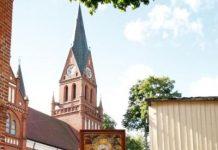
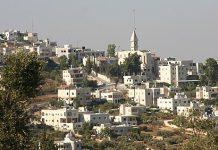
Newsroom (06/04/2026 Gaudium Press ) It was not how Father Maroun Ghafari had imagined Holy Week. For years, the priest of Alma al-Shaab, a predominantly Christian village nestled in Lebanon’s southern hills, had delivered Easter sermons surrounded by the familiar faces of his congregation. This year, his altar stood in a Beirut suburb, beside a cardboard cutout of his bomb-damaged church — a fragile symbol of a homeland now caught in a deadly crossfire between Israeli forces and Hezbollah fighters.
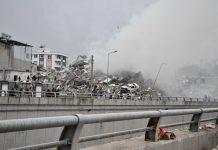
Since hostilities flared last month between Israel and Hezbollah — intensified by the broader U.S.-Israeli war on Iran — Lebanon has endured one of its deadliest crises in decades. More than 1,400 people have been killed, and over a million displaced, a staggering toll in a nation of just 5.5 million. Among those forced from their homes are thousands of Lebanese Christians, scattered far from the ancestral churches that have anchored their identity for centuries.
A People Caught Between Forces
Lebanon’s Christians, who constitute roughly a third of the population across 12 sects, have weathered countless invasions, from Byzantine and Ottoman to the modern civil war. Yet few crises have shaken their spiritual roots like the latest conflict.
Even miles away from the clashes, the displaced in Beirut live under the constant reminder of war — the low thunder of Israeli jets, the distant rumble of airstrikes echoing across the capital’s southern suburbs. Still, faith remains their anchor.
In his Easter homily, Maronite Patriarch Beshara al-Rai lamented the suffering, laying blame on both sides. “The country is going through a critical situation due to Iranian interference through Hezbollah and Israeli aggression,” he declared. “Our hearts bleed for the victims of the conflict imposed on Lebanon.”
The Church as Shelter — and Witness
In Alma al-Shaab, many refused to abandon their homes — even as bombs fell closer each day. When evacuation warnings spread, villagers gathered in their church, believing its thick stone walls and their collective prayers would protect them.
But their fragile sense of safety shattered on March 8. Father Ghafari’s brother, seventy-year-old Sami, was killed by an Israeli drone strike while tending to his garden. His death forced the remaining villagers to flee north under the protection of UNIFIL, the U.N. peacekeeping mission that has long patrolled the tense border region.
“We wanted to stay,” Father Ghafari said from St. Anthony Church in Jdeideh, “but it was always possible that one of us could be targeted or killed at any moment. Everyone is tired, and we see that war brings nothing but destruction, death, and displacement.”
Longing for the Smell of Home
For many Christians, Holy Saturday is a time of remembrance — a day to visit the graves of loved ones before the resurrection joy of Easter Sunday. This year, those traditions lived only in memory.
Nabila Farah, one of the last to leave Alma al-Shaab, attended the displaced community’s service in Beirut dressed in mourning black. “You miss the smell of home, the lovely traditions, the sound of the bells of three churches ringing,” she said softly. “As much as we experience the Easter atmosphere here, it will never be as it is over there.”
Faith Amid Ruins
In the southern city of Tyre, where pockets of Christians have held their ground, faith endures even as congregations shrink. Father Marius Khairallah continues to open his church doors each morning. “We stay not out of stubbornness,” he said, “but out of a sense of mission — to remain alongside our faithful, as witnesses.”
Yet the risks grow daily. With the Lebanese army scaling back its presence in parts of the south, civilians are increasingly vulnerable as Israeli troops push deeper into Lebanese towns. Many fear that centuries-old Christian enclaves could vanish altogether.
On Good Friday, inside St. Anthony’s Church in Jdeideh, Father Dori Fayyad’s sermon echoed against the packed pews. “Today, you understand what the cross means,” he told the faithful. “Not as an idea, not as a concept, but because you are going through it.” Beside him stood a row of cardboard cutouts — each bearing the image of a southern church scarred by war.
“These churches are not only places of worship,” he said solemnly. “They are silent witnesses — to suffering, and to faith.”
Even in displacement, Lebanon’s Christians cling to that belief: that the cross, however heavy, still points toward resurrection.
- Raju Hasmukh with files from Crux Now
Related Images: