













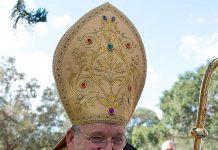
Cardinal Tagle reflected on St. John Henry Newman’s formative year as a student at the Collegio Urbano de Propaganda Fide and proposed three missionary lessons
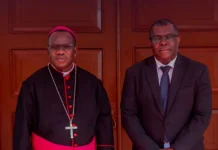
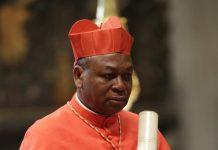
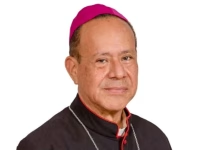
Newsroom (04/11/2025, Gaudium Press ) Cardinal Luis Antonio Tagle, Pro-Prefect of the Dicastery for Evangelization and Grand Chancellor of the Pontifical Urbaniana University, delivered a keynote address Tuesday at the opening of an academic symposium celebrating the proclamation of St. John Henry Newman as a Doctor of the Church. The event, titled “The Vocation of a Doctor of the Church: Saint John Henry Newman, from the College of Propaganda to the Universal Church,” was held in the university’s John Paul II Auditorium.
During the ceremony, Professor Vincenzo Buonomo, Pontifical Delegate and Rector of the Urbaniana, read the papal chirograph by which Pope Leo XIV declared Newman patron of the institution and co-patron, alongside St. Thomas Aquinas, of the Church’s educational mission.
In his remarks, Cardinal Tagle reflected on Newman’s formative year (1846–1847) as a student at the Collegio Urbano de Propaganda Fide and proposed three missionary lessons drawn from the new Doctor’s life and writings.
First, he urged evangelizers to draw on Newman’s insights into the act of faith, developed across works from The Arians of the Fourth Century (1833) and the University Sermons (1843) to the Grammar of Assent (1870). Rejecting a purely rationalist view of belief, Newman stressed personal dispositions—trust, humility, openness, and longing—as essential for receiving revelation. “One cannot simply lead others to faith by presenting the best arguments,” Tagle quoted, “but must form hearts and expand the imagination.”
Second, Tagle highlighted Newman’s Essay on the Development of Christian Doctrine (1845), which reconciled historical change with fidelity to the apostolic deposit. Newman’s criterion of “assimilative power”—Christianity’s capacity to incorporate new cultural elements without losing identity—offers, Tagle said, a model for confident inculturation. “Innovation and change are not betrayal,” he echoed Newman, “but necessary for the Gospel to be embraced across generations and contexts.”
Finally, Tagle invoked Newman’s 1859 essay On Consulting the Faithful in Matters of Doctrine, later vindicated by Vatican II’s Apostolicam Actuositatem. Citing the Arian crisis, when many bishops faltered while the laity held firm, Newman insisted on an active, educated laity. Tagle called for a “conspiratio”—a shared breathing—of pastors and faithful in bearing witness to the Gospel.
Concluding, Cardinal Tagle invited the Urbaniana community to invoke Newman as “Doctor of Mission,” noting the university’s historic mandate to form evangelizers for the particular churches.
- Raju Hasmukh with files from Fides News
Related Images: