

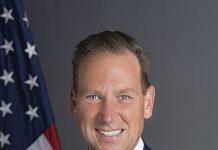
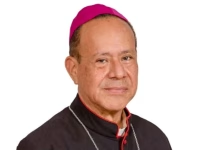

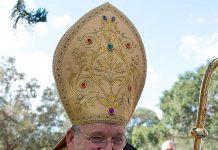
Cardinal Anthony Poola, India’s first Dalit and Telugu cardinal, elected CBCI president, guiding 20 million Catholics at a crucial moment.
Newsroom (09/02/2026 Gaudium Press ) The Catholic Church in India has reached a historic milestone with the election of Cardinal Anthony Poola, Archbishop of Hyderabad and the nation’s first Dalit cardinal, as the new President of the Catholic Bishops’ Conference of India (CBCI). The election took place on Saturday during the 37th CBCI General Body Meeting at St. John’s Medical College, Bengaluru.
The 64-year-old prelate, who leads a community of nearly 20 million Catholics across India, is the first Dalit cleric ever to head the national episcopal conference. His election represents both a spiritual and social landmark in the country’s complex journey toward equality and inclusion.
“With his election as President of the CBCI, Cardinal Poola Anthony assumes leadership of the Catholic Church in India at a crucial moment,” the CBCI said in a press statement, “bringing with him decades of pastoral experience, administrative leadership, and a strong commitment to the Church’s mission in service of faith, justice, and human dignity.”
A milestone for Dalits and India’s Church
Poola’s ascent carries immense cultural and symbolic weight. As a member of the Dalit community—historically marginalized and subjected to severe social discrimination—he embodies the Indian Church’s growing resolve to reflect the diversity of its flock. Although India abolished the caste system in 1948, its shadow persists in social and religious life, including among Christians who were not immune to its effects.
Bishop Sarat Chandra Nayak of Berhampur, chairperson of the CBCI Office for Scheduled Castes and Scheduled Tribes, hailed the election as “a clear and prophetic message” to those who still harbor caste-based prejudices. “Dalits and Tribals can be leaders in the Church at all levels,” he said, adding pointedly, “There is no partiality in God.”
A leader for turbulent times
The Church in India faces significant challenges under Poola’s stewardship. Those close to the cardinal describe the atmosphere as one of “severe distress,” citing harassment of pastors, closure of places of worship, and persecution of Christian believers by “fringe elements.” According to CBCI sources, Poola will be responsible for leading delegations to engage the government and advocate for minority rights and religious freedom.
Poola himself acknowledged these tensions in his acceptance message, thanking his “brother bishops” for their trust and noting that “leadership in the Church is a service rooted in listening, prayer, and shared discernment.” He pledged to work for “the unity of the Churches in India, the unity of Christians, and a deeper unity with the people of our nation.” In a country witnessing deepening polarization, he said, the Church must remain “a sign of reconciliation, dialogue, and hope.”
From rural beginnings to national prominence
Born on November 15, 1961, in the village of Poluru in the Diocese of Kurnool, Andhra Pradesh, Cardinal Poola’s path to leadership began in modest surroundings. After major seminary formation in Nuzvid and priestly studies at Saint Peter’s Pontifical Seminary, Bengaluru, he was ordained a priest on February 20, 1992, for the Diocese of Kadapa.
His early ministry featured pastoral assignments in both urban and rural parishes—serving as parish vicar at St. Mary’s Cathedral (1992–1993) and in Amagampalli (1993–1994), before leading congregations in Tekurpet, Badvel, and Veerapalli through the late 1990s and early 2000s.
In 2001, Poola travelled to the United States, where he earned a Master’s degree in pastoral care and completed theology studies at Loyola University, Chicago, while serving at St. Genevieve Church in the Archdiocese of Chicago. His exposure to international ministry and theological education broadened his pastoral vision, preparing him for leadership in India’s complex religious landscape.
Returning home in 2004, he directed the Christian Foundation for Children and Aging until 2008 and simultaneously held key administrative and educational roles in the Diocese of Kadapa—serving as diocesan consultor, education secretary, and coordinator of child sponsorship programs that improved the lives of hundreds of marginalized youth.
On February 8, 2008, he was appointed Bishop of Kurnool and consecrated two months later, beginning a period of energetic pastoral service marked by social outreach, education, and interreligious engagement.
Pope Francis named him Metropolitan Archbishop of Hyderabad on November 19, 2020, elevating him to cardinal two years later during the Consistory of August 27, 2022, when he was assigned the titular church of Ss. Protomartiri a Via Aurelia Antica in Rome. His appointment that year made headlines as he became not only India’s first Dalit cardinal but also its first Telugu-speaking cardinal, representing nearly 100 million Telugu-speaking citizens.
Looking ahead
Cardinal Poola now succeeds Archbishop Andrews Thazhath of Trichur, who led the CBCI for four years. The plenary meeting that elected him brought together bishops from India’s Latin, Syro-Malabar, and Syro-Malankara rites under the theme “Faith and the Nation: The Church’s Witness to India’s Constitutional Vision.”
As he assumes his new office, Poola faces the dual challenge of strengthening the Church’s internal cohesion while addressing rising external threats to India’s pluralism. Yet his message remains grounded in humility and hope. “I thank the People of God across the country for their prayers, goodwill, and trust in my leadership,” he said. “May God bless the Church in India and our beloved country.”
With decades of pastoral experience, administrative acumen, and a deep personal understanding of marginalization, Cardinal Anthony Poola’s election stands as a testament to a changing India and a Church increasingly attuned to the nation’s conscience.
- Raju Hasmukh with files from Crux Now and Indian Express
Related Images: