













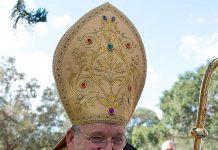




Bishop Bonny announces plans to ordain married priests before 2028, defying Rome and risking excommunication amid mounting tensions with the Vatican.
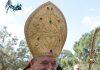
Newsroom (20/03/2026 Gaudium Press) Monsignor Johan Bonny, Bishop of Antwerp, has announced his intention to ordain married men as priests within three years—a decision made without authorization from Rome and one that could carry the gravest canonical consequences, including excommunication. The declaration, contained in a pastoral letter released on March 19 titled “Implementation of the Synodal Process in the Diocese of Antwerp,” marks a direct challenge to long-standing Church discipline and fuels an already volatile debate over the future direction of Catholic reform.
Promoted by Pope Francis but long identified with progressive causes, Bishop Bonny once again places himself at the center of theological controversy. In recent years, he has stirred debate on the Church’s positions regarding euthanasia, same-sex marriage, and the ordination of women. His latest move, however, may prove to be the most defiant yet.
“I will use every means to ordain some married men as priests for our diocese between now and 2028,” the bishop wrote, adding that he would personally select candidates who possess “the necessary theological formation and pastoral experience, comparable to that of other candidates for the priesthood.”
A Challenge to Centuries of Tradition
Priestly celibacy, Monsignor Bonny acknowledges, is deeply rooted in the Latin Church’s theology of the priesthood. The Catechism of the Catholic Church describes celibacy as a commitment “for the sake of the Kingdom of Heaven,” expressing the priest’s total consecration to God and service to the Church. Yet Bonny’s pastoral letter questions why this discipline cannot evolve.
He points to the Eastern Catholic Churches and Christian converts who already serve as married Catholic priests in Belgium, arguing that “no one can explain why the ordination of married men is possible for Eastern Catholic seminarians or Catholic converts, but not for those with Catholic vocations of origin.”
Despite this reasoning, Church scholars emphasize that the comparison is flawed. In Eastern rites, priestly marriage is part of an ancient tradition bound to specific conditions—bishops must remain celibate, and married priests cannot wed after ordination. Transposing that model onto the Latin Church, they warn, could disrupt theological and ecclesial coherence.
Synod or Schism?
Framing his initiative as a response to Pope Francis’ call for greater synodality, Bishop Bonny claims he is acting within the logic of the current reform process. “The ball is now in the court of the local bishops and their Churches,” he writes, suggesting that the faithful should not perceive the synodal process as an empty exercise.
But critics swiftly note that Bonny’s interpretation finds no backing in recent Vatican guidance. CathoBel, an unofficial outlet of Belgium’s bishops, reports that the Final Document of the Synod on Synodality concluded in 2024 does not call for the ordination of married men. Similarly, Pope Francis’s 2020 post-synodal exhortation Querida Amazonia declined to include proposals for expanding the married priesthood.
No diocesan bishop, canon lawyers remind, may unilaterally alter a universal discipline reserved to the Holy See. Should Bonny proceed without authorization, Rome could interpret the act as a grave disobedience to the Pope’s authority—though excommunication would only occur in the event of sustained defiance.
A Troubled Relationship with the Magisterium
The Antwerp bishop’s announcement fits a pattern of repeated clashes with the Vatican. In 2014, he publicly supported Church recognition of same-sex relationships. In 2022, the Flemish bishops—Bonny among them—proposed blessing rituals for same-sex couples, directly contradicting Vatican directives. In 2024, Belgian prelates again courted controversy by questioning the Church’s teaching on abortion, described by the Second Vatican Council as a “grave crime.”
These actions have deepened what some observers describe as a widening gap between sectors of the Belgian Church and the Magisterium. For others, Bonny represents a testing ground for the “synodal spirit” encouraged under Pope Francis—an experiment in local autonomy that, at its limit, risks undermining the Church’s unity.
Women and Leadership
In the same pastoral letter, Bishop Bonny also takes aim at the Church’s treatment of women. Pledging further reform, he calls for “co-responsibility of women in all pastoral and administrative tasks,” and raises “the difficult issue of women’s access to the sacrament of Holy Orders,” particularly the diaconate. Though he stops short of announcing concrete actions, the appeal continues his pattern of urging structural change.
Unity at the Breaking Point
Bonny’s announcement lands amid a continuing decline in religious practice across Belgium and a severe shortage of priestly vocations. To supporters, the ordination of married men could provide pragmatic relief and make priesthood more accessible to new candidates. To critics, it signals a deeper crisis—an erosion of fidelity to Rome and of confidence in the spiritual meaning of celibacy.
Ultimately, the bishop’s pronouncement forces a reckoning not just over clerical discipline but over ecclesial communion itself. If Antwerp proceeds down this path, it could face isolation within the universal Church, posing one of the most serious challenges yet to Pope Francis’s experiment in synodality.
- Raju Hasmukh with files from Infovaticana
Related Images: