







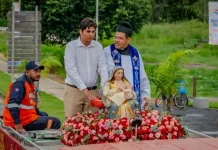



A year after the June 13-14, 2025 Yelwata massacre, survivors rebuild amid trauma, forgiveness, and renewed demands for justice.
Newsroom (11/05/2026 Gaudium Press ) On the night of June 13–14, 2025, Yelwata, a village in Benue State, was transformed from a place of refuge into a scene of mass death. A coordinated attack—reported as carried out by radical Fulani herdsmen—killed 259 people, many of them internally displaced persons who had fled violence in neighboring towns and sought shelter in the community.
A year later, Yelwata is still trying to rise from the ashes—physically, spiritually, and morally—while survivors insist that rebuilding cannot be separated from justice and accountability.
Fire as a weapon—and people trapped in the market square
Reports cited by Nigeria’s Foundation for Justice, Development and Peace (FJDP) describe an attack that did not involve shooting alone. According to these reports, attackers used fuel to burn entire families alive inside temporary accommodations in the town’s market square. The account further states that the exits were blocked, preventing people from escaping the buildings where they were staying.
Another account, attributed to AIN, offers a witness perspective. “Many people were burned to ashes. They forced the door, broke into the house, and doused it with gasoline,” a witness recalls.
For Father Jonathan Ukuma, parish priest of Yelwata, the aftermath was so brutal that it defied clear identification. “You could see burned human bodies alongside the crops. You couldn’t tell what was what. It was a terrible situation. The whole community was traumatized.”
Most victims were already fleeing—so Yelwata became a death trap
The tragedy was compounded by the victims’ status. Many who died in Yelwata had already lost their homes to violence in neighboring villages. They arrived seeking safety, only to encounter the violence they had run from.
When the attackers struck, victims were sleeping in makeshift shelters. In doing so, the attack turned the village—once a place to hide—into a site where displacement itself became a condition of vulnerability.
The Church says the massacre was part of a wider plan
After the killings, the local Church denounced the attack, describing it not as an isolated event but as part of a coordinated plan to force Christian communities to leave Benue State. The narrative presented by the Diocese of Makurdi adds another layer of concern: the diocese said the police were ill-prepared to prevent the tragedy.
The Church’s claim of an organized strategy emphasizes the broader context in which Yelwata’s survivors are now living—one marked not only by grief, but by fear of recurrence.
“Faith among the ashes”: survival, duty, and the refusal to abandon the community
Even as trauma dominates memory, survivors describe a response rooted in faith.
Father Jonathan Ukuma survived the attack by throwing himself to the floor in his sanctuary alongside several children as bullets rained down on the building. Ordained only three years earlier, he says he chose not to abandon those under his care. “I will continue serving the people here for the glory of God,” he declared resolutely.
In explaining his mission since the massacre, Father Jonathan frames endurance as both spiritual and communal. “As a priest, my duty is to encourage people, to let them know that, despite the situation, God does not abandon us,” he affirms.
He adds that those who remained continue to come to church and keep fighting to move forward. “Despite the challenges, despite the persecution, we must keep our faith alive,” he says.
“I forgive”: survivor testimony and a community’s spiritual response
Survivors also describe forgiveness—not as forgetting, but as a decision to pray even for those believed responsible.
Edward, a layman and parishioner, recounts that during the attack his wife was pregnant and that some people sought refuge in St. Joseph’s Catholic Church. His account captures what the community calls its spiritual response to brutality.
“I forgive, because God says, ‘To err is human, to forgive divine.’ So I forgive, I pray for the afflicted and for those who lost their lives during the attack. And I also pray for the enemies, that they may repent and return to God’s will.”
For many in Yelwata, faith is not an alternative to justice—it is presented as the only way to keep living after what happened.
A deserted town: rebuilding amid absence and fear
One year after the massacre, Yelwata’s impact remains measurable in empty streets and reduced worship attendance.
Father Jonathan notes that Yelwata, once a haven for thousands displaced people, was virtually deserted. According to the account, attendance at Sunday Mass fell from 500 to 20 in the days following the attack, as many had either died or fled fear of further reprisals.
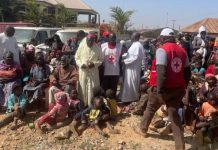
Many survivors remain in displacement camps in Daudu and Abagena.
For those who continue to stay, Father Jonathan insists that hope must be maintained—yet he also connects any return to safety requirements. He stresses that families will only come back consistently if a permanent military base is created in the area to prevent repetition of such an atrocity.
Justice still pending—and demands for action along the border
Beyond spiritual rebuilding, the Yelwata community and local church continue to demand that the government honor its promise: prosecute the perpetrators and address the root causes of the violence. Victims and families are calling for concrete action to combat insecurity along the border with Nasarawa State.
The memory of the 259 killed persists not only as a number, but as an ongoing emotional and moral obligation. Father Jonathan continues to ask for prayers for peace to return to Nigeria: “May God grant eternal rest to those who lost their lives… and the return of peace.”
Reconstruction is both material—and spiritual
In Yelwata, reconstruction is not limited to rebuilding structures. It is described as rebuilding lives—under the weight of trauma, through forgiveness that is tested daily, and with a justice that survivors say still feels distant.
As the community tries to restart after catastrophe, its central demand remains unchanged: that the violence that destroyed Yelwata must not be allowed to disappear into silence.
If you want, I can also produce a shorter “news brief” version (300–500 words) using the same provided material.
- Raju Hasmukh with files from Infocatholica
Related Images: