






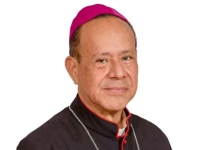


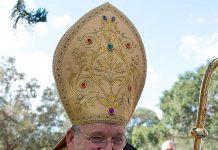
Cardinal Brandmüller urges Catholics to “lay down their weapons” in the liturgical disputes, calling for fidelity to Vatican II’s Sacrosanctum Concilium.
Newsroom (26/02/2026 Gaudium Press ) At 97 years old, Cardinal Walter Brandmüller—one of the most senior and outspoken figures in the College of Cardinals—has issued an impassioned appeal for “liturgical peace” within the Catholic Church. In a text published on the Diakonos blog, the German prelate calls on both progressive and traditionalist factions to “lay down their weapons,” urging a return to fidelity with the Second Vatican Council’s overarching liturgical constitution, Sacrosanctum Concilium.
Brandmüller, a respected Church historian and former president of the Pontifical Committee for Historical Sciences, frames his message as both a lament and a plea. He contends that it was not Sacrosanctum Concilium itself, but its post-conciliar implementation, that sowed deep divisions across the Catholic world—divisions that have persisted for decades. “The so-called liturgical conflict,” he writes, “has not only wounded ecclesial unity but threatens the very experience of faith for many of the faithful.”
A Conflict Rooted in History
The cardinal situates current liturgical tensions within a longer historical arc, tracing instances where reform led to rupture. From the 17th-century schisms in Orthodox Russia through the 19th-century upheavals in France over the replacement of the Gallican liturgy, conflicts about worship practices, he argues, have repeatedly revealed how deeply liturgical life touches the core of believers’ identities.
“These are not matters of dogma,” Brandmüller notes, “but of faith lived daily—customs, devotions, and ritual expressions that are woven into our lives.” The stakes, he implies, are emotional as much as theological, which is why disputes often burn so fiercely despite appearing to hinge on minor details, such as hymn texts or the gestures used during Mass.
From Pius XII to Paul VI: Two Reform Paths
Drawing on personal recollections as a seminarian and young priest, Brandmüller recalls the introduction of Pius XII’s reforms to the Holy Week liturgy in the 1950s as moments of excitement and renewal that faced little opposition. In contrast, the post–Vatican II reforms under Pope Paul VI were met, in his view, with fragmentation and resistance.
He attributes this shift partly to the cultural and intellectual climate that followed John XXIII’s pontificate. The desire for theological “liberation,” Brandmüller suggests, opened the door to arbitrariness and individual experimentation in the liturgy—what he calls “spiral notebook Masses,” improvised by celebrants. This, he argues, destabilized worship and helped fuel the growing polarization between reform-minded Catholics and those clinging to the preconciliar Mass of Pius V.
“In many places,” he writes, “arbitrariness replaced obedience, and the Church’s unity was weakened.” Countermovements arose in equal and opposite reaction, as traditionalists entrenched themselves in total rejection of postconciliar developments. The net result: a liturgical landscape marked by mutual suspicion and continuing schism.
The Deeper Issue: Understanding the Eucharist
For Brandmüller, the root of the liturgical tension lies not primarily in ritual structures but in a weakened understanding of the Eucharistic mystery itself. Citing earlier 20th-century debates and Pius XII’s encyclical Mediator Dei, he argues that contemporary practice too often reduces the Mass to a sociological or “convivial” event, neglecting the sacrificial dimension at its heart.
He warns that this “absolutization of the communal character of the Mass” has led to grave abuses—acts of neglect and even blasphemy—stemming from what he calls “fundamental misunderstandings about the mystery of the Eucharist.”
Equally troubling, he says, is the uneven enforcement of liturgical norms: too often, the celebration of Mass depends on the subjective style of the presiding priest, while episcopal oversight remains minimal. “This dissolution of liturgical unity,” Brandmüller cautions, “is both symptom and cause of a weakened faith, threatening the very unity of the Church.”
A Plea for Peace and Fidelity
Brandmüller’s call is not for a return to the past, but for reconciliation guided by fidelity to Sacrosanctum Concilium. He draws inspiration from the 19th-century pacifist novel Die Waffen nieder! (“Lay Down Your Weapons!”) by Bertha von Suttner, invoking it as a metaphor for the Church’s current situation. Both sides of the liturgical divide, he argues, must “disarm their language,” refrain from polemics, and show mutual respect.
For progressives, that means celebrating the Novus Ordo Missae with discipline and reverence; for traditionalists, it requires recognizing that the Roman liturgy has never been static but has evolved across centuries and cultures. True fidelity, he insists, lies not in nostalgia or innovation, but in conformity with the Council’s authentic vision.
“It is only in silence and with patience,” he concludes, “that we can work toward a reform of the reform—one faithful to Sacrosanctum Concilium and capable of uniting the faithful once again.”
At 97, Cardinal Walter Brandmüller’s voice carries both the weight of history and the urgency of one who has seen too much division. His message—“For God’s sake, lay down your weapons”—is less a shout than a prayer for peace in a Church still seeking harmony at its altar.
- Raju Hasmukh with files from Infovaticana
Related Images: