









The Vatican will debut AI translation for Mass at St. Peter’s, offering real-time translations in 60 languages via smartphone this spring.
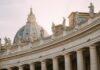
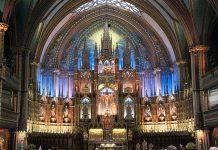
Newsroom (20/02/2026 Gaudium Press) In an unprecedented blend of faith and technology, the Vatican is set to introduce an artificial intelligence-assisted translation system this spring, enabling worshippers at St. Peter’s Basilica to follow the liturgy in their own languages in real time. The landmark initiative represents a significant step in the Church’s modern embrace of digital tools to make worship more inclusive and accessible to millions of visitors from around the world.
For the first time in the basilica’s history, those attending Mass will be able to understand prayers, chants, and readings as they happen—directly from their smartphones. The system, requiring no app downloads or additional devices, will operate through a browser-based interface accessible by scanning QR codes placed at entrances and designated points throughout the basilica. Once connected, users can listen to or read live translations of the liturgy in up to 60 languages.
The technology behind this innovation is powered by Lara, an advanced AI system developed by Translated, a world leader in AI-based language solutions, in collaboration with Carnegie-AI LLC, a company specializing in simultaneous interpretation technologies. According to Antonio Autorino, head of communications at the Fabric of St. Peter, pilot tests are already underway with select groups of faithful to ensure functionality and precision before the official launch.
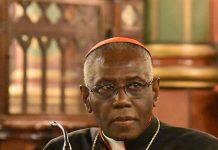
Presented on February 16 by Cardinal Mauro Gambetti, archpriest of St. Peter’s Basilica, the initiative is the result of a partnership between the Fabric of St. Peter, the Dicastery for Communication, and Translated. Cardinal Gambetti emphasized that the project reflects the Church’s mission of universality—an endeavor “to serve the mission that defines the heart of the Catholic Church, universal by its very vocation.” He underlined that St. Peter’s has long been a meeting place for the faithful of every nation, and this new tool continues that tradition by breaking down linguistic barriers.
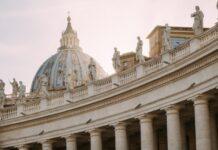
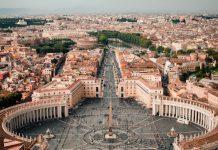
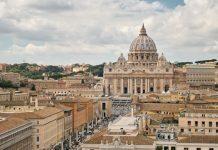
The rollout also coincides with a historic milestone: four centuries since the basilica’s consecration in 1626 by Pope Urban VIII, following more than a hundred years of construction. The foundations of this spiritual center, laid in 1506 at the direction of Pope Julius II, marked a new era for the Catholic world. Now, technology appears poised to usher in yet another transformation—this time through real-time communication aided by artificial intelligence.
A Broader Technological Vision for the Vatican
The real-time translation system is just one element of the Vatican’s expanding integration of technology into its heritage and daily operations. Alongside this initiative, officials have announced the SmartPass digital access platform, which will streamline entry into St. Peter’s Basilica. The system uses a network of sensors linked to the basilica’s official website to manage the daily flow of pilgrims and tourists, ensuring both safety and efficiency.
In another ambitious move, the Vatican has unveiled project “Beyond the Visible”, a groundbreaking structural monitoring program financed by Italian energy company Eni. The system employs highly sensitive sensors installed throughout the basilica’s foundations, dome, facade, and subsoil to provide continuous, millimeter-level tracking of the structure’s stability. As described by Claudio Granata, Eni’s head of monitoring projects, the technology makes it possible to detect even the smallest shifts—on the order of ten-thousandths of a degree—offering an unprecedented view of the building’s physical health.
This integration of advanced science and spiritual stewardship illustrates the Church’s evolving relationship with technology—not as a replacement for tradition, but as an instrument to preserve, protect, and make it more universally accessible.
By marrying centuries-old faith with cutting-edge innovation, the Vatican once again affirms its dual mission: to safeguard the past while guiding humanity toward the future.
- Raju Hasmukh with files from CNA
Related Images: