















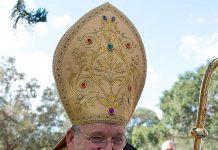
Germany’s Synodal Way ends its first phase amid sharp debate over whether a new national body should monitor reform implementation across dioceses.
Newsroom (03/02/2026 Gaudium Press) The German Synodal Way, a six-year reform effort that has roiled Catholic life in Germany and drawn close Vatican scrutiny, concluded its “first phase” on Saturday with a heated confrontation over how — and by whom — its sweeping resolutions will be enforced.
The closing session, held Jan. 31 in Stuttgart, capped the sixth and final plenary assembly of the Synodal Way, which brought together bishops and lay delegates to address systemic change in response to Germany’s clerical abuse crisis. Over five assemblies between 2020 and 2023, the initiative approved 150 pages of proposals urging deep revisions to Church practice, including support for women deacons, reconsideration of priestly celibacy, greater lay roles in episcopal appointments, lay preaching at Mass, and fresh language in the Catechism of the Catholic Church concerning homosexuality.
A Divisive Vote
Although the Synodal Way formally ended in 2023, organizers reconvened Jan. 29–31 to assess how dioceses had implemented the reforms and to set the stage for a proposed permanent national body — the “synodal conference” — whose establishment requires Vatican approval. The assembly’s statement described the gathering as “the end of the first phase,” signaling that the process will continue when the synodal conference meets for the first time in November.
Tension spiked after a Jan. 30 report summarized progress on implementing the resolutions across Germany’s 27 dioceses without naming specific ones, a decision that sparked “widespread outrage,” according to domestic media. The controversy spilled into the final day’s debate on whether the forthcoming synodal conference should “regularly monitor” diocesan compliance with the reform decisions.
Cardinal Reinhard Marx of Munich and Freising — one of the Synodal Way’s founding figures — vigorously opposed the measure. “I foresee significant difficulties,” he told delegates, warning against the creation of what could become “a higher authority that constantly monitors me as a bishop. This is precisely what Rome has criticized. It is not desirable.” Marx’s position was echoed by Bishop Peter Kohlgraf of Mainz, who cautioned that claims of sovereignty by the synodal assembly were “not compatible with the universal Church.”
Despite such concerns, the resolution passed by a narrow margin. It received 122 votes in favor, 11 against, and six abstentions — but with roughly 40 delegates absent by the time of the vote. Of the bishops present, 21 supported it, 10 opposed, and two abstained. Because abstentions were excluded, the approval barely met the required two-thirds majority among bishops.
Church Governance at Stake
The controversy touches the heart of an enduring question: how far national reform can go within Catholic ecclesial law. The proposed statutes of the synodal conference avoid the term “monitoring,” emphasizing instead that the body will “respect the constitutional order of the Church” and uphold the rights of diocesan bishops and existing Church structures.
Still, the Jan. 31 decision is likely to alarm Rome, which has repeatedly reminded German leaders since 2019 that no synodal entity may restrict a bishop’s autonomy within his diocese. Supporters of the reform argue that the intended role is one of “accompaniment” rather than control, noting that the German text used monitoren rather than the stronger kontrollieren to describe oversight.
A background document presented at the assembly acknowledged that inconsistent or ambiguous wording in the resolutions themselves made it difficult to measure what, if anything, had changed in many dioceses. Some lacked clear lines of responsibility or implementation timelines.
Next Steps in Würzburg
The German bishops will meet Feb. 23–26 in Würzburg to vote on the statutes establishing the synodal conference before submitting them to the Vatican for experimental approval (recognitio ad experimentum). The same meeting will elect a new chairman of the bishops’ conference to succeed Bishop Georg Bätzing, whose leadership since 2020 has been identified closely with the reform process.
Irme Stetter-Karp, co-president of the Synodal Way and head of the lay Central Committee of German Catholics, urged that the next chairman maintain respect for the reform path. “It would be difficult if it were someone who considers the Synodal Way to be completely wrong,” she said, adding that keeping “good connections in Rome” would aid in advancing Germany’s reform concerns within the wider Church.
Despite what participants admitted were “tensions, setbacks, and crises along the way,” the assembly’s closing statement declared the first phase of the Synodal Way a success — even as its future now depends on how both the bishops and the Vatican define the boundaries of synodality itself.
- Raju Hasmukh with files from The Pillar
Related Images: