

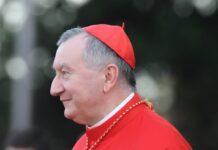








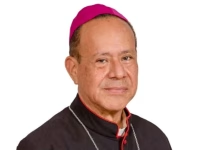



Pope Leo XIV appears to have resumed lessons on a popular language-learning platform after a year’s hiatus.
Newsroom (15/10/2025, Gaudium Press ) In a digital-age twist on papal pursuits, Pope Leo XIV has quietly reignited his language-learning endeavors on Duolingo, the world’s leading language app, following a year’s absence from the platform.
Eagle-eyed users spotted the revival in recent weeks when a dormant profile under the name “Robert”—the pontiff’s baptismal name, Robert Prevost—began racking up impressive gains. The account, tied to the username “@DrPrevost” (matching Leo’s pre-papal social media handle), amassed over 30,000 experience points (XP) in a short span, signaling a dedicated return to studies.
Duolingo, a gamified app boasting millions of global users, delivers bite-sized lessons, quizzes, and streaks to build fluency in dozens of languages. Progress is tracked publicly via XP totals and leaderboards, turning personal improvement into a shareable spectacle. It was this transparency that alerted the online community: screenshots circulating on social media showed the profile’s shift from German studies to Italian—Vatican’s lingua franca—with a modest two-day streak and exactly 30,154 XP earned.
The surge drew witty reactions across platforms. One user quipped on X (formerly Twitter) about launching the app only to encounter a notification: “Robert earned 30,000 XP,” before realizing they were inadvertently cheering the Supreme Pontiff. “I just applauded the Pope without knowing it,” they posted, encapsulating the blend of amusement and awe.
Adding to the intrigue was the unconventional timing. Activity logs indicated sessions as late—or early—as 3 a.m. Rome time, prompting lighthearted rebukes online. “Holy Father, it’s 3 a.m.—what are you doing?” one commenter wrote, highlighting the humanizing glimpse into the papal routine amid global duties.
Pope Leo XIV, elevated to the papacy in 2024 as the first American pontiff, brings a formidable linguistic arsenal to the role. Already fluent in English, Spanish, Italian, French, and Portuguese, he joins a lineage of polyglot leaders. His predecessors, including St. John Paul II (who mastered over a dozen languages) and Benedict XVI (proficient in German, English, and ancient tongues), set a high bar for verbal virtuosity.
This personal hobby aligns with the Catholic Church’s enduring linguistic legacy. Latin endures as its official language for documents and liturgy, while Greek, Syriac, and Aramaic shaped its early Eastern roots. The Second Vatican Council (1962–1965) ushered in vernacular masses, enabling worship in native tongues to broaden accessibility. From medieval missionaries translating scriptures into local dialects to modern papal addresses in multiple languages, multilingualism has been a tool for evangelization in a faith spanning 1.3 billion adherents across continents.
For today’s pontiffs, such skills are pragmatic necessities in a global institution. Pope Pius XI (1922–1939) commanded Esperanto alongside European languages to foster unity, while St. John XXIII (1958–1963) wielded fluent French for diplomatic finesse. Leo’s Duolingo dalliance, whether for refinement or leisure, underscores this tradition—proving that even the Vicar of Christ logs in for daily drills in an app-dominated era.
Vatican spokespeople have not commented on the account’s authenticity, but the details align seamlessly with known facts, leaving little doubt among observers. In an age of scrolling pontiffs, Leo’s streak serves as both inspiration and reminder: sanctity and swiping can coexist.
- Raju Hasmukh with files from Catholic Herald