










Pope Leo XIV praises lay people as essential to the Church’s outreach, peacebuilding, and witness to the Gospel during his General Audience.
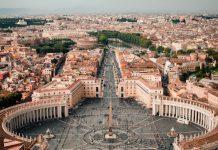
Newsroom (01/04/2026 Gaudium Press ) At his weekly General Audience in St. Peter’s Square on April 1, Pope Leo XIV renewed his appeal for a Church that welcomes, serves, and reaches everyone. The pontiff highlighted the indispensable role of lay people in spreading the Gospel and promoting peace, emphasizing that their service and witness extend far beyond parish walls.
“The vast field of the lay apostolate is not confined to the Church, but extends to the world,” Pope Leo said, addressing thousands of faithful gathered under the bright Roman morning. His remarks continued his catechesis series on the documents of the Second Vatican Council, this week focusing on the 1964 Dogmatic Constitution Lumen gentium.
Pope Leo recalled that Lumen gentium underscores the vocation of lay people to bear witness to Christ in their daily lives — whether in workplaces, civic life, or family relationships. “The Church is present wherever her children profess and bear witness to the Gospel,” he said, “through choices that show the beauty of Christian life, foretelling the justice and peace that will be fulfilled in the Kingdom of God.”
The Equality of All the Baptized
Reflecting on the fourth chapter of Lumen gentium, the Pope observed how the Council sought to explain “in positive terms” the nature and mission of the laity. He noted that for centuries, lay people were often defined merely by what they were not — clergy or consecrated religious — rather than by their own distinctive mission within the Church.
Quoting his predecessor Pope Francis, Leo XIV reaffirmed that lay people form “the vast majority of the People of God,” while ordained ministers are “the minority and at their service.” He stressed that the unity of the Church rests on the shared dignity of all the baptized: “Before any distinction of ministry or state of life, the Council affirms the equality of all the baptized.”
He reminded the audience that the People of God are characterized by “the dignity and freedom of the children of God,” calling this a foundation for both spiritual and social renewal within the Christian community.
Living the Mission in the World
Pope Leo went on to explain that participation in the life of the Church is not limited to sacramental or liturgical contexts. Citing point 31 of Lumen gentium, he said the laity “are in their own way made sharers in the priestly, prophetical, and kingly functions of Christ.” This means that every baptized person has a role in the mission of the Church — not only through prayer and worship, but through actions that transform society.
“The holy People of God is never a formless mass,” he added. “It is the body of Christ, or, as Saint Augustine said, the Christus totus — the whole Christ.” Within this living body, the Pope explained, there exists a fruitful relationship between the common priesthood of the faithful and the ministerial priesthood of the clergy. “By virtue of Baptism, the lay faithful participate in the very priesthood of Christ,” he said.
A Call to Active Witness
In concluding his catechesis, Pope Leo XIV referenced Saint John Paul II’s Apostolic Exhortation Christifideles laici (1988), which he described as a landmark text affirming the mission and dignity of lay people in the Church. That exhortation, he noted, urged all the baptized to engage actively in the apostolate, transforming their communities through charity, justice, and truth.
“May the Easter we are preparing to celebrate renew in us the grace to be, like Mary Magdalene, like Peter and John, witnesses of the Risen One,” Pope Leo said, closing his address with an invitation for the faithful to renew their baptismal commitment during the approaching Easter celebrations.
By turning attention to the indispensable contribution of lay faithful — women and men who live out the Gospel in their families, workplaces, and public life — Pope Leo XIV reaffirmed a principle central to Vatican II: that the Church is not confined to its clergy, but lives wherever the baptized serve as instruments of peace and witnesses of God’s love in the world.
- Raju Hasmukh with files from Vatican News
Related Images: