Pope Leo XIV visits Barcelona’s Raval, meeting vulnerable families, reflecting on suffering, forgiveness, and faith in a deeply moving encounter.
Newsroom (11/06/2026 Gaudium Press ) In the vibrant yet marginalized district of El Raval, where more than half of residents are of migrant origin, Pope Leo XIV encountered a community defined by both hardship and resilience. His visit, ahead of celebrating Mass at the Sagrada Familia Basilica, offered a powerful reminder that his papacy extends beyond grand cathedrals into the lived realities of the vulnerable.
The streets of Raval were filled with palpable joy as the pope arrived in one of Barcelona’s most disadvantaged neighborhoods. Rather than focusing solely on the city’s architectural splendor, Leo XIV brought attention to its social peripheries—places where poverty and migration intersect with faith-driven outreach.
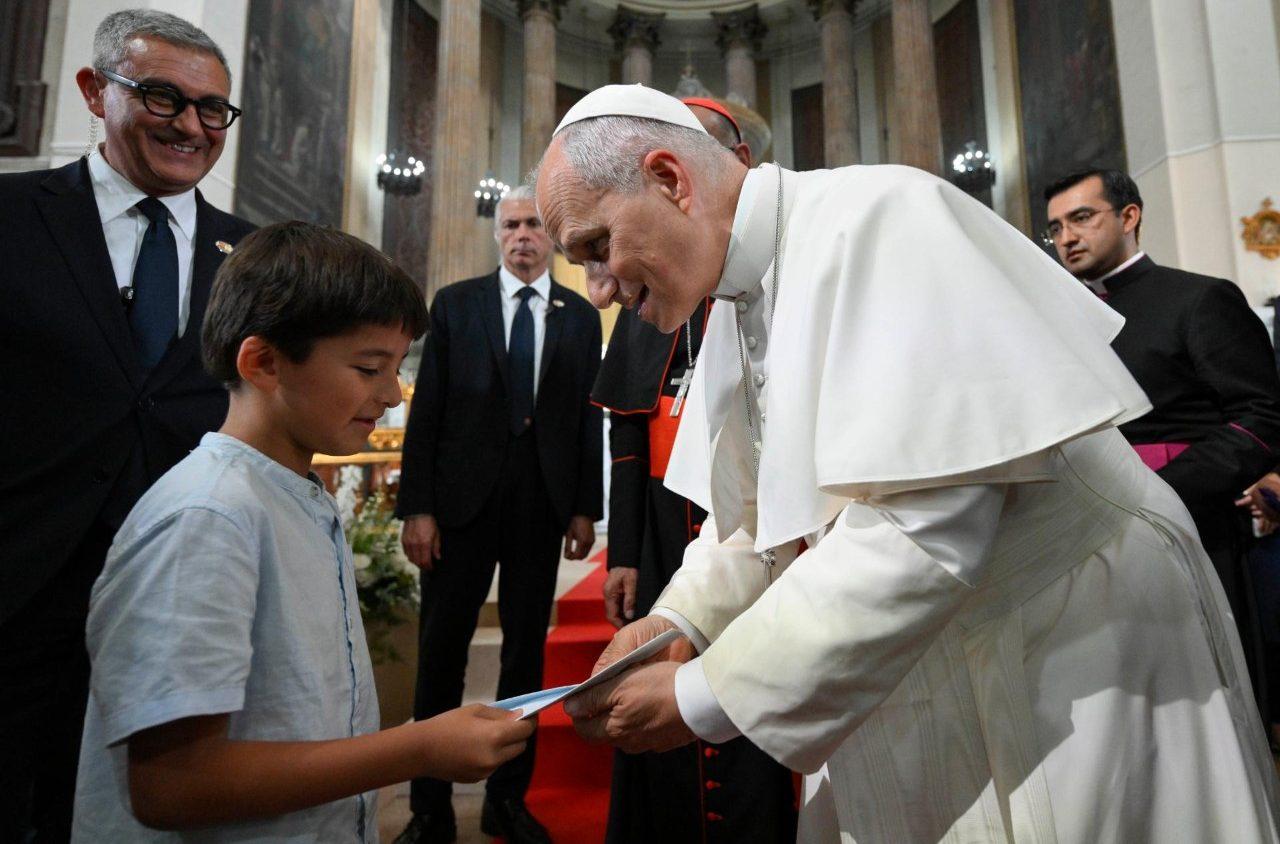
At the heart of this visit was St. Augustine Church, which operates a soup kitchen within a former convent. The initiative, led by the Missionaries of Charity and the Mano Amiga Foundation, provides essential aid such as food and clothing to those in need. Among the beneficiaries is Renzo, a 6-year-old boy whose family fled extreme poverty in Peru in search of a better life.
In a moment that captured both the innocence of childhood and the weight of human suffering, Renzo posed a profound question to the pontiff:
“Why do bad things happen to some people? And not to others? Whose fault is it? Why are there so many people living on the street? No one sees them; no one helps them.”
Before addressing this question, the pope first responded with humor when asked if he had ever wanted to become pope. “I didn’t want to be pope, neither as a young man nor as an old man,” he said, drawing laughter. Yet he added a more reflective note: “When the Lord calls, one must say yes.”
The exchange underscored the tone of the visit—personal, disarming, and deeply human. Leo XIV remarked that he “truly feel[s] at home” in the parish, expressing gratitude for the work being carried out by the community.
Turning to Renzo’s question, the pope acknowledged its complexity. “It is not easy to find the answer,” he said, suggesting that reflection on the life of Jesus offers guidance. He recalled how Christ “went about doing good and healing all who were oppressed,” yet still suffered crucifixion. The message, he emphasized, lies in the Resurrection: suffering does not have the final word.
“Even amid suffering, [God] never abandons any of his children,” Leo XIV said. “Let us have confidence; Jesus is with us, helping and accompanying us.”
The visit also included a diocesan meeting with local organizations dedicated to social assistance. There, the pope expanded his message beyond individual encounters, calling on ecclesial communities to actively engage with the marginalized.
Each community, he said, is called “to reach out… with discretion, sensitivity, and perseverance, to the wounds and needs of the least and most vulnerable.” This mission, rooted in charity and guided by the Holy Spirit, reflects what he described as a fundamental Christian responsibility: making “God’s love for every man and woman present within the concrete fabric of history.”
The gathering included four Augustinians serving in Barcelona and nearby areas—two from Tanzania and two from the Philippines—highlighting the global nature of the Church’s presence in local ministry.
A central theme of the pope’s address was forgiveness. He clarified that forgiving does not mean excusing wrongdoing or ignoring harm. “It does not mean forcing oneself to forget,” he explained. Rather, forgiveness is about refusing to let hatred take root.
“Jesus asks us to forgive because it is the only way to experience God’s peace and heal spiritual wounds,” Leo XIV said, framing forgiveness as both a moral imperative and a path to inner restoration.
The pope also drew attention to a quieter but equally pressing social issue: the isolation of the elderly. “Let us not allow loneliness and abandonment to become the norm in the lives of older adults,” he warned, describing such neglect as deeply saddening.
Despite the gravity of the themes discussed, the visit retained moments of levity. Renzo, continuing his candid questioning, asked whether the pope liked soccer. Leo XIV revealed that while he is known for playing tennis, he also enjoyed soccer in his youth and followed local teams during his time in Peru.
“A little sport is good for everyone,” he concluded, bringing the encounter to a warm and relatable close.
In Raval, Pope Leo XIV’s presence transformed a routine pastoral visit into a vivid demonstration of the Church’s mission: not only to preach from altars, but to stand alongside those whose voices are often unheard, affirming dignity, hope, and compassion where they are needed most.
- Raju Hasmukh with files from CNA