






Rumors surrounding Marko Rupnik’s Vatican trial raise urgent questions about justice, accountability, transparency, and trust in the Church.
Newsroom (22/07/2026 Gaudium Press ) Rumors erupted yesterday suggesting that the canonical trial of disgraced Fr. Marko Rupnik is nearing its conclusion and that the former Jesuit artist may not be convicted by the Dicastery for the Doctrine of the Faith tribunal currently hearing his case. Whether those rumors prove accurate remains uncertain. What is already clear, however, is that the public reaction reveals how profoundly the Rupnik affair has evolved beyond a single judicial proceeding.
The speculation triggered a wave of commentary, much of it poorly informed. Among the more notable misconceptions was the claim that Rupnik is currently facing a trial related to alleged violence and would later face a separate trial concerning abuse. Such assertions appear to have arisen from ambiguously worded reports and misunderstandings of the rumors themselves.
Yet the confusion obscures a more important reality. The possibility that Rupnik may not be convicted has never been outside the realm of serious consideration. Canon lawyers have long noted that criminal trials operate according to standards of evidence and procedural rules, not public sentiment. A court’s inability to secure a conviction does not necessarily answer the broader question of whether misconduct occurred. It merely reflects what can be established through admissible testimony and evidence within the framework of the law.
That distinction is crucial, though it may offer little comfort to Catholics who have watched the Rupnik case become one of the most symbolic accountability tests in modern Church history.
The allegations against Rupnik are among the most disturbing and consequential the Church has confronted in recent years. Combined with his previous conviction for absolving an accomplice in sin and the perception that he enjoyed extraordinary protection within Vatican circles, the case has acquired significance far beyond the fate of one priest. For many Catholics, the proceedings have become a referendum on whether the Church is truly committed to confronting abuse and holding influential clerics accountable.
This is why the stakes surrounding the trial are so unusually high.
If Rupnik is not convicted, many faithful Catholics will not view the outcome as justice being done, regardless of the legal reasoning behind such a verdict. In the court of public opinion, especially after years of scandal and institutional failures, acquittal and exoneration are often treated as synonymous. They are not. But perceptions matter, particularly when trust in institutions is fragile.
The danger is that public expectations could create pressure on judges to reach a result that satisfies popular demand rather than legal standards. That must not happen.
The integrity of any judicial system depends on judges applying the law and evaluating evidence without regard to political or public consequences. The ancient legal principle quod non est in actis, non est in mundo — what is not in the record is not in the world — captures this reality. Courts can only judge what is before them. To ask judges to do otherwise is to abandon the rule of law in favor of outcomes determined by emotion, pressure, or expediency.
Indeed, impartial adjudication is the only path through which the Church can hope to restore confidence in its legal institutions. If Pope Leo is serious about strengthening the rule of law within ecclesiastical governance, then allowing judges to reach their conclusions independently is not optional. It is essential.
But judicial independence alone will not be enough.
Should Rupnik avoid conviction, transparency will become imperative. The Vatican’s longstanding instinct toward secrecy and nondisclosure may no longer be sustainable in a case of such magnitude. Catholics who have followed every development for years will expect more than a simple announcement of an outcome. They will demand an explanation.
Without a clear accounting of how judges arrived at their decision, suspicion will quickly fill the void. The absence of transparency would likely convince many observers that procedural outcomes were used as a shield against accountability rather than as an expression of justice.
Equally pressing is the question of what happens to Rupnik himself.
Rupnik is now a priest incardinated in Slovenia. Regardless of the trial’s outcome, Church authorities will face unavoidable questions about his future ministry. If he is permitted to continue exercising priestly functions in any meaningful capacity despite what is already publicly known about his conduct, many Catholics will conclude that promises of reform remain hollow when powerful insiders are involved.
That perception already exists among a substantial portion of the faithful. Decisions such as the relatively swift reinstatement of Msgr. Jeff Burrill have contributed to skepticism about whether Church leaders apply accountability standards consistently. Any appearance of institutional tolerance toward Rupnik would likely intensify those concerns dramatically.
The consequences could extend far beyond internal Church politics.
The Catholic Church’s moral authority ultimately depends on credibility. People want to believe the Church means what it says about justice, truth, and moral responsibility. They want to see decisions made because they are right, not because they are convenient. When actions appear disconnected from principles, trust erodes. And when trust erodes, the Church’s ability to persuade people about far more important truths is weakened as well.
A Church perceived as unwilling to confront corruption within its own ranks will inevitably struggle to convince people of its broader moral claims.
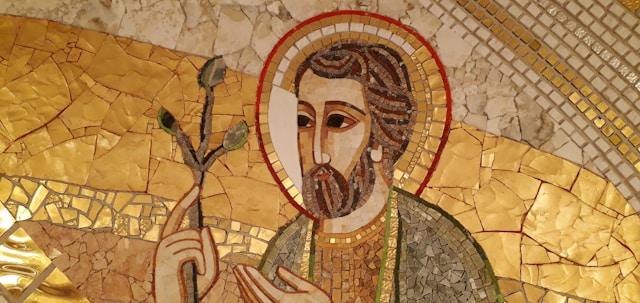
Beyond Rupnik’s personal future lies another unresolved issue: his artistic legacy. The fate of his liturgical artwork will become a major point of debate regardless of the verdict. Questions remain about whether the creation of that art was itself intertwined with the coercive abuse alleged by former religious sisters. For many Catholics, these works can no longer be separated from the accusations surrounding their creator.
That issue, too, demands an answer.
Ultimately, the coming decision is not merely about whether a tribunal finds sufficient evidence to convict a single priest. It is about whether Church leadership understands the broader crisis of confidence that has developed around this case. Catholics will inevitably ask two questions: What happens to Rupnik, and what happens to the art associated with him?
No verdict, guilty or not guilty, will settle those questions on its own.
If the rumors circulating today contain any truth, Pope Leo may soon face one of the defining moments of his pontificate. The legal outcome of the trial matters. But the transparency, accountability, and moral clarity that follow may matter even more. For a Church seeking to rebuild trust, the verdict will not be the end of the story. It may be only the beginning.
- Raju Hasmukh with files from
Related Images:


