
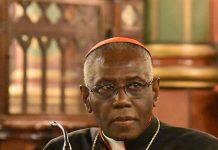
























Parolin delivered a lecture on the “Ethics of Artificial Intelligence,” declaring that “human dignity comes before any calculation.”
Newsroom (15/10/2025, Gaudium Press ) Cardinal Pietro Parolin, the Vatican’s Secretary of State, emphasized that artificial intelligence (AI) must serve as a tool to enhance human dignity in healthcare, warning against its potential to dehumanize care or exacerbate inequalities. Speaking at the inauguration of the Center for the Study and Development of Artificial Intelligence at Italy’s Higher Institute of Health (Istituto Superiore di Sanità), Parolin delivered a lecture on the “Ethics of Artificial Intelligence,” declaring that “human dignity comes before any calculation.”
In his address, Parolin described AI as “a horizon full of promises but also a crossroads,” where society must choose between efficiency-driven technology that discards the weak or an ethically guided AI that serves the integral good of every person. He underscored the Holy See’s commitment to ensuring technology remains a means to build a “more just, fraternal, and human world,” in dialogue with people of goodwill.
AI’s Promise in Medicine
Parolin highlighted AI’s potential contributions to healthcare, citing examples such as analyzing X-rays with precision surpassing human eyesight, discovering new drugs, tailoring cancer therapies to genetic profiles, and optimizing hospital resources for equitable access in impoverished regions. “This is the artificial intelligence we want: a powerful tool at the service of life, an ally to humanity in the fight against disease and suffering,” he said.
However, he cautioned against overshadowing the human element. AI can provide diagnoses but not words of comfort, he noted, stressing the therapeutic alliance between doctor and patient as a pact of trust. Overburdened by bureaucracy and economics, physicians risk becoming mere supervisors of automated processes if they delegate judgment to machines. “We must fight so that technology remains a support for the doctor’s decision, not a substitute for his humanity,” Parolin urged.
Risks: Dehumanization and Algorithmic Discrimination
The cardinal identified key risks, including the “dehumanization of care” and “algorithmic discrimination.” By feeding AI data reflecting societal biases and inequalities, systems could perpetuate a “health apartheid,” denying benefits to all. He also raised accountability concerns: Who bears responsibility for algorithmic errors? A lack of clarity could foster a “system of irresponsibility” where victims find no justice.
In a world obsessed with performance, AI might intensify a “culture of discard,” assigning lesser value to lives of the elderly, terminally ill, or unborn with malformations—potentially deeming them “not worthy of living.” “Here we touch the heart of our ethics,” Parolin said. “For us, every life has infinite value from conception to natural death, independent of utility, productivity, or physical perfection.”
Call for Human-Centric Governance
Echoing papal teachings and the “Rome Call for AI Ethics” initiative, Parolin reaffirmed guiding principles: transparency, inclusion, responsibility, impartiality, reliability, security, and privacy. He advocated for interdisciplinary dialogue among scientists, ethicists, philosophers, theologians, and policymakers to ensure innovation aligns with human progress. Investment in ethical training for technologists is essential, but “the true enabling platform” is the human being, he asserted. “The final decision, especially when life and death are at stake, must always remain in the hands of a human capable of integrating machine data with prudence, compassion, and wisdom.”
The Church views scientific progress with admiration and prudence, Parolin noted, offering the Holy See’s experts to contribute to the new center’s activities.
Comments on Global Conflicts
Ahead of his lecture, Parolin fielded questions from reporters on current events. On Gaza’s peace plan, he expressed hope it could lead to a “just and lasting peace,” acknowledging the challenging path but trusting in continued goodwill for further steps. For Ukraine, he lamented a lack of positive prospects, saying “there is much to do” amid stalled progress.
Parolin’s remarks come as global debates on AI ethics intensify, aligning Vatican perspectives with broader calls for responsible innovation in healthcare. The event marks a significant step for Italy’s public health institution in advancing AI research under ethical scrutiny.
- Raju Hasmukh with files from Vatican News
Related Images: