






Israel shuts Gaza crossings after Iran missile attack, halting aid as officials claim supplies suffice and agencies warn of worsening crisis.
Newsroom (08/06/2026 Gaudium Press ) Israel has closed key crossings into the Gaza Strip following a ballistic missile attack launched by Iran overnight between Sunday and Monday, in a move officials describe as a necessary security response amid heightened regional tensions.
The decision, announced by the Defense Ministry’s Coordinator of Government Activities in the Territories (COGAT), affects the Kerem Shalom and Rafah crossings—critical entry points for humanitarian aid and goods into the enclave. Authorities said the closures would remain in place “until further notice,” citing newly implemented security measures in response to the missile fire.
COGAT stated that “a number of necessary security measures have been implemented,” emphasizing that the closure is part of a broader security reassessment. Officials indicated that updates would be issued in line with ongoing evaluations conducted in coordination with Israeli security agencies and international stakeholders.
Following the missile attacks launched by Iran against the State of Israel, a number of necessary security measures have been implemented, including the closure of the crossings into the Gaza Strip, among them the Kerem Shalom Crossing and the Rafah Crossing, until further… pic.twitter.com/PptfY8LNcz
— COGAT (@cogatonline) June 7, 2026
Aid Halted, but Officials Downplay Impact
The closures immediately halted the entry of humanitarian supplies into Gaza, raising concerns about the already fragile situation in the territory. However, Israeli authorities insist that the move will not worsen living conditions for the population.
“It should be emphasized that the closure of the crossings will not affect the humanitarian situation in the Gaza Strip,” COGAT said. The agency added that, based on United Nations methodologies, the volume of food delivered to Gaza since the start of the ceasefire “significantly exceeds the nutritional needs of the population.”
COGAT also reiterated that it would maintain coordination with international organizations, suggesting that mechanisms remain in place to monitor conditions and adjust policy if necessary.
Contrasting Assessments From Aid Organizations
Despite official reassurances, humanitarian groups and international agencies have repeatedly warned that aid reaching Gaza has fallen far short of what is required.
Under a US-brokered ceasefire agreement signed in October, Israel committed to facilitating approximately 600 aid trucks per day. In practice, the average has reportedly been closer to 200 trucks daily—less than half the agreed level. Aid deliveries have been further disrupted in recent months, even before the latest closure.
UN agencies, human rights organizations, and local witnesses have consistently reported severe shortages of food, water, fuel, and medical supplies. These shortages have been exacerbated by ongoing military operations and restrictions on access.
Ahmad Alhendawi, Regional Director for Save the Children, issued a pointed criticism of the latest measures, warning that humanitarian assistance must not be used as leverage amid geopolitical tensions.
“Aid is not a political tool and should not be weaponised in this way,” he said. “The survival and needs of children in Gaza should not have to answer to airstrikes elsewhere.”
Rising Civilian Casualties
The closure of crossings comes against a backdrop of continued violence inside Gaza. Since Sunday, Israeli operations have killed at least 13 Palestinians, according to the Palestinian health ministry and local reports. The casualties include children, a fisherman, and police officers.
Among the incidents reported:
- An early morning strike in the al-Mawasi area in southern Gaza hit tents sheltering displaced people, killing two civilians.
- In Jabalia in the north, another strike killed two individuals, including a child.
- A separate attack in Gaza City’s Rimal neighborhood killed four people when a vehicle near Palestine Square was targeted.
- At sea, Israeli naval forces fired on fishing boats near Deir al-Balah, killing a 15-year-old fisherman, Muhammad Musa Abu Giab, and detaining others.
- In Khan Younis, five Palestinians were killed in a strike on a police checkpoint.
Additionally, 14-year-old Hadeel Ayman Jundiya succumbed to injuries sustained in earlier strikes.
Broader Conflict and Humanitarian Toll
Violence has persisted despite the ceasefire framework. Since the agreement took effect, Israeli military operations have continued, resulting in at least 970 deaths, including 119 in May alone, according to health officials.
Since October 2023, nearly 73,000 Palestinians have been killed, with thousands more reported missing or trapped beneath rubble.
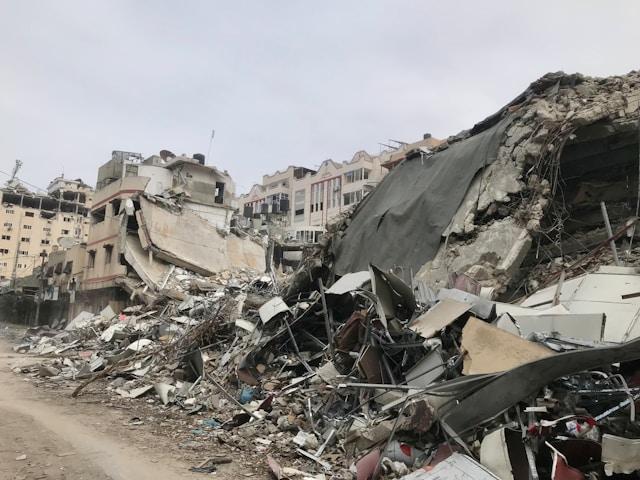
Humanitarian advocates argue that the cumulative impact of prolonged conflict, infrastructure destruction, and restricted aid flows has left Gaza’s population increasingly dependent on external assistance—assistance now further constrained by the latest closures.
“Children in Gaza depend on crossings for food, clean water, medicine, fuel, shelter materials and the supplies needed to keep hospitals and essential services running,” Alhendawi said. “All of this is now under threat.”
Uncertain Outlook
Israeli authorities have not provided a timeline for reopening the crossings, stating only that decisions will be guided by evolving security conditions. While a brief reopening of Kerem Shalom was reported on Monday morning, uncertainty persists amid ongoing regional hostilities.
As tensions between Israel and Iran continue to escalate, the situation in Gaza remains precarious—caught between security imperatives and mounting humanitarian needs. Aid organizations are urging immediate action to restore access, warning that prolonged closures could deepen an already critical crisis.
- Raju Hasmukh with files from I24 News, The Times of Israel and Save the Children.
Related Images:


