










Jihadist violence surges in Mozambique’s Cabo Delgado: Bishop warns of church burnings, child abductions & Islamization after perilous visit. 1M displaced, 6K dead.
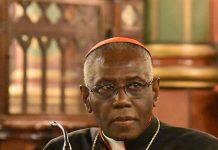
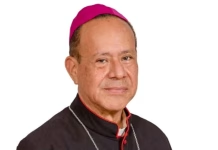
Newsroom (16/10/2025, Gaudium Press ) The security situation in northern Mozambique is spiraling out of control, with jihadist forces torching churches, abducting children, and imposing draconian controls on civilians, Bishop Osório Citora Afonso of the Diocese of Quelimane warned Tuesday upon returning from a perilous pastoral visit to a frontline parish.
“The situation continues to deteriorate and violence is spreading throughout the north of the country,” the bishop told reporters, detailing atrocities committed overnight from Thursday to Friday, October 10. Insurgents linked to the Islamic State burned a church, kidnapped minors, and left a trail of victims in Cabo Delgado province – a hotspot of the eight-year insurgency that has displaced over one million people and claimed at least 6,000 lives.
“Since the Islamic State began raging,” Bishop Afonso said, “people must have an authorization card to access any services, otherwise they risk their lives.”
A Forgotten Crisis Gains Global Spotlight
Despite the protracted toll, the conflict has languished in obscurity, the bishop lamented. “Although the northern regions of this African country have been suffering from radical Islamism for eight years… not much has been said about this.”
That changed recently, he noted, crediting papal intervention. Pope Leo XIV voiced solidarity with Cabo Delgado‘s “victims of a situation of insecurity and violence that continues to claim lives and displace people” at the end of the Angelus prayer on August 24. Days later, on September 29, Vatican Secretary for Relations with States Archbishop Paul Richard Gallagher spotlighted the province – alongside the Sahel and Horn of Africa – as a jihadist flashpoint during his address to the 80th United Nations General Assembly.
Perilous Roads to a ‘Most Islamized’ Parish
Installed as bishop on August 31, 2025, Afonso chose Bajone – one of Quelimane’s 28 parishes and the “most Islamized area” – for his inaugural pastoral visit, signaling it as a top priority amid 140 communities spanning 270 kilometers of unpaved, danger-ridden roads.
“It was not an easy visit, starting with the roads we had to travel,” he recounted. Accompanied by aides, he traversed three pastoral zones – Tapata, Macura, and Tapaliwa – each encompassing about 50 communities.
Tensions ran high upon arrival. “I requested an audience with the Muslim leaders, who initially received me with great suspicion,” Afonso said. Once a model of “peaceful coexistence,” the region now trends toward “the Islamization of the country,” he added somberly.
Yet dialogue prevailed: “After our visit, the Muslim leaders thanked me because it was the first time a meeting and visit with the Muslims had taken place.” In a stark illustration, the bishop’s convoy passed 45 newly built mosques in a single 40-kilometer stretch.
Afonso’s episcopal journey began even more dramatically. Upon arriving in Quelimane, he shunned the airport for a 1,700-kilometer, two-day road odyssey from a distant suburb, where 100 parishioners awaited. “From there, I drove to the center,” he said.
Hope Amid the Jubilee
Closing on an uplifting note, Bishop Afonso expressed joy at attending the Jubilee of Missionaries and Migrants in Rome on October 4-5, joining thousands from over 100 countries.
As jihadist threats mount, the bishop’s outreach offers a fragile bridge in Cabo Delgado’s deepening shadows – a call for the world to heed before the flames spread further.
- Raju Hasmukh with files from Agenzia Fides
Related Images: